Journal ·
Tattoo Size Guide: How Big Should Your Tattoo Be?
A tattoo size guide with a size chart by placement, the detail rule for small tattoos, minimum lettering sizes, how size affects price and how to test it.
"How big should my tattoo be?" is one of the most common questions artists hear, and one of the most important. Size decides how much detail a design can hold, how well it ages, how long the session takes and what it costs. This tattoo size guide gives you a practical starting point for every common placement, and a few simple ways to test a size before you book.
How tattoo size is measured
Artists measure a tattoo by its outer box: the width and height of the smallest rectangle that fits around the whole design. A "3-inch tattoo" usually means about 3 inches (7.5 cm) on its longest side. When you ask for a quote, give both measurements and the placement, for example "about 3 × 4 inches on the inner forearm".
Tattoo size chart by placement
These ranges are typical starting points, not rules. Your own anatomy and the design's shape matter more than any chart.
| Placement | Common size | Works best for |
|---|---|---|
| Finger | 0.5–1 in (1–2.5 cm) | Simple symbols, single initials |
| Behind the ear | 1–2 in (2.5–5 cm) | Tiny motifs, small florals |
| Inner wrist | 1–3 in (2.5–7.5 cm) | Small symbols, short words, dates |
| Ankle | 2–3 in (5–7.5 cm) | Small florals, wrap-around lines |
| Inner forearm | 3–7 in (7.5–18 cm) | Botanicals, lettering, animals |
| Outer forearm / upper arm | 4–8 in (10–20 cm) | Traditional pieces, portraits |
| Calf | 4–8 in (10–20 cm) | Tall designs: koi, snakes, florals |
| Shoulder blade | 4–8 in (10–20 cm) | Wings, mandalas, birds |
| Chest piece | 8–12 in (20–30 cm) | Symmetrical designs, eagles |
| Full back | 12 in and up (30 cm+) | Large Japanese or narrative work |
Not sure which spot suits your design? The tattoo placement guide compares visibility, pain and how each area ages.
The detail rule: small tattoos need simple designs
Ink spreads a little under the skin over the years. Lines that sit very close together slowly drift towards each other, and tiny spaces fill in. A rule of thumb many artists use: if a detail is smaller than a grain of rice at the size you want, it will probably not survive ten years.
That does not mean small tattoos are a bad idea. It means small tattoos work best with:
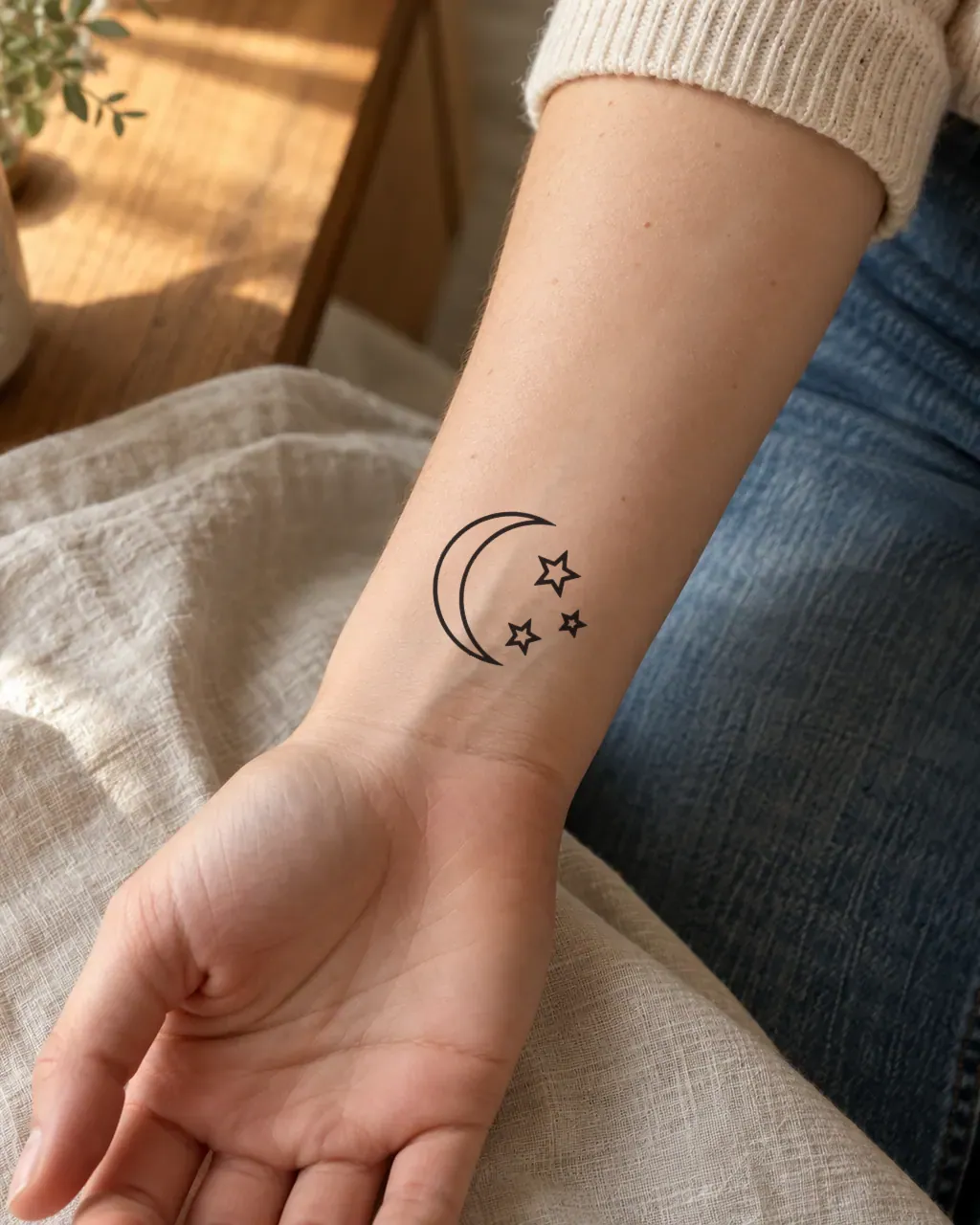
- Fewer, cleaner lines. A crescent moon or a single line drawing beats a detailed landscape at 1 inch.
- Open space inside the design. Let the skin breathe between lines.
- Bold outlines when there is color. Color holds best when a line keeps it in place.
Browse small tattoo ideas for designs that were drawn to stay readable at small sizes, or try a minimal look in the fine line tattoo style.
Lettering size: keep words readable
Letters are the first thing to blur, and script blurs faster than print. As a rough guide, many artists prefer lowercase letters to be at least about a quarter of an inch (6 mm) tall, and more for detailed script or Old English. A single word therefore needs more width than most people expect.
Preview your words at the real size in the tattoo font generator, and choose a simpler font if the details start to disappear.
How size affects tattoo price
Size is the biggest driver of price because it decides how many hours the tattoo takes. Small pieces are often charged at the studio's minimum, while medium and large pieces are usually priced by the hour. Color, shading and difficult placements such as ribs or hands add time. The tattoo cost calculator turns size, placement and detail into a realistic price range.
How to test a size before you book
- Print it at actual size. Our tattoo stencil maker prints at true size. Cut out the print and tape it to the spot.
- Wear a temporary version. Print a few temporary tattoo designs on tattoo paper and live with one for a week.
- Try it on a photo. Drop the design onto a photo of your own arm with the tattoo simulator and scale it until it looks right.
- Ask your artist. Bring the size you like, then listen if they suggest going a little bigger. They have seen how designs age.
Tattoo size guide: quick answers
What is the smallest a tattoo can be? Simple symbols can work at around half an inch (1–1.5 cm), but anything with detail or lettering needs more room.
Is it better to go bigger? Usually, yes: a little extra size gives the design room to age gracefully. Start from the design you want, then pick the smallest size that keeps its details readable.