Style guide · 8 designs
Blackwork Tattoo Ideas & Guide
A blackwork tattoo uses black ink alone – bold shapes, ornamental patterns, solid fills and striking negative space – for maximum contrast. This guide covers the style’s roots, its main approaches, the ideas that suit it and what to know before committing to heavy black.
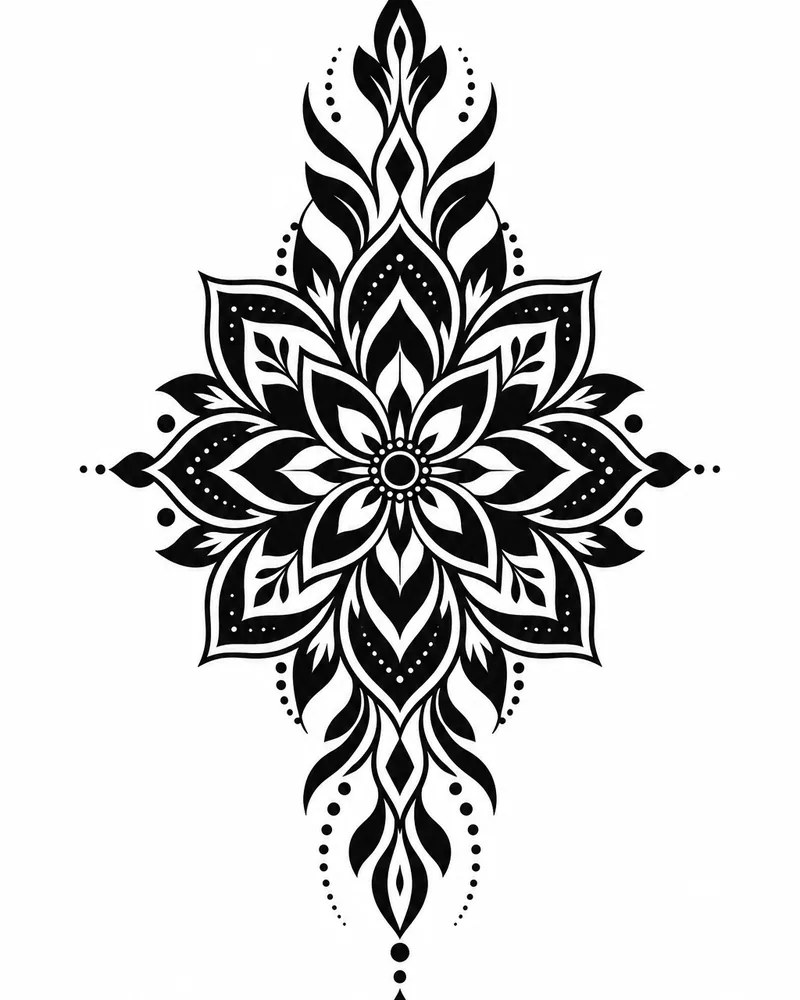
Blackwork tattoo designs
an ornamental mandala with layered petalsBlackwork · forearm 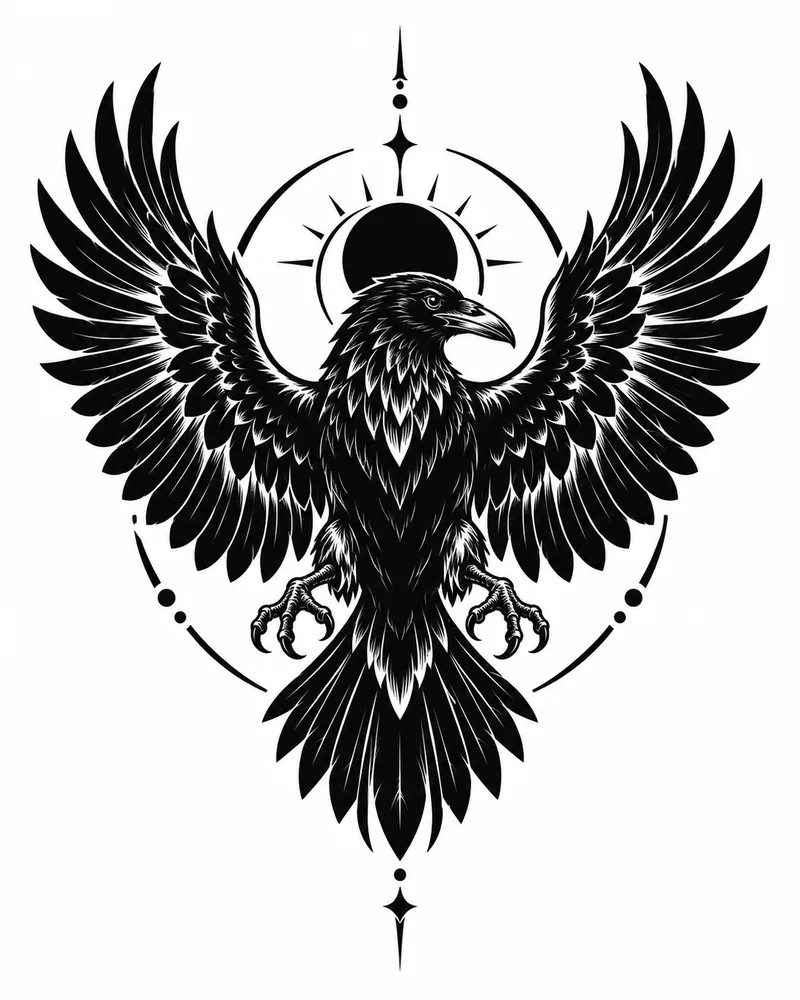
a raven with spread wingsBlackwork · upper arm 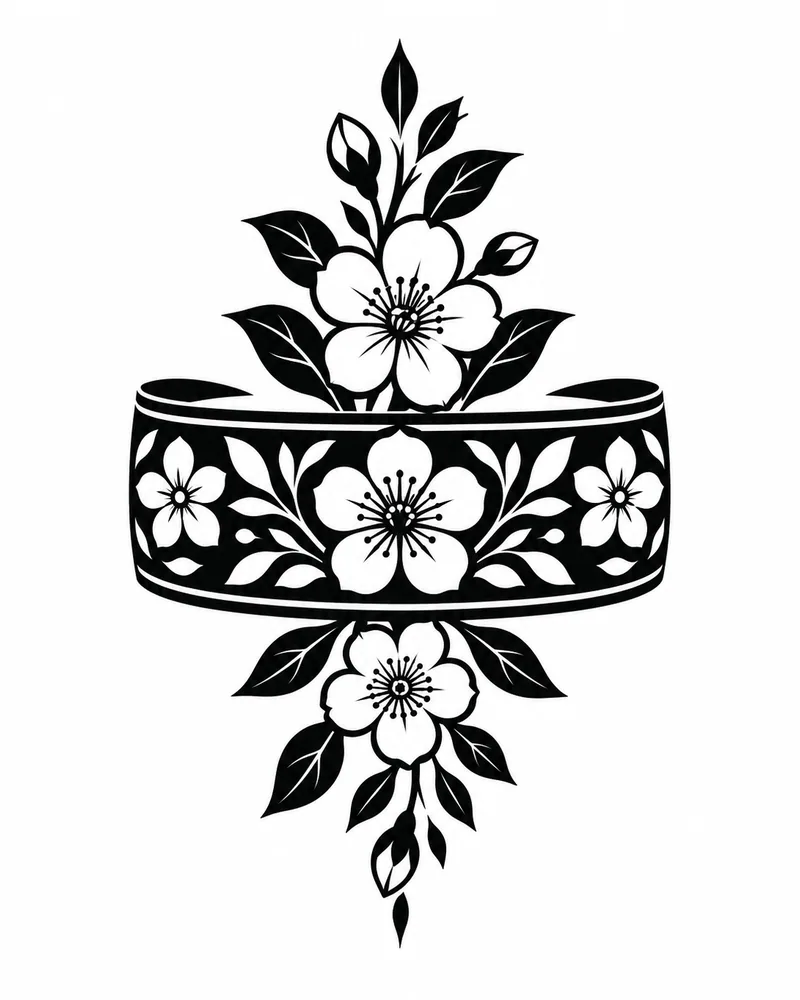
a wide band with flowers cut out of it, drawn flatBlackwork · calf 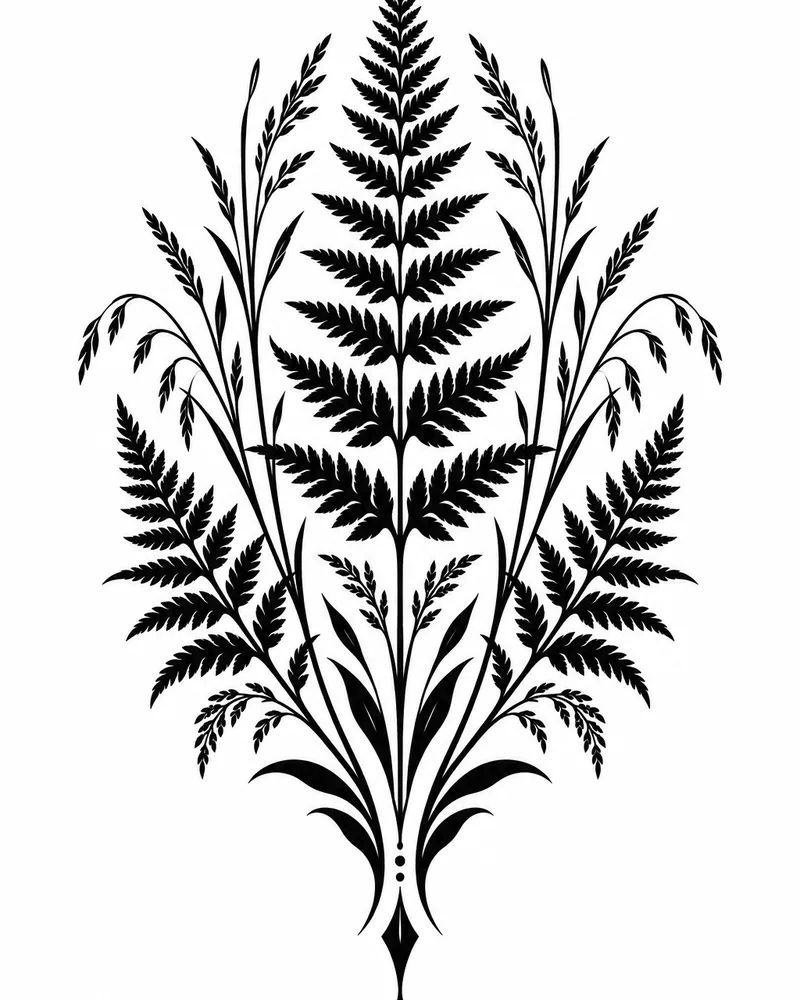
silhouettes of ferns and wild grassesBlackwork · back 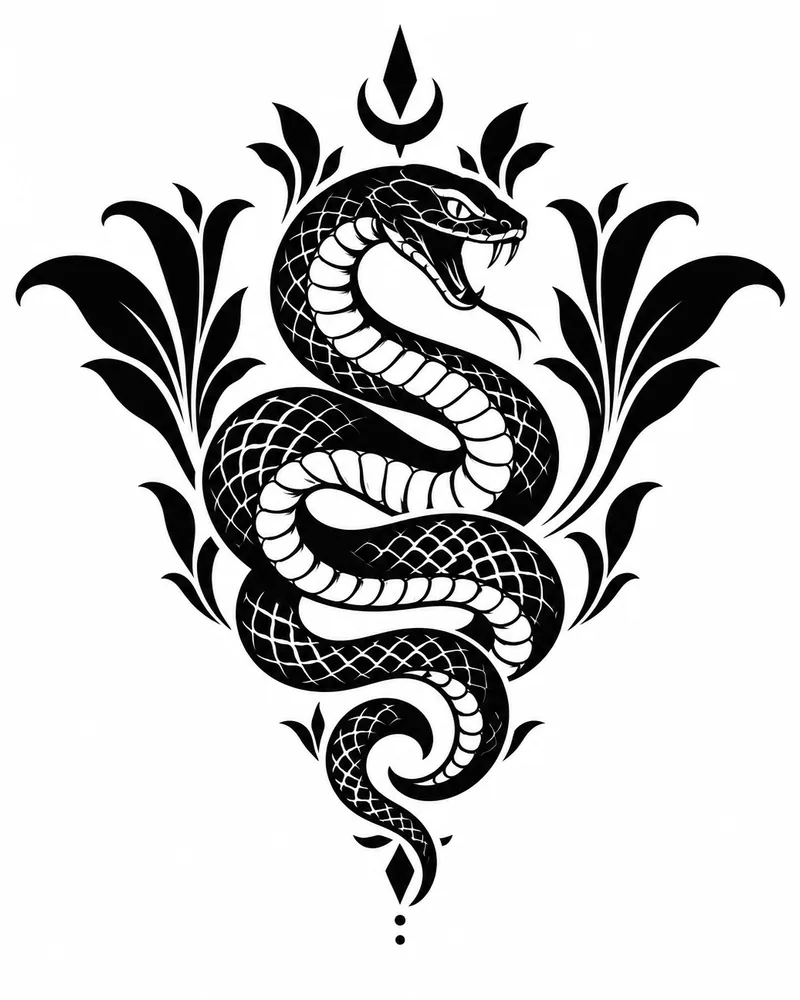
a snake coiled into an ornamental spiralBlackwork · hand 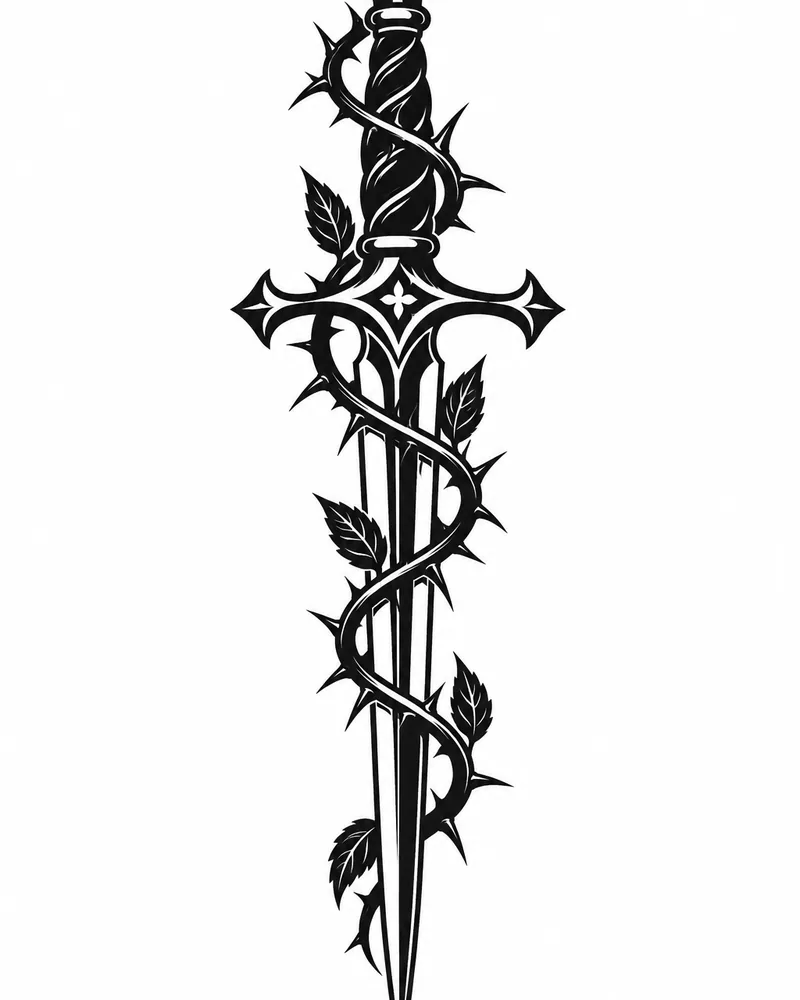
a dagger wrapped in thorny vines, blade pointing downBlackwork · forearm 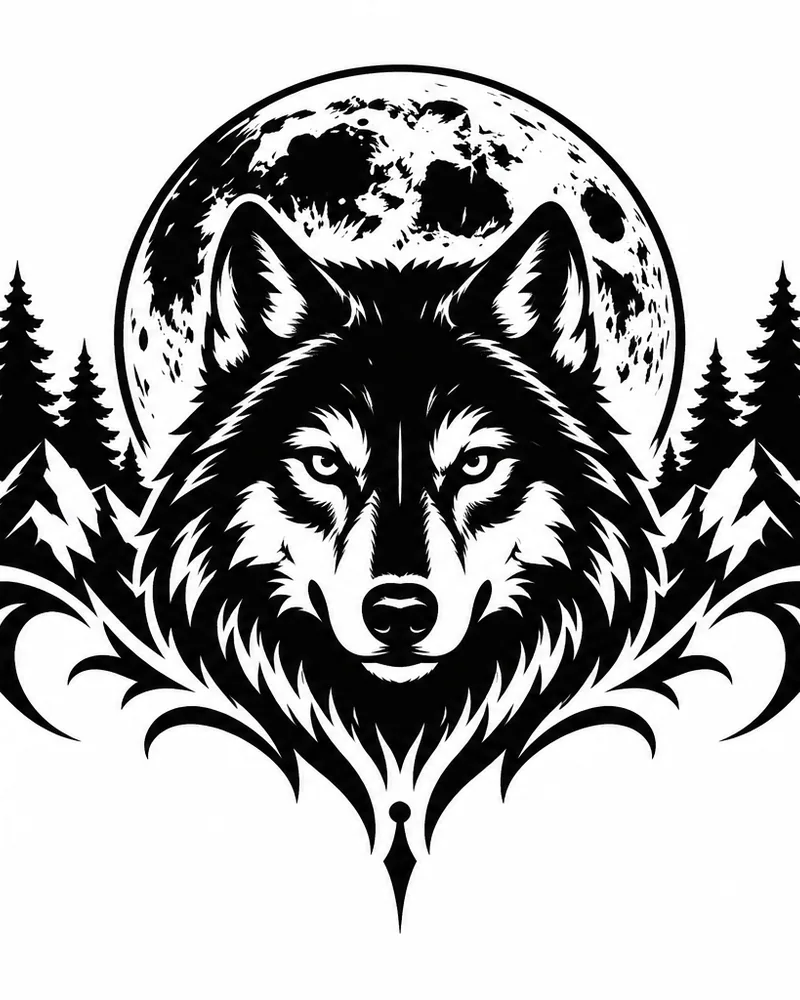
a wolf head silhouette against a full moonBlackwork · chest 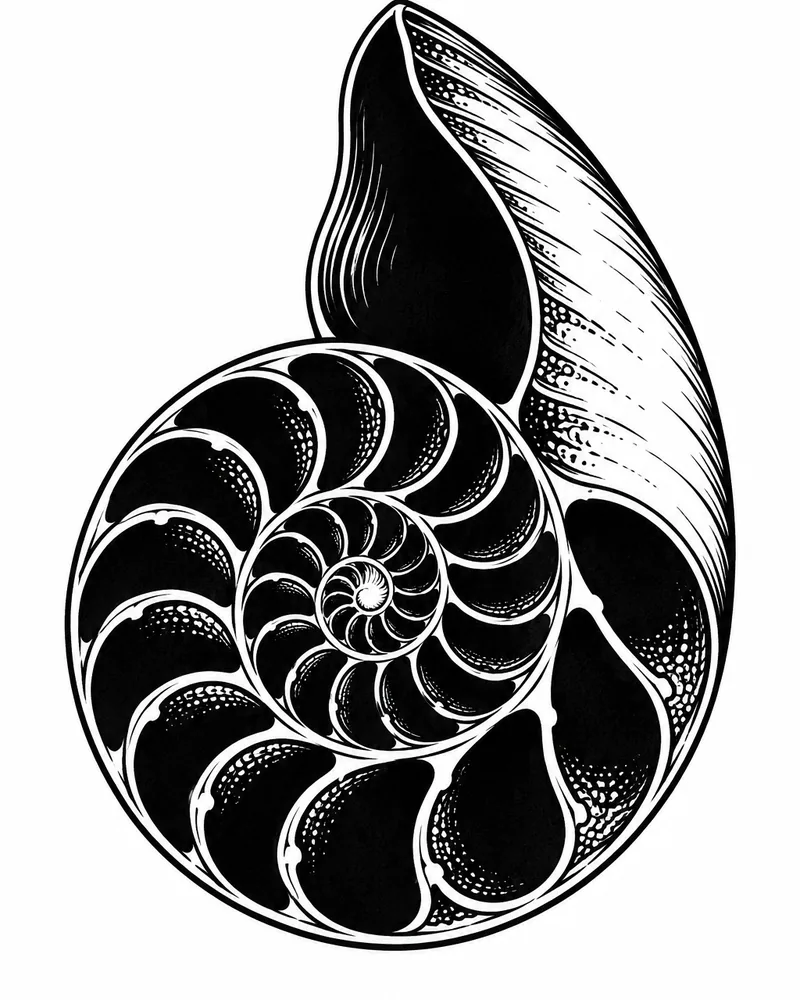
a nautilus shell cut in cross-sectionBlackwork · calf Not quite it?
Describe your own blackwork tattoo
No. 01
What is a blackwork tattoo?
Blackwork is defined by its ink: everything is done in black, often in large, saturated areas. It covers a wide range – ornamental mandalas and patterns, bold silhouettes, woodcut-style illustration, geometric designs and full blackout sections – united by high contrast between ink and skin.
Black-only tattooing is as old as tattooing itself; many ancient and Indigenous traditions used soot- or carbon-based black. The modern blackwork label took shape in the late 20th century, as artists drew on tribal revival, ornamental pattern work, engraving and printmaking to create graphic designs that rely on contrast instead of color.
Blackwork overlaps with tribal, dotwork and geometric styles, and it’s a common choice for covering old tattoos, because dense black can hide most earlier ink.
No. 02
Key characteristics of blackwork tattoos
- Black ink only
- No color, and often no soft shading – the design depends entirely on contrast.
- Solid fills
- Large areas of saturated black, from bold silhouettes to full blackout sections.
- Negative space
- Open skin inside black areas creates the image, like flowers cut out of a black band.
- Ornamental patterns
- Mandalas, lace, filigree and repeating motifs drawn with precision.
- Graphic illustration
- Woodcut- and engraving-inspired linework that uses hatching instead of gradients.
- Bold silhouettes
- Animals, plants and objects reduced to striking black shapes.
No. 03
Popular blackwork tattoo ideas
Blackwork rewards bold silhouettes and patterns that use skin as a second color.
- Ornamental mandala
- A symmetrical mandala with solid black accents, centered on the forearm, back of the hand or upper back.
- Solid black raven
- A raven silhouette with minimal interior lines, striking at 4–6 inches on the forearm or calf.
- Blackout band with negative-space flowers
- A solid band around the forearm or calf with flowers left as bare skin; keep the cutouts large.
- Botanical silhouettes
- Ferns, leaves or wildflowers rendered as flat black shapes that follow a limb.
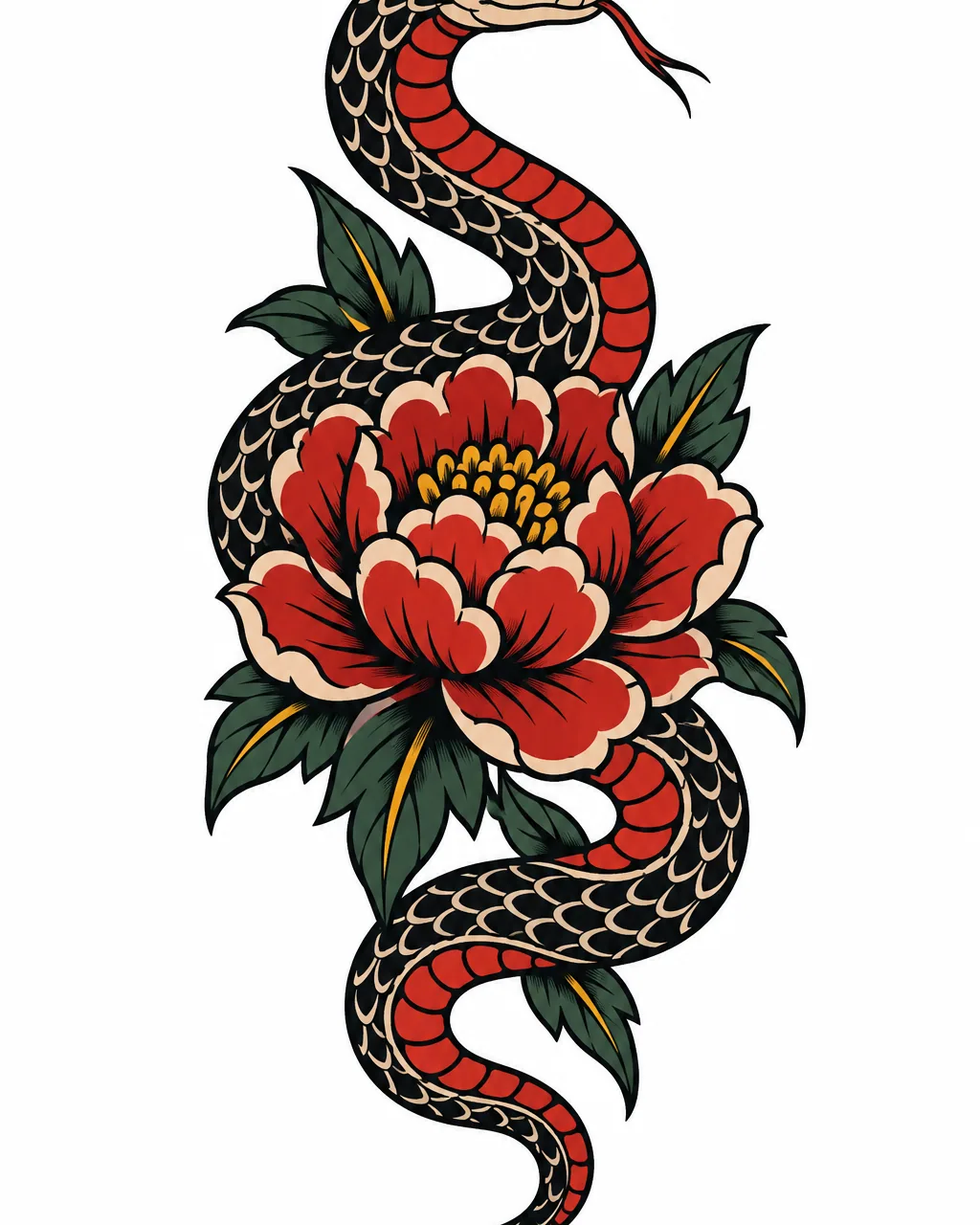
- Ornamental snake
- A snake with patterned scales and decorative details winding along the forearm or calf.
- Moth with patterned wings
- A symmetrical moth with geometric or lace-like wings, a natural fit for the back of the hand or upper back.
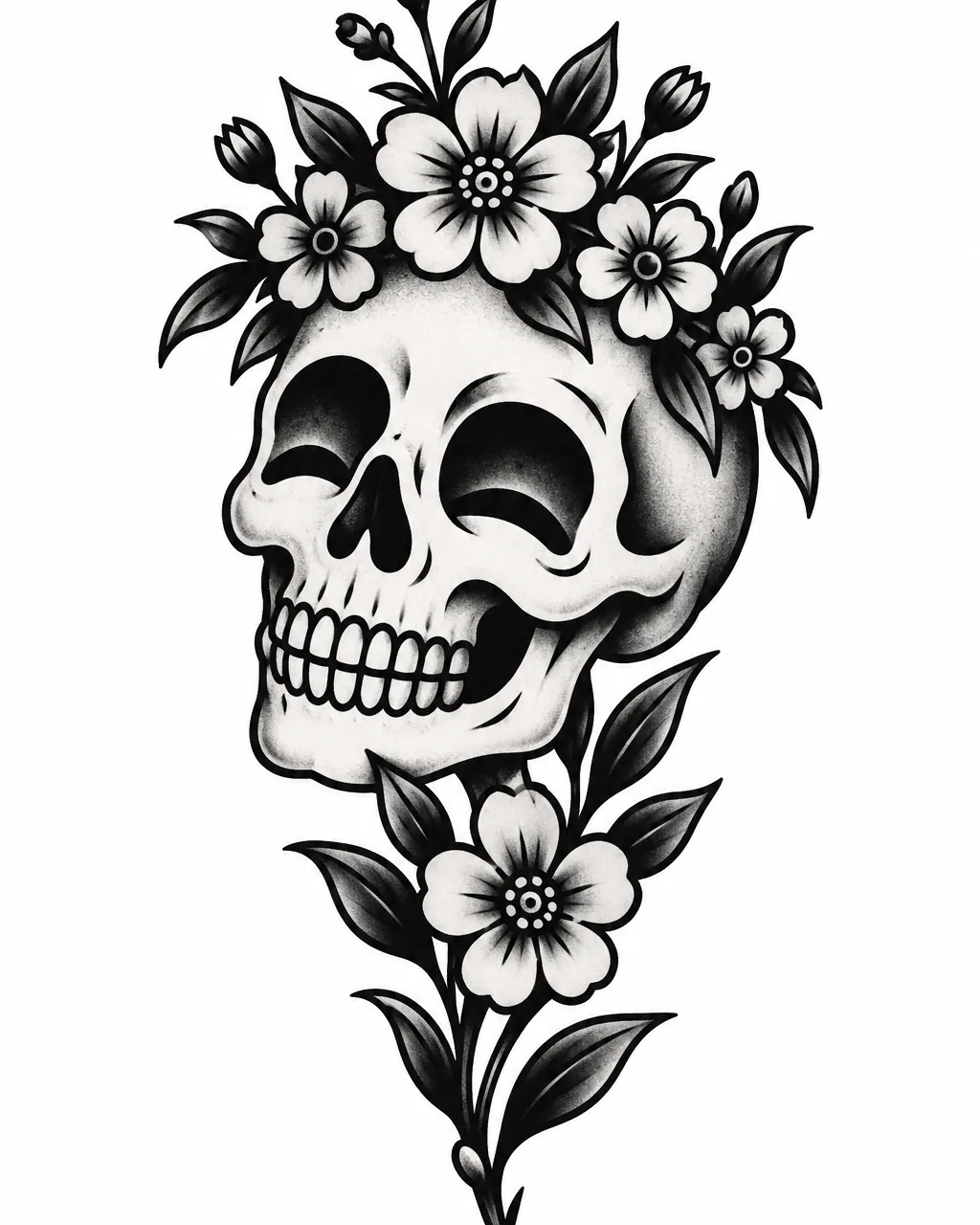
- Geometric skull
- A skull built from bold geometric shapes – graphic rather than grim.
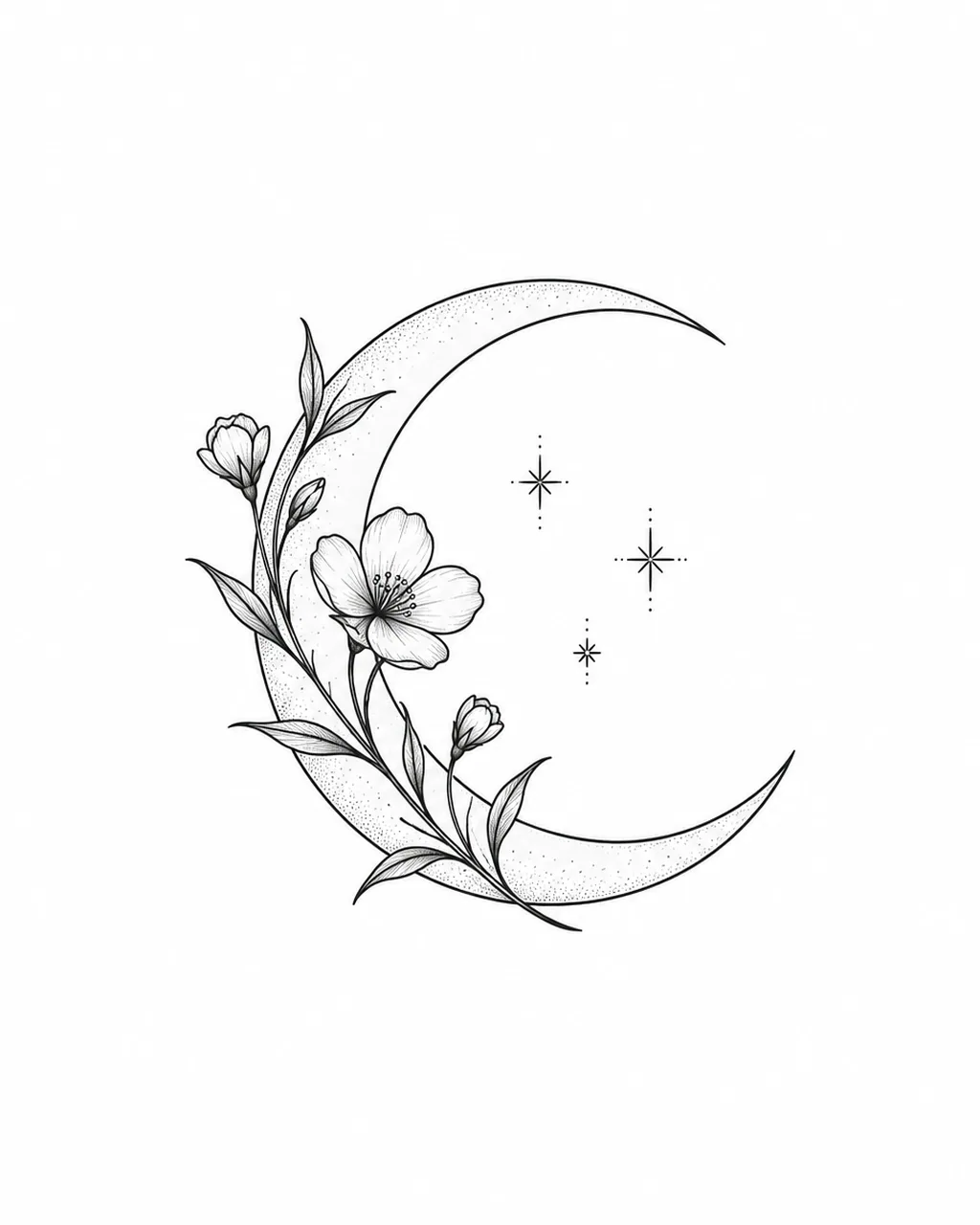
- Black moon
- A solid black full or crescent moon, sometimes with ornamental borders or stars.
No. 04
How blackwork tattoos age
Blackwork is one of the most durable styles. Black is the most stable tattoo pigment, and bold shapes stay readable for decades. Over many years black can soften slightly toward dark charcoal, but the design keeps its impact.
Two things need planning. Negative space narrows as ink spreads, so cutouts and gaps should be generous – fine details left in skin may disappear. Solid areas sometimes heal unevenly and need a touch-up pass to look smooth. And heavy black is hard to cover and can take many laser sessions to lighten, so treat large blackout work as a long-term commitment.
No. 05
Best placements and sizes for blackwork
Blackwork scales from small silhouettes to full sleeves, but patterns need room for their cutouts.
- Forearm
- Bands, mandalas and silhouettes at 3–7 inches, or a full wraparound band.
- Calf
- A strong spot for bands and vertical ornamental pieces at 5–8 inches.
- Upper arm
- Ornamental shoulder caps and bold silhouettes at 4–7 inches that can extend into a sleeve.
- Back
- Large symmetrical ornamental designs along the spine or across the shoulder blades.
- Hand
- Ornamental patterns on the back of the hand; hands fade faster, so keep shapes bold.
No. 06
Working with a blackwork artist
Solid black is harder to do well than it looks. In healed photos, look for even saturation without patchy spots, clean edges where black meets skin and negative-space details that are still crisp. For ornamental work, check the symmetry; for illustrative work, check the linework and hatching.
Bring references for the shapes and patterns you like and, for a cover-up, a clear photo of the existing tattoo. Ask how many sessions solid areas will need, how they plan negative space for aging and what aftercare they recommend for large black areas. The TattooMaker generator can help you explore blackwork concepts before your consultation.
FAQ
Blackwork style FAQ
Do blackwork tattoos hurt more?
Blackwork can feel more intense than linework because solid areas need repeated passes over the same skin, and sessions often run longer. Pain still depends mostly on placement – bony areas such as the ankle, shin or elbow tend to be sharper than the outer arm or calf – and on your own tolerance. Splitting large pieces into several sessions helps.
Can blackwork cover up an old tattoo?
Often, yes. Dense black can hide most older tattoos, including dark or colorful ones, which is why blackwork is a popular cover-up choice. The new design usually needs to be larger and darker than the original, and a heavily inked old tattoo may first need a few laser sessions to lighten it. Bring a clear photo to your consultation.
Does blackwork fade?
Black is the most stable tattoo pigment, so blackwork fades less than color or fine line work. Over many years, black can soften slightly toward dark charcoal and edges may spread a little, which can narrow thin gaps of skin. Generous negative space, sun protection and a touch-up for any patchy areas keep blackwork looking bold.
What is the difference between blackwork and black and grey?
Blackwork uses solid, saturated black and the contrast between ink and skin, with little or no soft shading. Black and grey uses diluted black to create smooth gradients, often for realistic portraits or soft illustrations. Both use only black ink, but blackwork looks graphic and bold, while black and grey looks soft and dimensional.
Can you tattoo over blackwork later?
Only in limited ways, because no ink can lighten solid black. White highlights or new linework can sometimes be added on top, but white tends to fade or blur. Laser can lighten blackwork, though dense black often takes many sessions. Plan blackwork as a long-term choice, and leave room for future additions if you think you’ll want them.
Design your own blackwork piece
Describe it in a sentence. Four original sketches in seconds — then turn the one you love into a stencil.