Style guide · 8 designs
American Traditional Tattoo Ideas & Guide
An American traditional tattoo – often just called a traditional or old school tattoo – uses heavy black outlines, a short palette of solid color and motifs that read from across a room. Here’s the style’s sailor-era history, its classic flash imagery, how it ages and how to plan one.
American Traditional tattoo designs
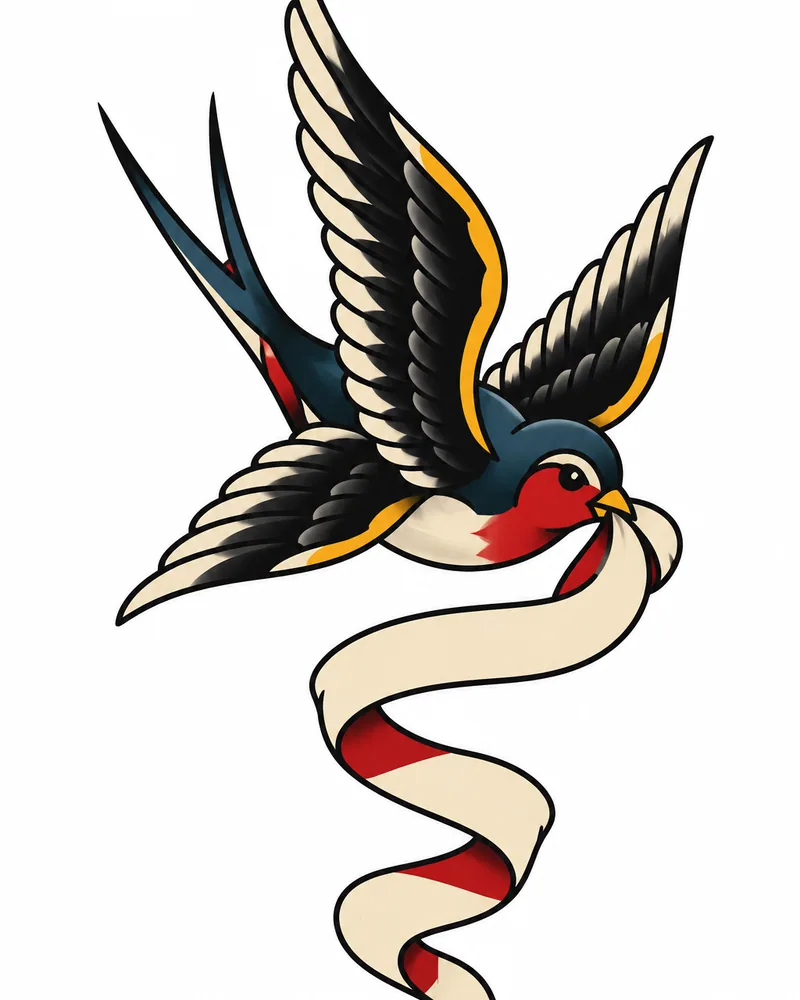
a classic swallow in flight carrying a plain curling ribbon in its beakTraditional · forearm 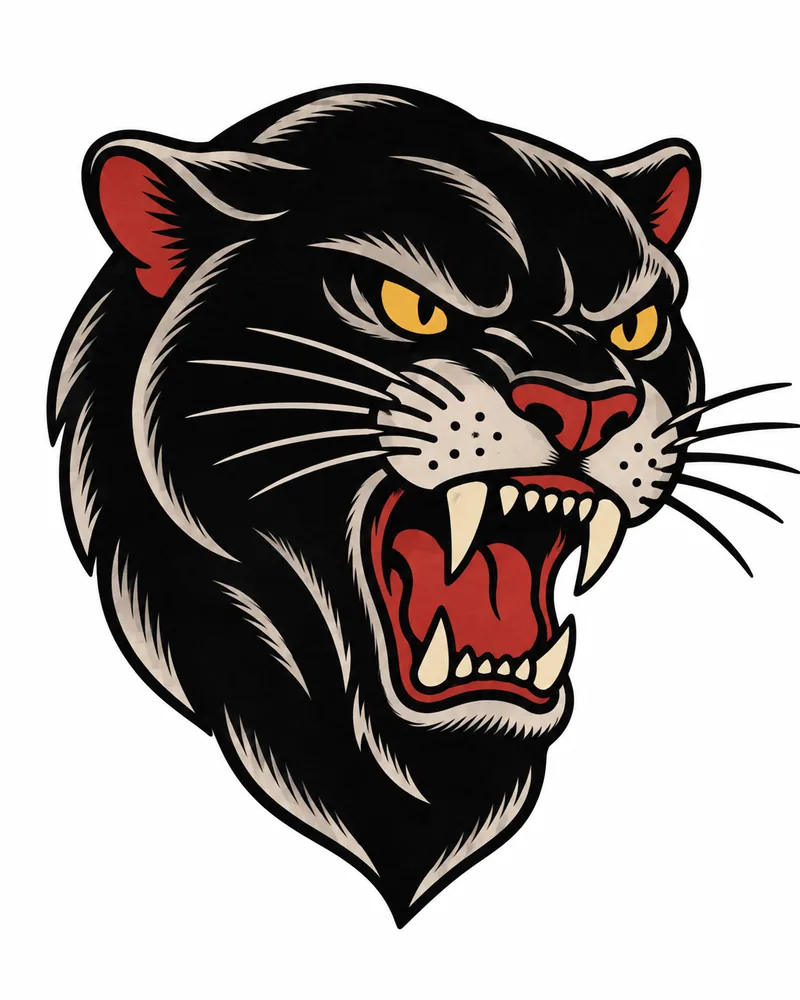
a black panther head roaring, red mouth, mustard eyes, bold whiskersTraditional · upper arm 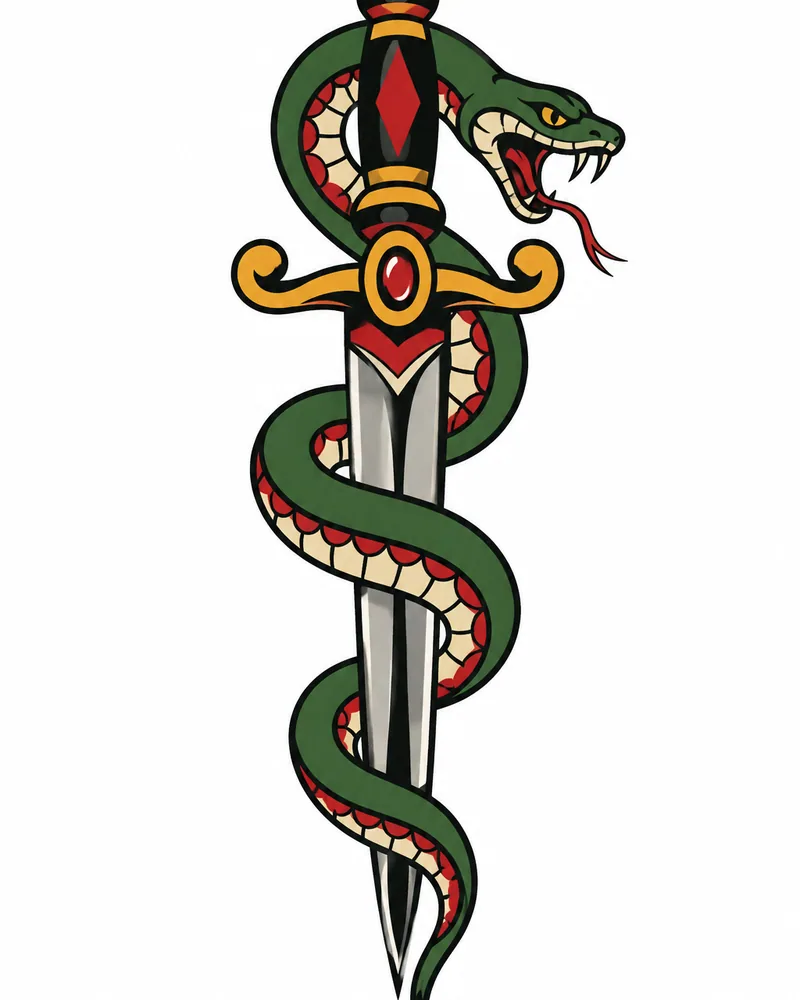
a dagger wrapped by a green snake, blade pointing down, no bloodTraditional · forearm 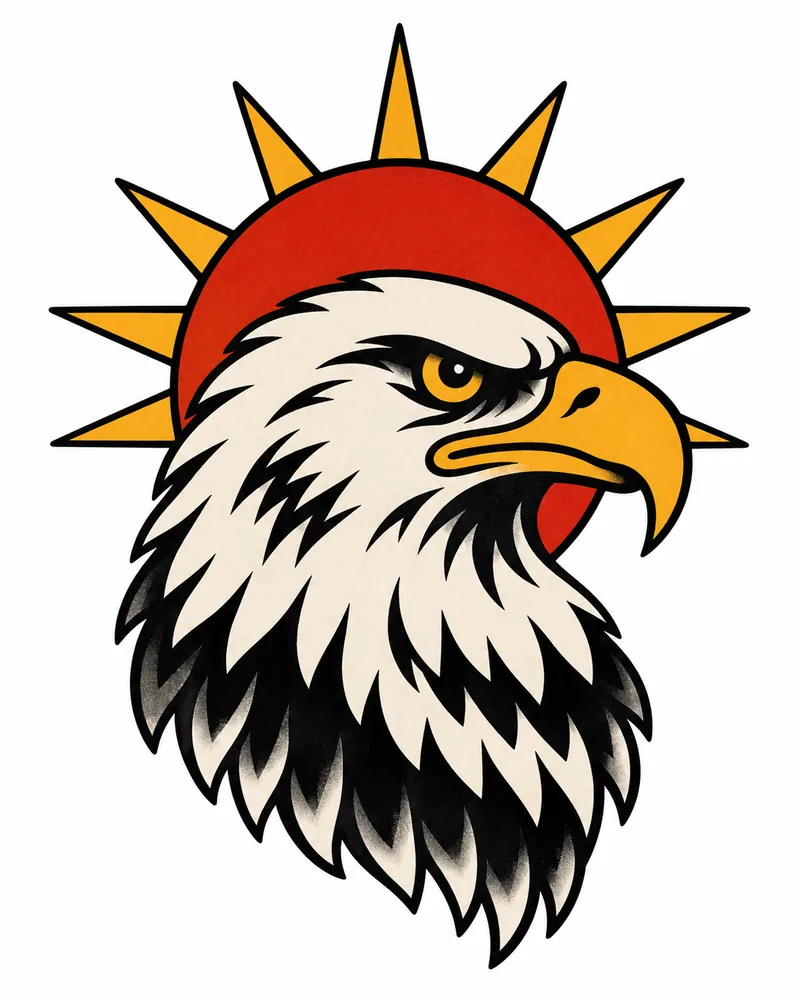
an eagle head in profile in front of a simple sun with straight raysTraditional · upper arm 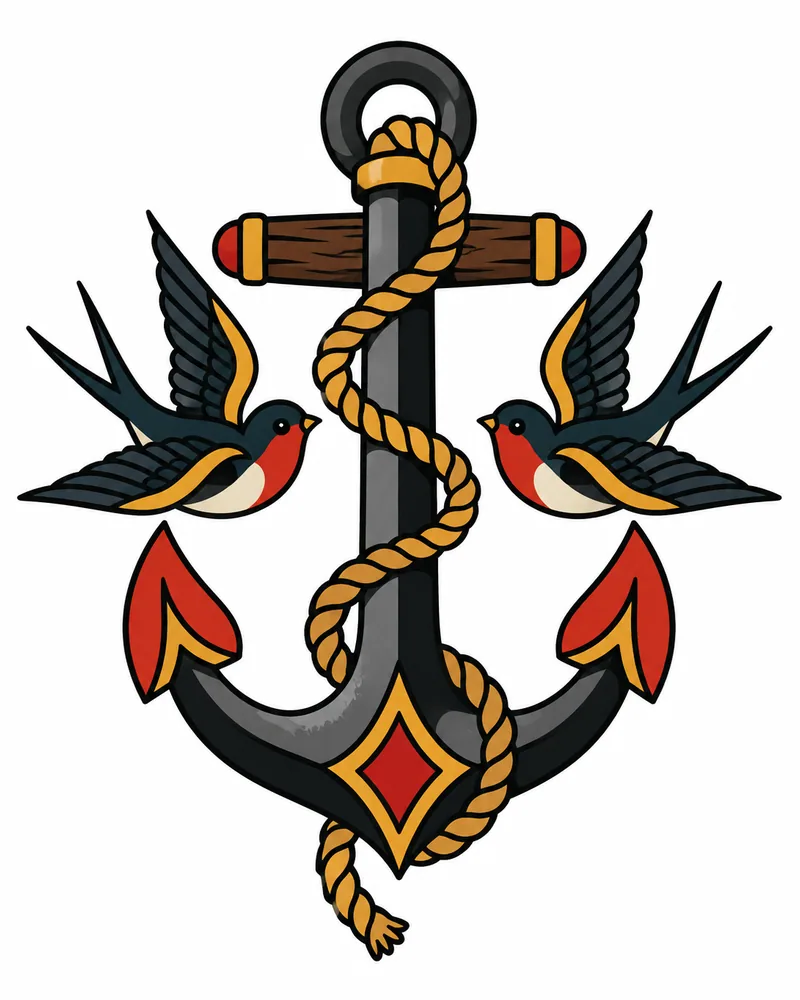
an anchor wrapped in rope with a pair of swallowsTraditional · calf 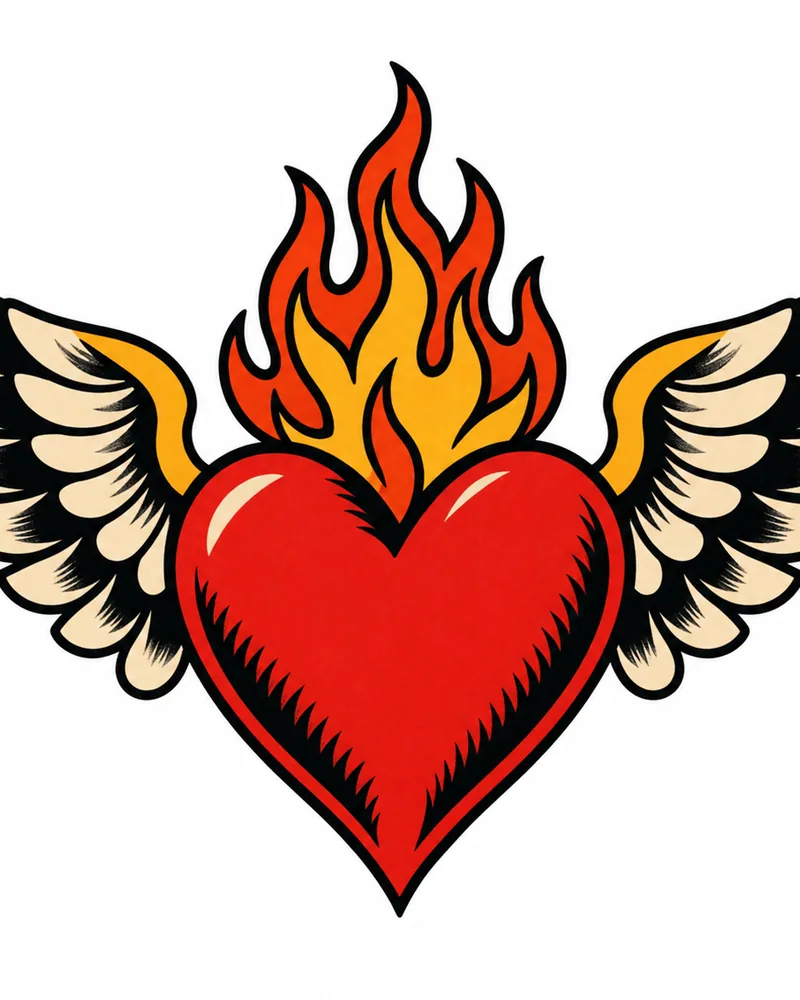
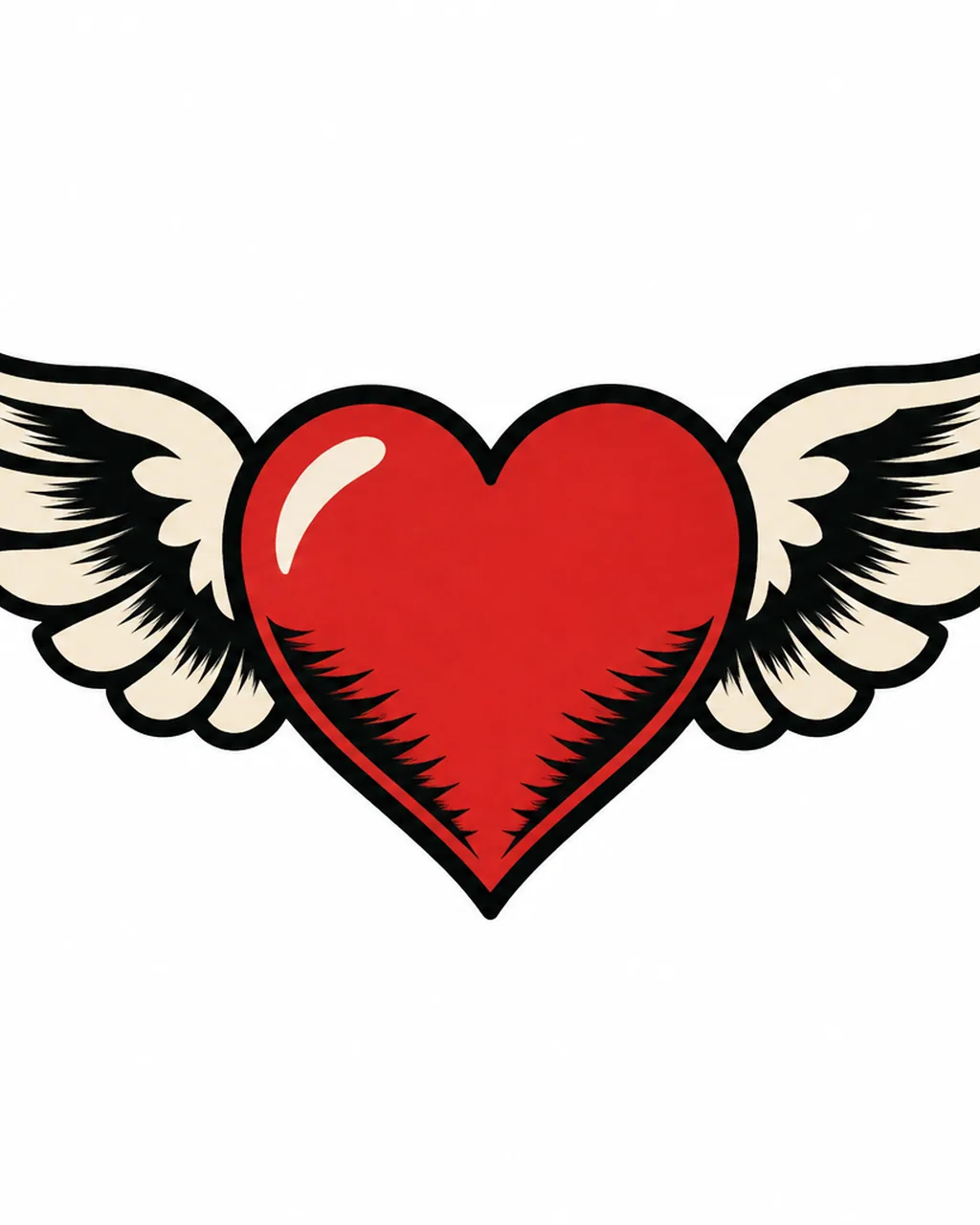
a flaming heart with small feathered wingsTraditional · hand 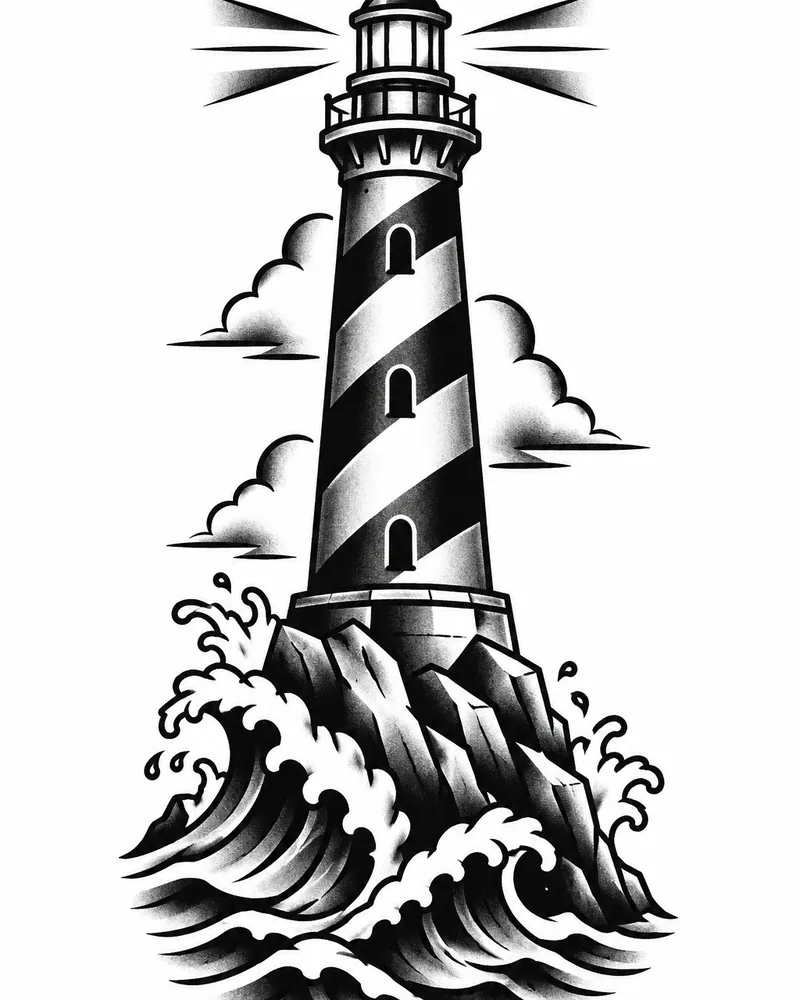
a lighthouse on a rocky shore with waves breaking at its baseTraditional · forearm 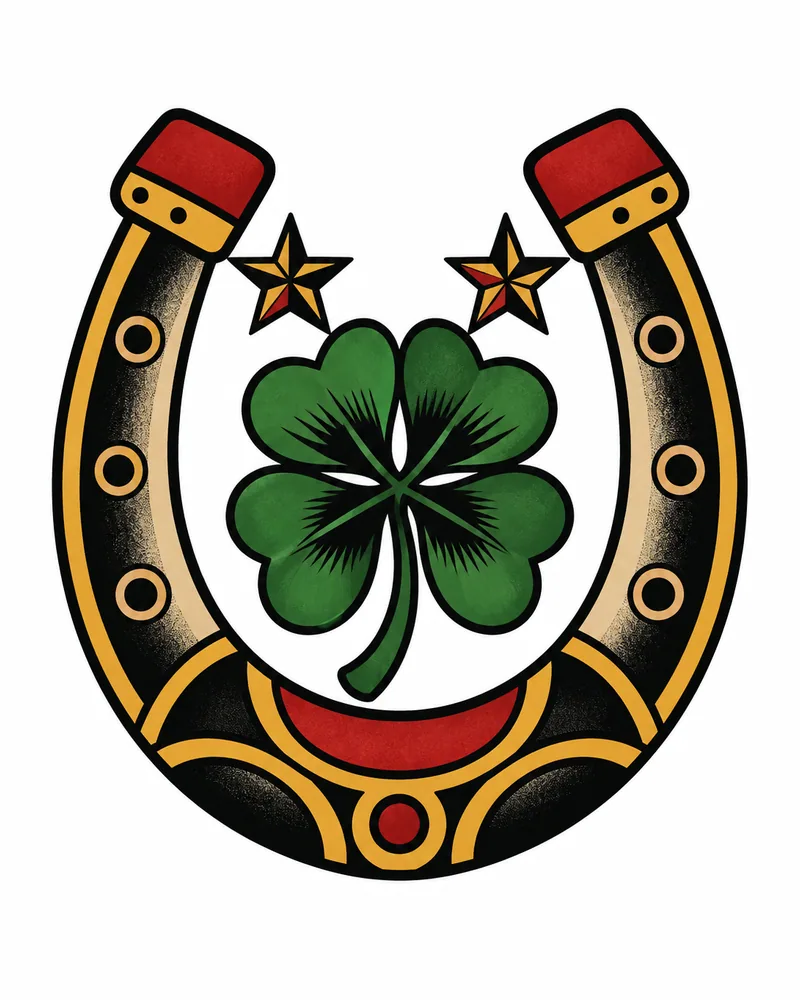
a horseshoe with a four-leaf clover and two small starsTraditional · calf Not quite it?
Describe your own american traditional tattoo
No. 01
What is an American traditional tattoo?
American traditional is the bold, flat-color style that took shape in American tattoo shops in the early 20th century, and it’s what most people mean by a traditional tattoo. Each design is a strong silhouette, outlined in heavy black and filled with a few saturated colors so it reads at a glance.
It grew up around sailors, soldiers and port-town street shops after the electric tattoo machine was patented in the US in 1891. Designs were painted as flash – sheets of ready-made images on the wall – and traded between shops. Norman “Sailor Jerry” Collins, who tattooed in Honolulu in the mid-20th century, refined the look and corresponded with Japanese masters, borrowing their ideas about composition.
- Heavy black outlines
- Thick, even lines define every shape and keep color in place as the tattoo ages.
- A limited palette
- Black, red, yellow and green, with brown, blue and a little purple as accents; bare skin is the fifth color.
- Solid color packing
- Color goes in flat and opaque, not blended, so each area reads as one clean field.
- Black shading
- Whip or pepper shading in black adds depth instead of soft gradients.
- Iconic motifs
- Swallows, eagles, roses and ships simplified to their most recognizable shapes.
- Banners and lettering
- Ribbon banners carry names or short words in bold script or block letters.
No. 02
Traditional vs old school vs neo-traditional
In Western shops, “traditional tattoo” and “old school tattoo” usually mean the same bold flash look. American traditional is its best-known branch; “old school” is heard more often in the UK and Europe, which have flash traditions of their own, and some people use it loosely for any vintage-looking design.
Traditional also has a wider meaning: Japanese irezumi, Polynesian tatau and Filipino batok are traditional within their own cultures, and many are far older than Western flash. Artists add a qualifier, such as “traditional Japanese,” when they mean one of those lineages.
Neo-traditional is the modern offshoot: the same bold outline, plus varied line weight, jewel tones, blends and ornament like frames and jewels. If you want a piece that looks lifted from a vintage flash sheet, ask for traditional.
No. 03
Popular American traditional tattoo ideas
Each classic motif has a common reading, but the meaning you give it is your own.
- Swallow with a banner
- Sailor lore links swallows to finding the way home; it works from about 2 inches up.
- Panther head
- A snarling black panther, a classic on the forearm or upper arm.
- Rose and dagger
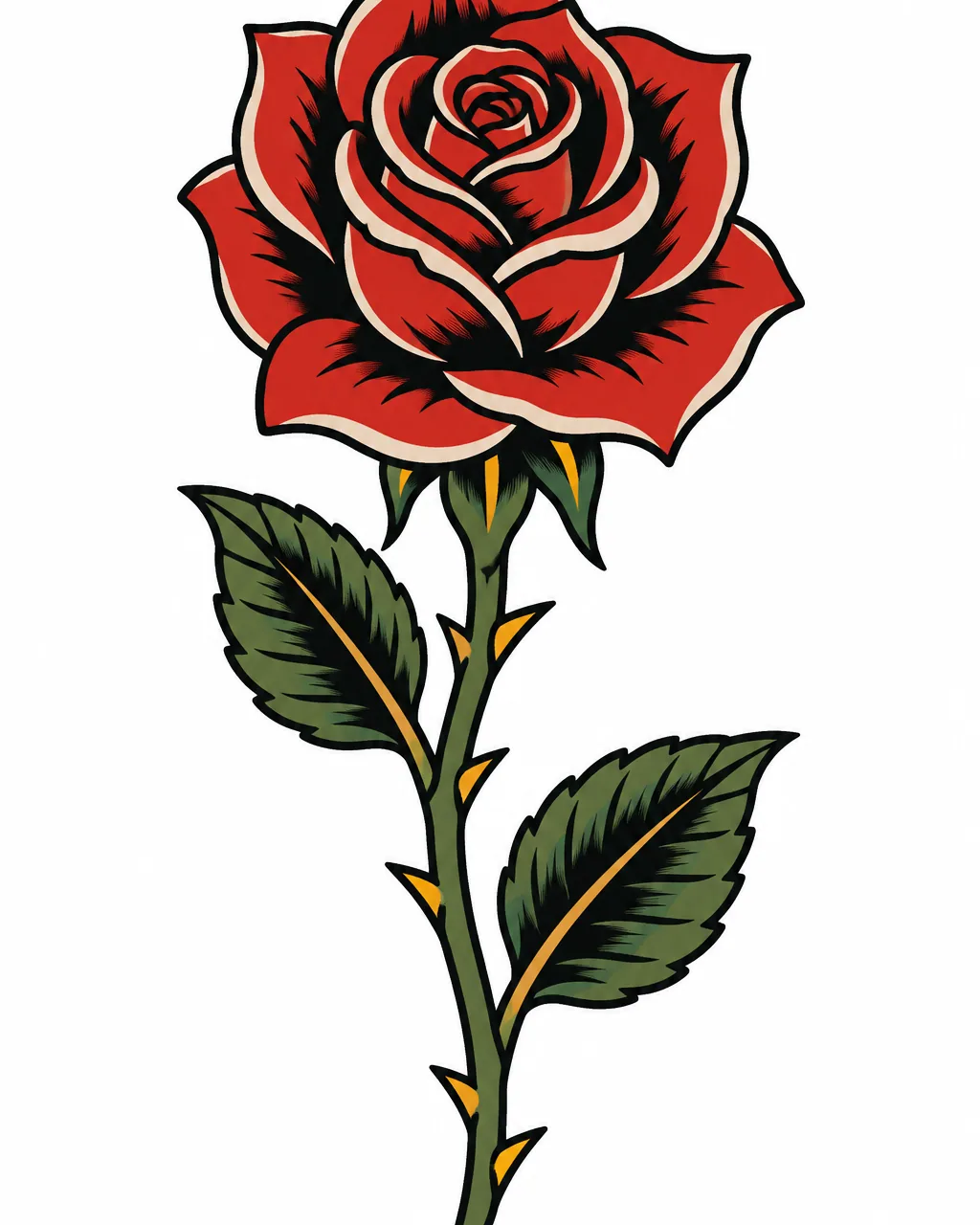
- A blade through a rose pairs beauty with danger; the vertical layout suits a forearm or calf.
- Eagle
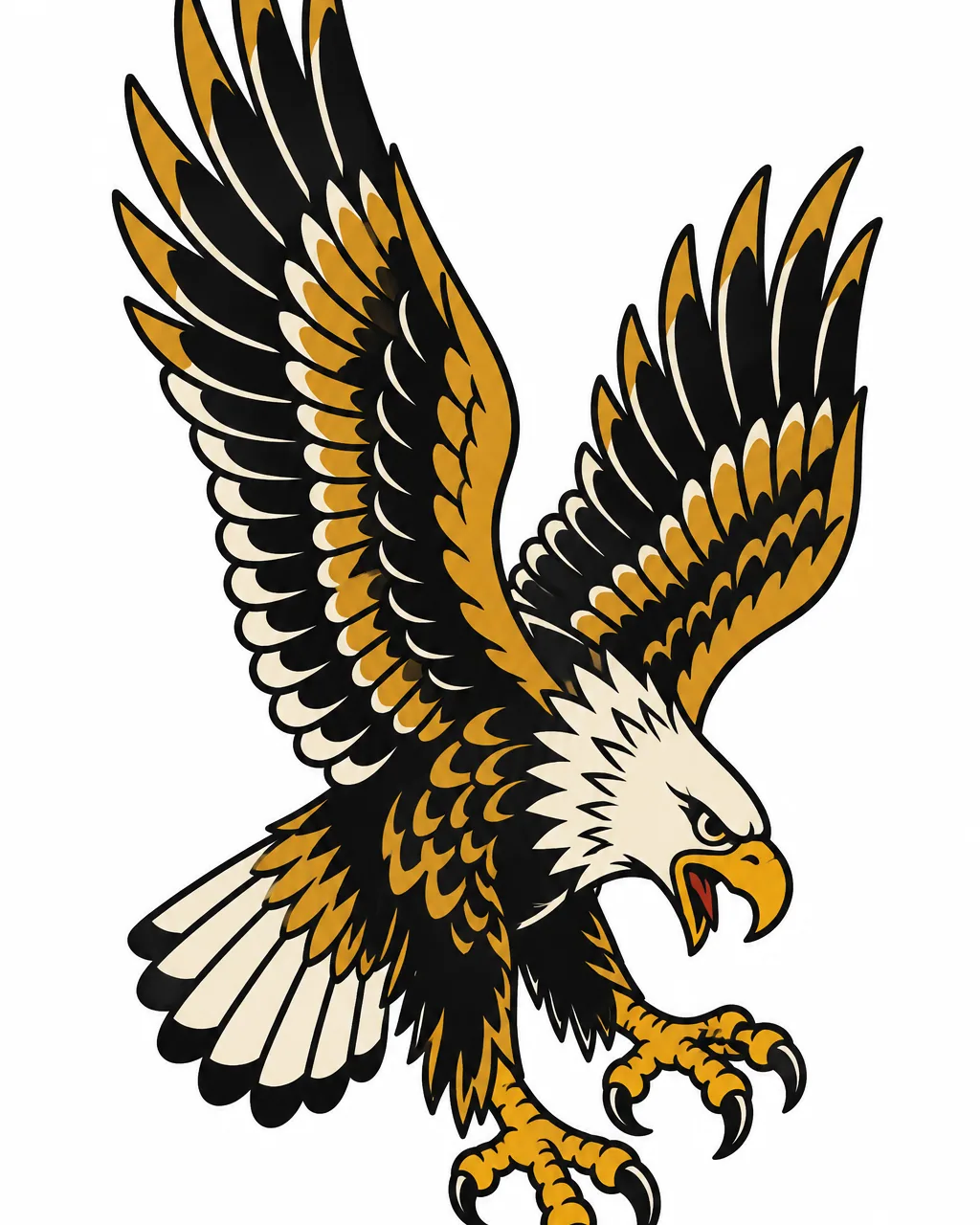
- Spread wings suit the chest or upper back; an eagle head fits the outer arm.
- Ship in a storm
- A full-sail ship on rolling waves; give it palm size or more so the rigging stays clear.
- Snake and skull
- A snake winding through a stylized skull – graphic, not grim – for a forearm or calf.
- Lucky dice
- Dice with flames or a horseshoe, a compact luck motif for a hand or wrist.
- Anchor with rope
- A nautical symbol of stability, often with a banner, and easy to scale down.
No. 04
How traditional tattoos age
Aging is the style’s biggest strength. Ink spreads slightly under the skin over the years, and heavy outlines with open spacing leave room for it, so a well-made swallow still reads clearly decades later – hence the tattooer’s saying “bold will hold.”
Color is what changes: yellow and other light colors fade first, especially in the sun, while black lasts longest. Expect a color refresh after many years, and use sunscreen on healed skin. The style mostly ages badly when shrunk too far, as gaps between thick lines fill in.
No. 05
Best placements and sizes for traditional tattoos
Most single flash designs look best at 3–6 inches; smaller, and the gaps between lines close up.
- Forearm
- The classic spot for a swallow, rose or dagger at 3–6 inches, with room to add more.
- Upper arm and shoulder
- Eagles, panthers and ships at 4–7 inches.
- Calf
- Daggers, snakes and other vertical designs at 5–8 inches.
- Chest
- A spread-wing eagle or two facing swallows, sized to the width of the chest.
- Hand
- Simple flash at 2–3 inches; hands fade faster, so expect touch-ups.
No. 06
Working with an American traditional tattoo artist
Look at healed work, not just fresh photos: smooth lines, solid color without patchy spots and designs that look as strong after healing as on day one. Many traditional artists paint their own flash, and choosing from it is a time-honored way to get a classic piece.
If you bring your own idea, bring a reference rather than a finished stencil and let the artist redraw it – a rough concept from the TattooMaker generator makes a good starting point. Ask how large it needs to be, whether they’d adjust the palette for your skin tone and how they handle touch-ups.
FAQ
American Traditional style FAQ
What is the difference between traditional and old school tattoos?
Usually there isn’t one. “Traditional,” “old school” and the shorthand “trad” all describe the bold-outline, limited-color flash style, and American traditional is its best-known form. “Old school” is heard more often in the UK and Europe, and some people use it loosely for any vintage-looking tattoo, so reference images are the clearest way to show your artist what you mean.
What colors are used in American traditional tattoos?
The core palette is black, red, yellow and green, with brown, blue and occasionally purple in supporting roles. Colors are packed in solid rather than blended, and areas of bare skin are left open as highlights – often called the fifth color. Many artists adjust tones slightly so the design reads well on the client’s skin.
What is the difference between American traditional and neo-traditional?
American traditional keeps outlines thick and even, color flat and motifs simple. Neo-traditional grew out of it but adds varied line weight, a wider palette with jewel tones, smoother blends and decorative details like frames and jewels. Both rely on bold outlines, so both age well, but neo-traditional pieces usually need more room for their extra detail.
Who was Sailor Jerry?
Norman “Sailor Jerry” Collins was an American tattooer who worked in Honolulu in the mid-20th century and is closely tied to the American traditional look. He was known for clean lines, saturated color and well-drawn flash, and he corresponded with tattoo masters in Japan, sharing techniques and designs. His flash is still widely referenced by traditional artists.
Do traditional tattoos fade?
All tattoos soften with time, but traditional tattoos age better than most styles. Heavy black outlines keep the shapes readable even as ink spreads slightly under the skin. Light colors such as yellow fade first, especially with sun exposure, so a color touch-up after many years is common. Daily sunscreen on healed tattoos keeps colors brighter for longer.
Can American traditional tattoos be small?
Yes, within limits. Simple motifs like a swallow, heart or anchor can work at around 2 inches, but thick outlines need breathing room, so detailed pieces like ships or eagles should be larger. If a design has to shrink, ask your artist to simplify it rather than squeeze in the same detail – that keeps it readable for years.
Design your own american traditional piece
Describe it in a sentence. Four original sketches in seconds — then turn the one you love into a stencil.