Style guide · 8 designs
Dotwork Tattoo Ideas & Guide
A dotwork tattoo builds its images from thousands of tiny dots, using their density to create shading, texture and soft gradients. Here’s how the technique works, where it comes from, the ideas that suit it, how it ages and what to know before a long stippling session.
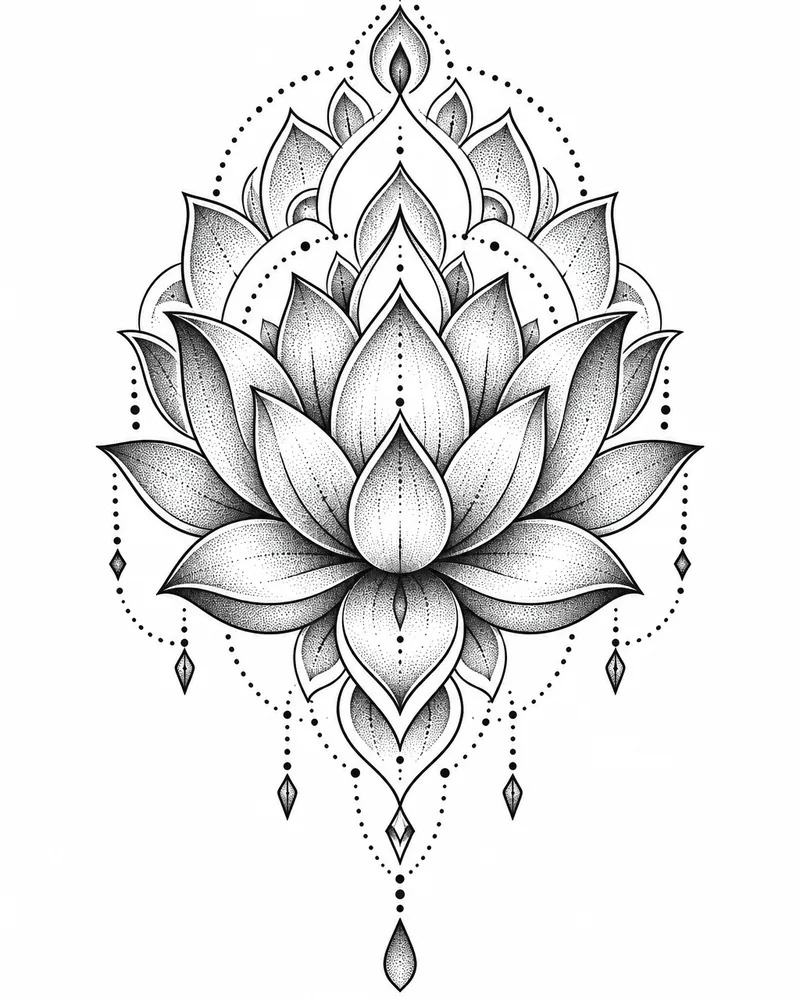
Dotwork tattoo designs
a mandala with layered lotus petalsDotwork · back 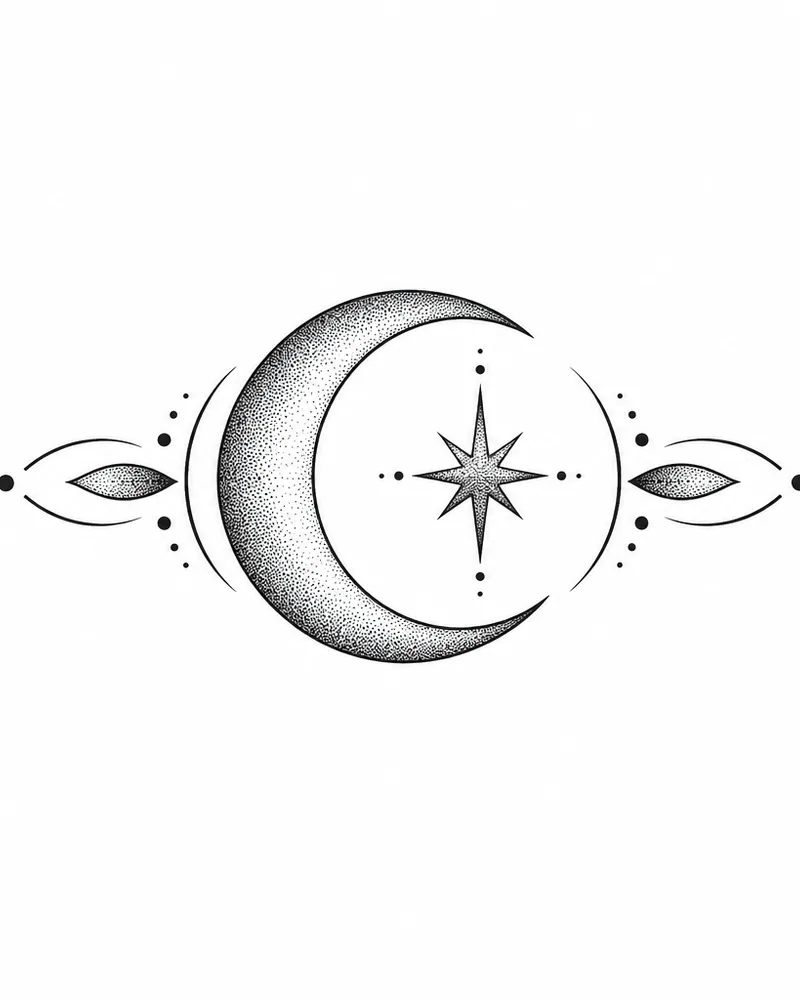
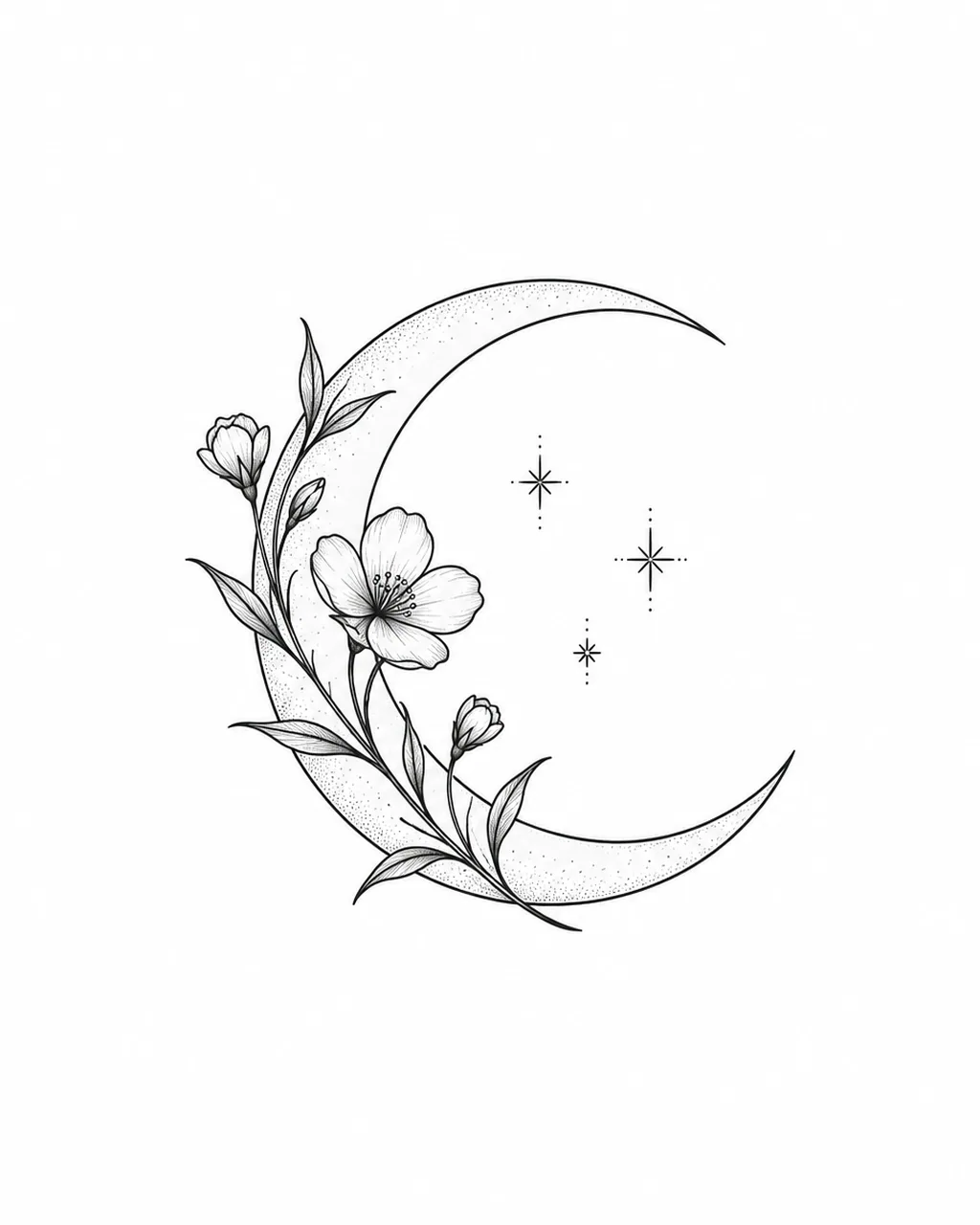
a crescent moon with a small starDotwork · ankle 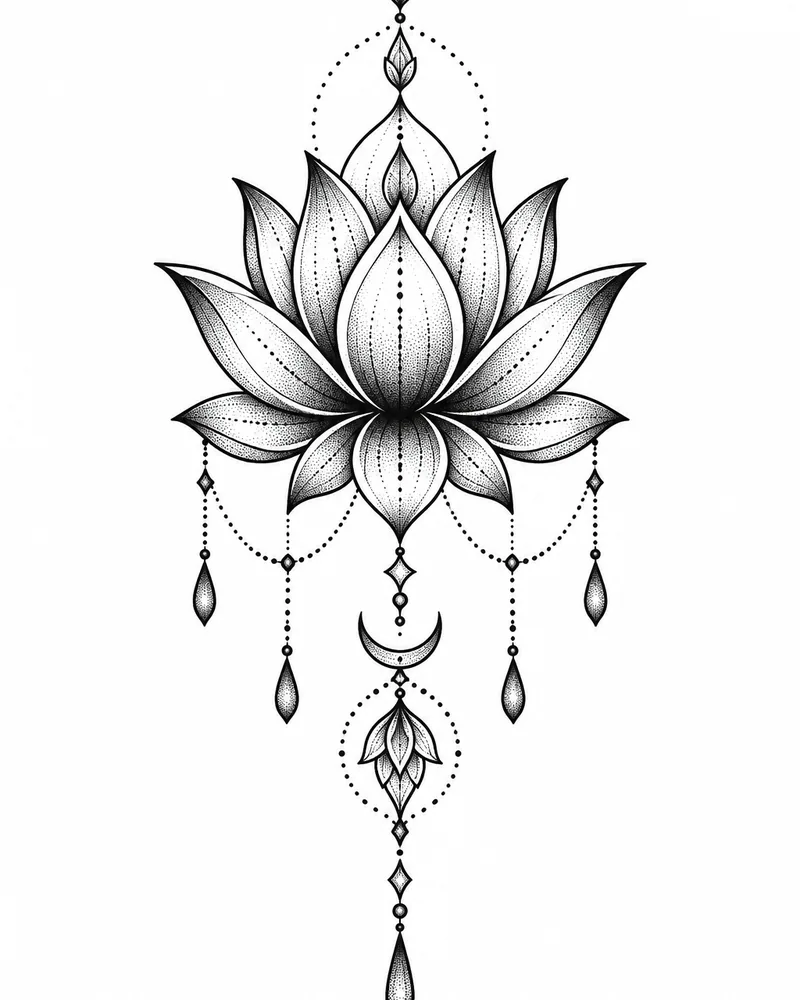
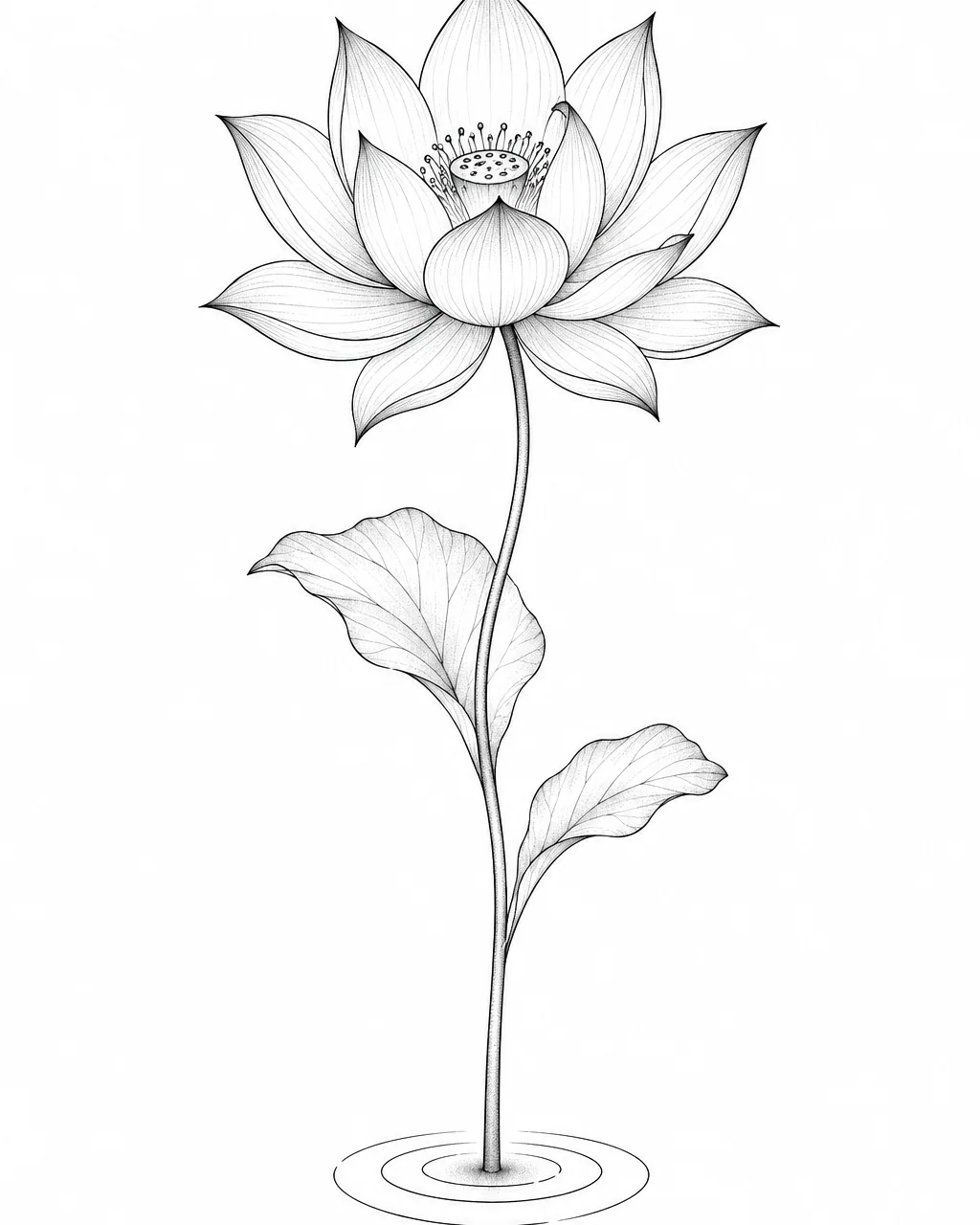
a lotus with hanging filigree dropsDotwork · forearm 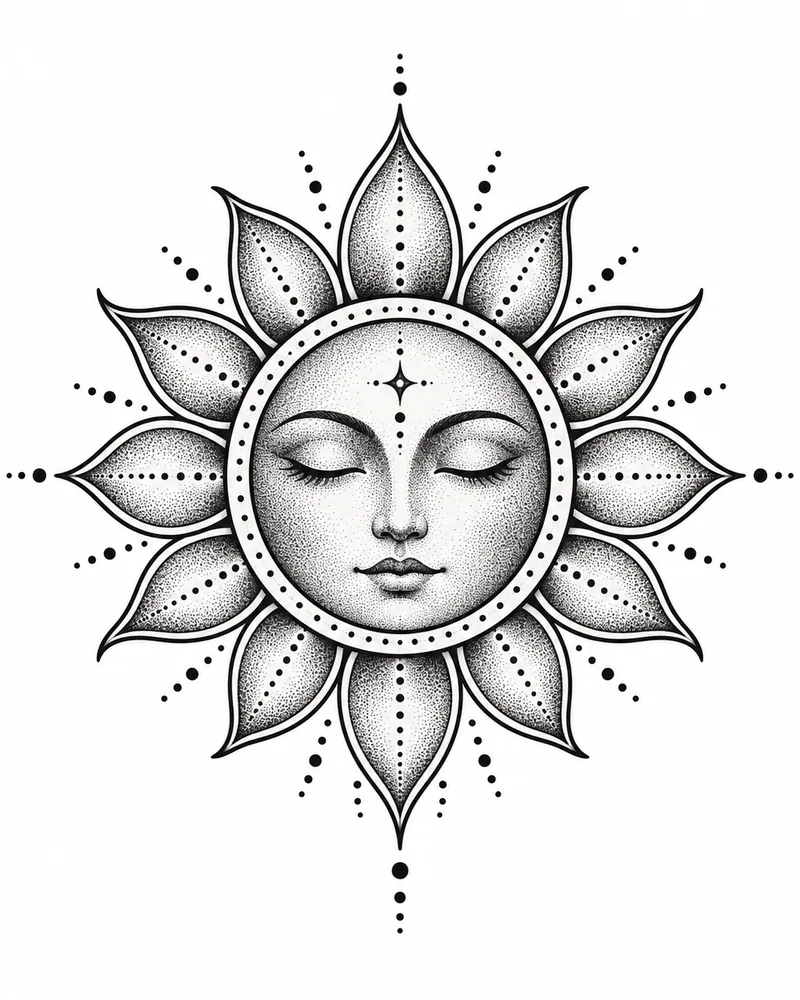
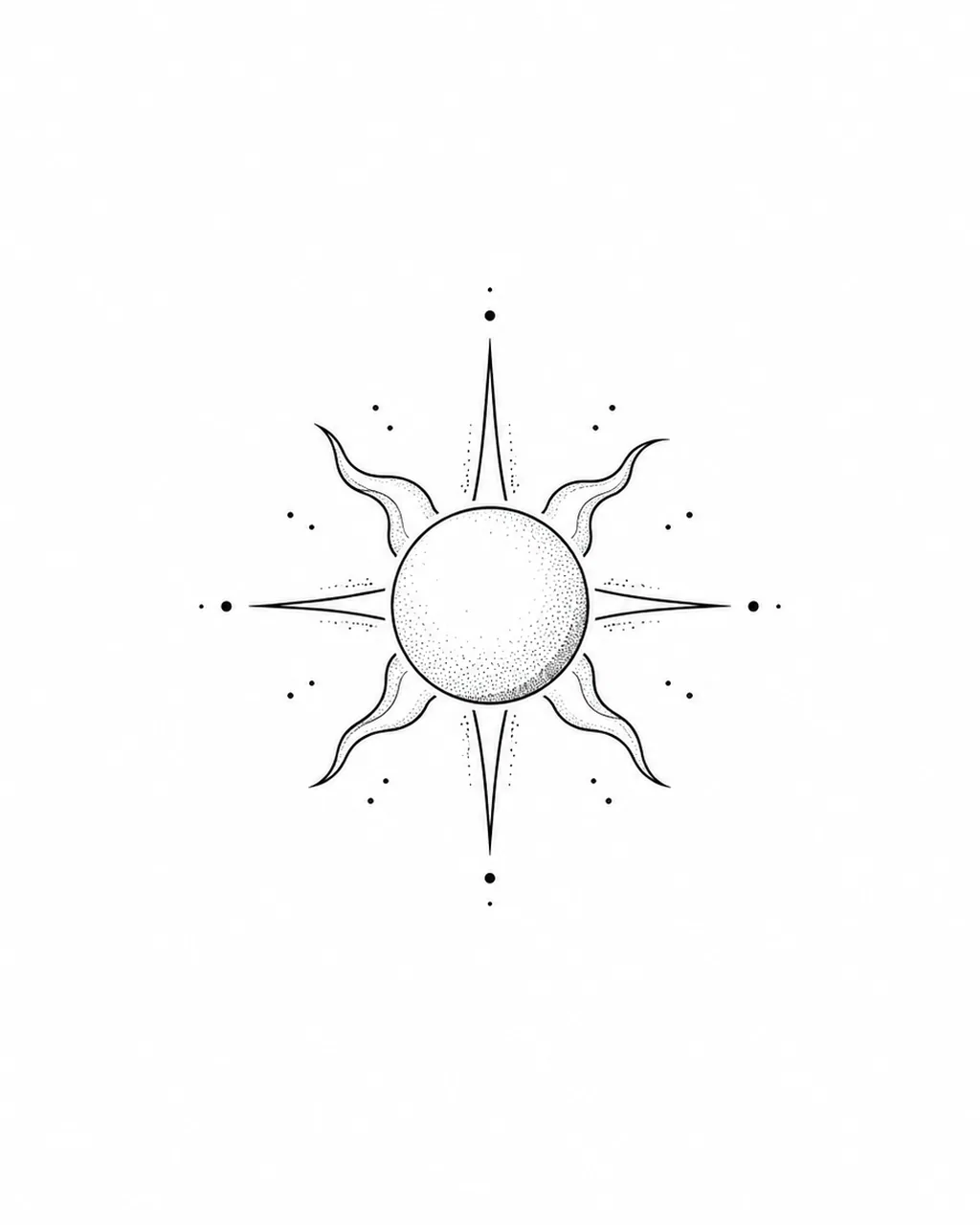
a sun with petal-shaped raysDotwork · upper arm 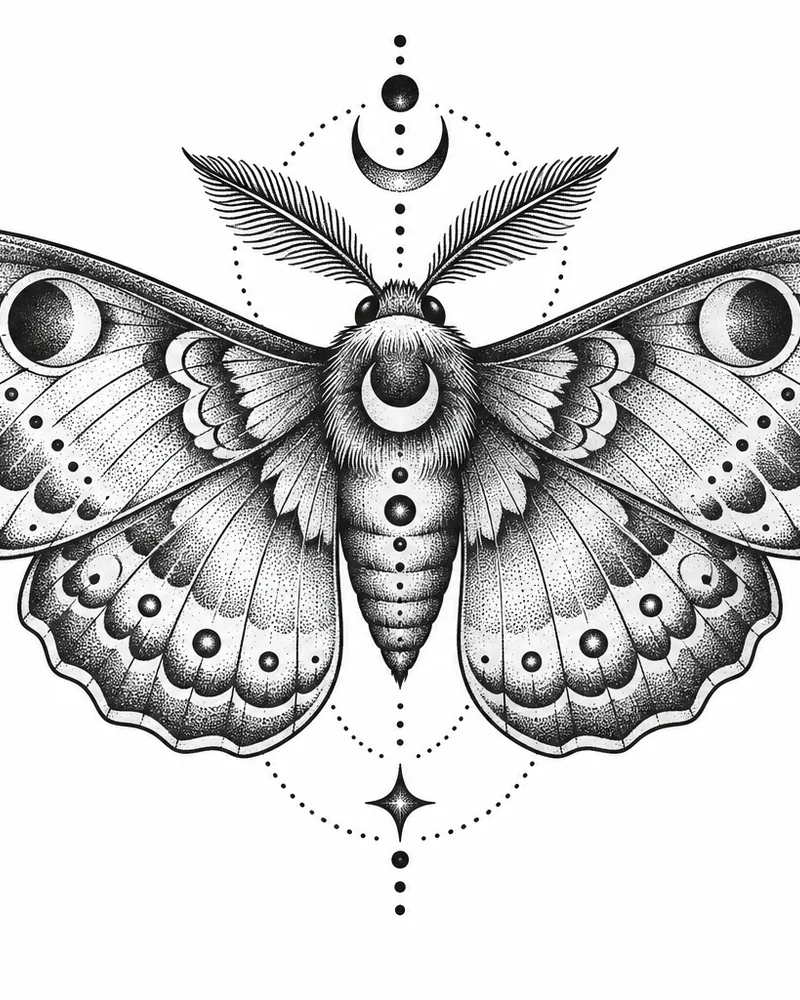
a moth with patterned wingsDotwork · chest 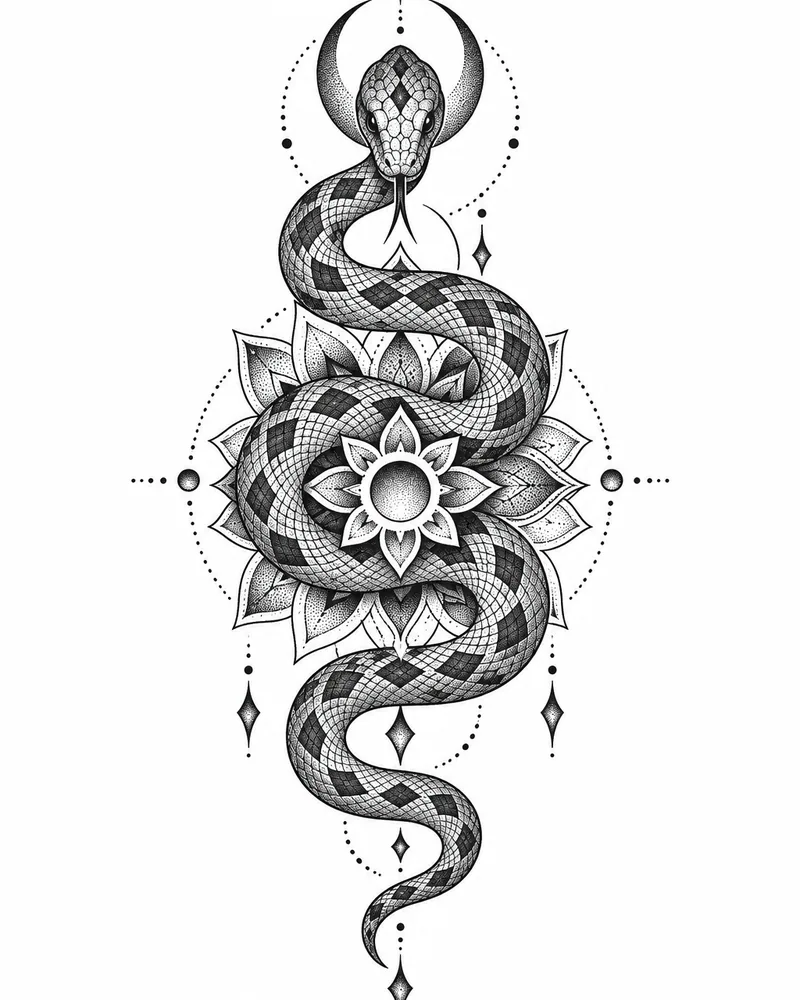
a snake with diamond-patterned scalesDotwork · calf 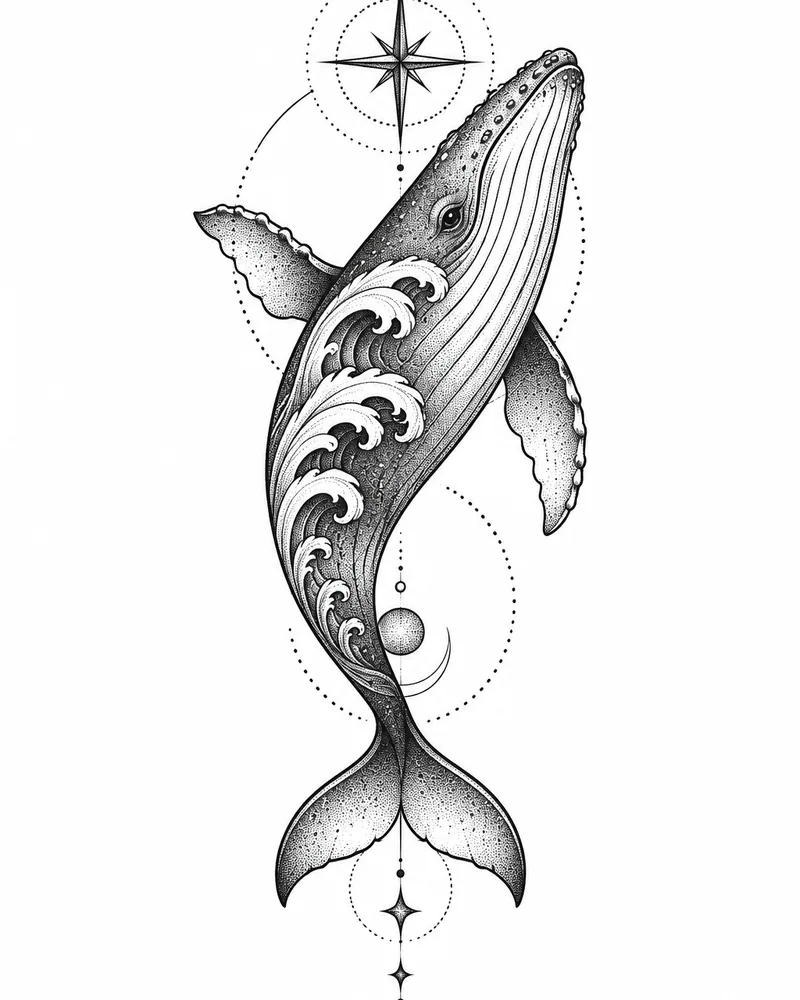
a whale with wave patterns along its bodyDotwork · forearm 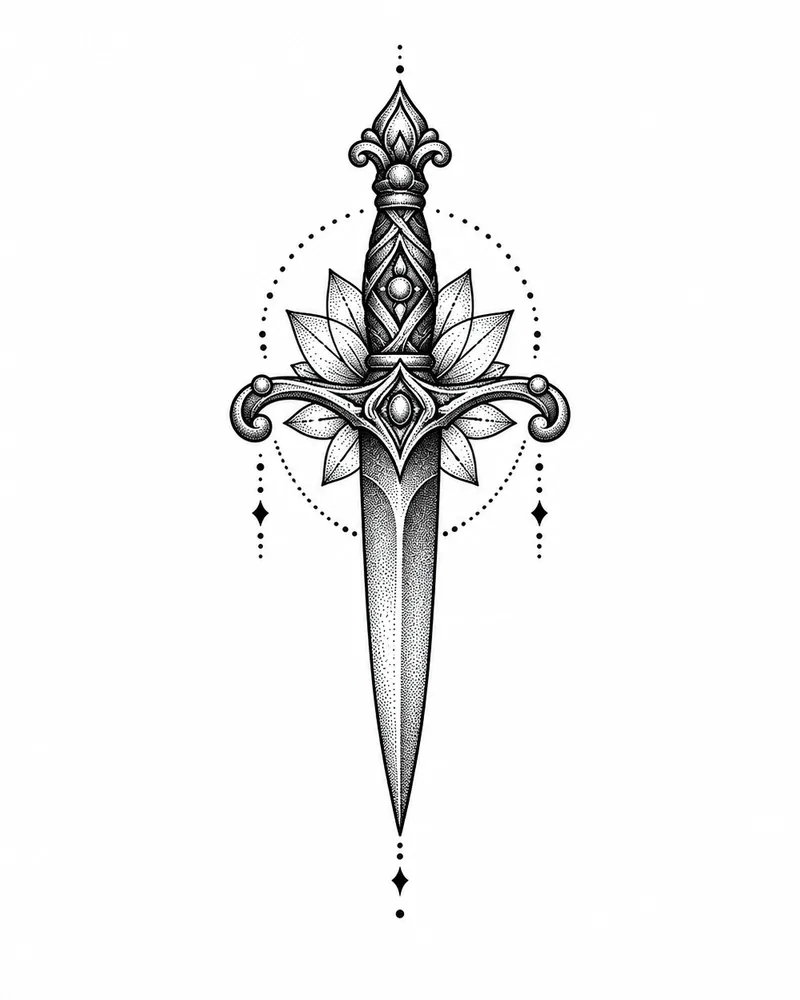
a dagger with a filigree hilt, blade pointing downDotwork · wrist Not quite it?
Describe your own dotwork tattoo
No. 01
What is a dotwork tattoo?
Dotwork is a shading technique turned into a style. Instead of solid fills or smooth washes, the artist places dots one by one – close together for dark areas, farther apart for light ones – so the image is built from texture. The result has a soft, grainy depth that looks like a print or engraving.
The technique echoes stippling in engraving and pen illustration, and placing ink dot by dot is also the basis of hand-poking, one of the oldest ways of tattooing. The modern dotwork style rose alongside blackwork and geometric tattooing, especially in mandalas, ornamental patterns and sacred geometry.
Dotwork can be done by machine or by hand. It often pairs with fine linework and can also shade illustrative subjects, such as a stippled moon or skull.
No. 02
Key characteristics of dotwork tattoos
- Stippled shading
- Gradients come from dot density rather than diluted ink or solid fill.
- Soft texture
- A grainy, print-like finish that feels lighter than solid black.
- Ornamental and geometric patterns
- Mandalas, sacred geometry and decorative bands are the style’s core.
- Mostly black
- Black ink dominates, sometimes with red as a single accent.
- Linework structure
- Fine or bold lines frame the dot gradients and keep shapes crisp.
- A patient process
- Building gradients dot by dot takes time, so sessions can be long.
No. 03
Popular dotwork tattoo ideas
Dotwork suits subjects with soft light or symmetrical structure.
- Dotwork mandala
- A layered mandala with dot gradients between rings, centered on the forearm, upper back or a shoulder cap.
- Stippled moon
- A full or crescent moon with craters shaded entirely in dots – one of the most natural subjects for the technique.
- Dotwork lotus
- A symmetrical lotus with stippled petals, often on a dotted mandala base.
- Stippled skull
- A skull with engraving-style dot shading, graphic and clean rather than grim.
- Dotwork sun
- A radiant sun with stippled rays fading into skin, compact enough for an ankle or forearm.
- Ornamental band
- A wraparound band of repeating motifs with dot shading, for the forearm, calf or upper arm.
- Stippled moth
- A symmetrical moth with dot-shaded wings, centered on the upper back or calf.
- Geometric pattern
- Sacred geometry with dot gradients that add depth to clean lines.
No. 04
How dotwork tattoos age
Dotwork tends to age gracefully. As the years pass, individual dots spread slightly and blend, so gradients often look smoother over time rather than worse. Dense areas hold their darkness well, especially in black.
The weak spots are very light gradients and tiny details. Sparse dot fields can fade until the shading looks patchy, and dots packed into a small design can merge into a smudge. Choose a medium or larger size, keep strong dark areas in the composition, protect the tattoo from the sun and plan a touch-up to rebuild light gradients if needed.
No. 05
Best placements and sizes for dotwork
Dotwork needs space for its gradients, and centered designs benefit from a natural axis.
- Forearm
- Mandalas, bands and moons at 3–6 inches.
- Back
- Large symmetrical mandalas or ornamental pieces along the spine or across the upper back.
- Calf
- Vertical ornamental pieces and bands at 5–8 inches.
- Upper arm
- Shoulder caps and mandalas at 4–7 inches that can flow into a sleeve.
- Ankle
- Small suns or bands at 2–3 inches; keep the dots dense enough to last.
No. 06
Working with a dotwork artist
In healed photos, look for gradients that transition smoothly without blotchy patches, dots placed evenly rather than scattered and linework that stays crisp beside the stippling. Ask for healed pieces at least a year old if possible, since dotwork changes as it settles.
Bring references for patterns and the level of darkness you like – stippling can range from airy to nearly solid. Ask how long the piece will take, whether they work by machine or by hand and how they plan contrast for aging. The TattooMaker generator can help you test a few dotwork compositions before your consultation.
FAQ
Dotwork style FAQ
Do dotwork tattoos fade?
Dotwork fades about as much as other black tattoos, though light, sparse gradients soften first. Over time, dots spread slightly and blend, which often makes shading look smoother. Designs with strong dark areas and a medium or larger size age best. Sunscreen and an occasional touch-up keep light gradients from looking patchy.
Does dotwork take longer than other styles?
Often, yes. Building gradients one dot at a time is slower than whip or smooth shading, so dotwork sessions can run longer and larger pieces may need several sittings. The time depends on size, how dense the stippling is and the artist’s method. Ask for a session estimate during your consultation.
Is dotwork the same as stippling?
Stippling is the technique of shading with dots, used in drawing and engraving long before tattooing. Dotwork is the tattoo style built on that technique, often combined with linework, mandalas and geometry. Most dotwork tattoos use stippling for shading, but stippled shading also appears in other styles, such as black and grey illustration.
What is the difference between dotwork and geometric tattoos?
Geometric tattoos are defined by shapes and lines – symmetry, polygons and sacred geometry. Dotwork is defined by its shading technique – images built from dots. The two are often combined, with dot gradients filling clean geometric frameworks, but a dotwork moon may contain no geometry at all, and a geometric band may contain no dots.
Is dotwork good for small tattoos?
Dotwork works best at medium size and up, because gradients need room for dot density to change. Small designs of an inch or two can work if they’re simple and use dense dots, such as a tiny stippled moon or sun. Very small, detailed dotwork tends to blur into a smudge over time, so size up when you can.
Design your own dotwork piece
Describe it in a sentence. Four original sketches in seconds — then turn the one you love into a stencil.