Style guide · 8 designs
Japanese Tattoo Ideas & Guide
A Japanese tattoo, or irezumi, is a bold, large-scale style built around dragons, koi, tigers and flowers set against waves, clouds and wind bars. This guide covers its Edo-period roots, its visual rules, the classic subjects and what to know before committing to a sleeve or back piece.
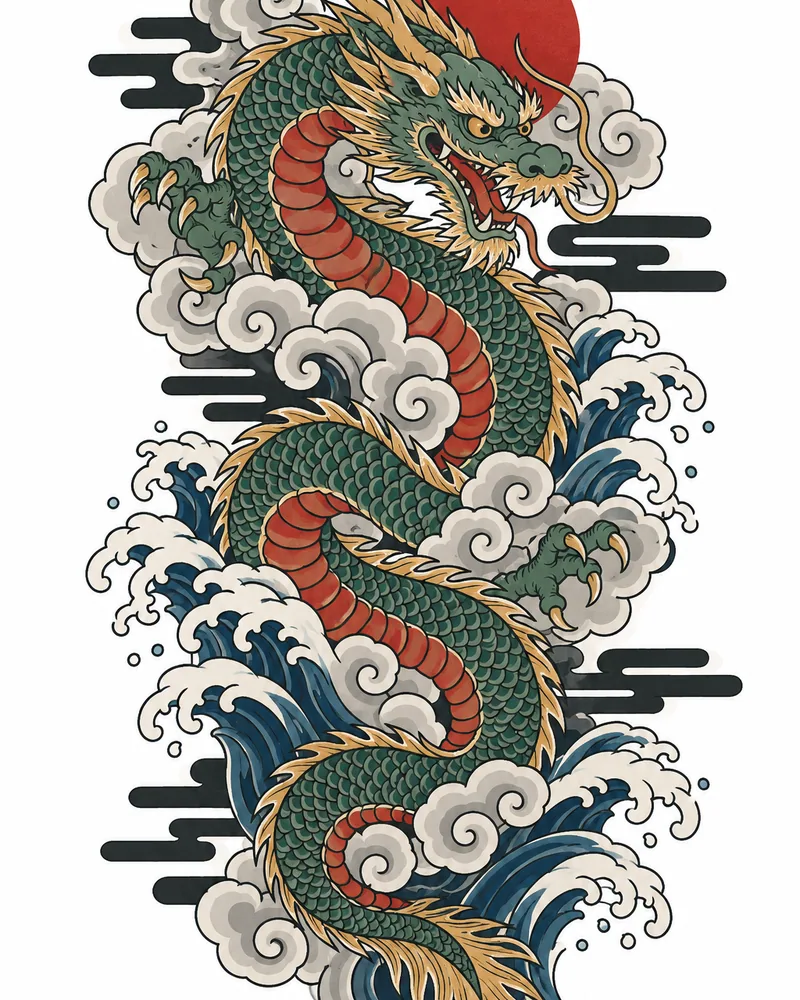
Japanese tattoo designs
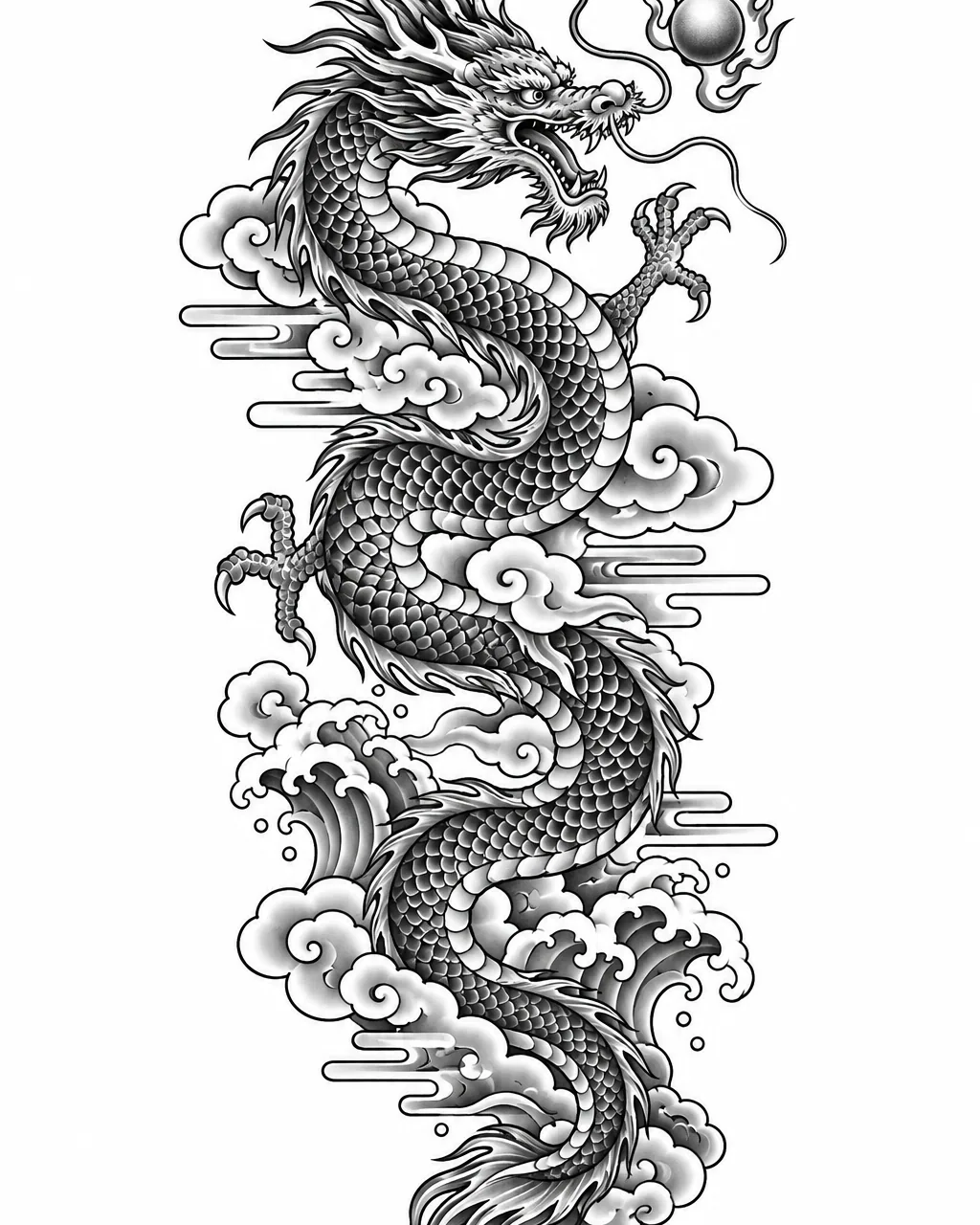
a dragon coiling through clouds and wavesJapanese · sleeve 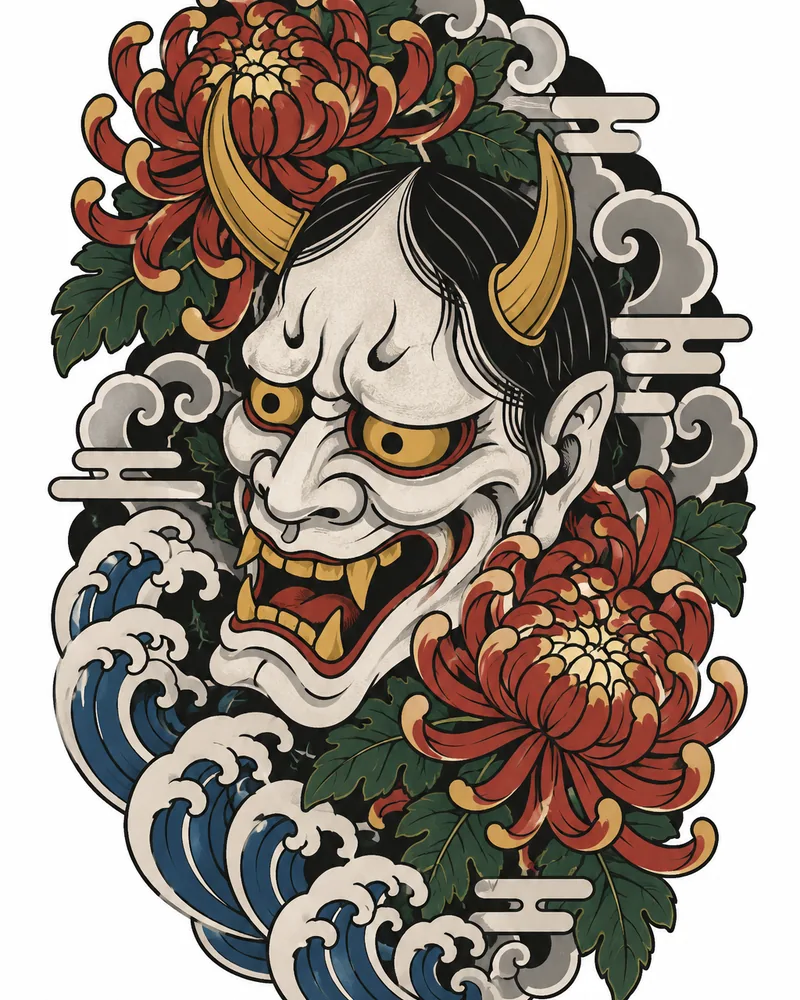
a hannya mask framed by chrysanthemumsJapanese · upper arm 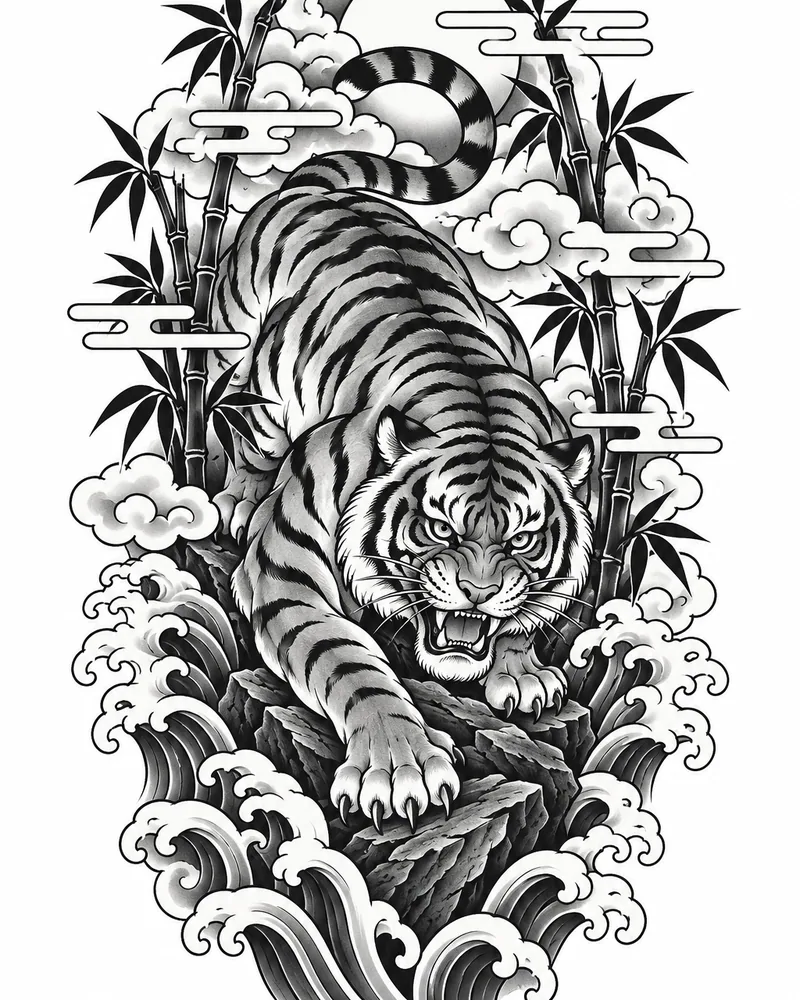
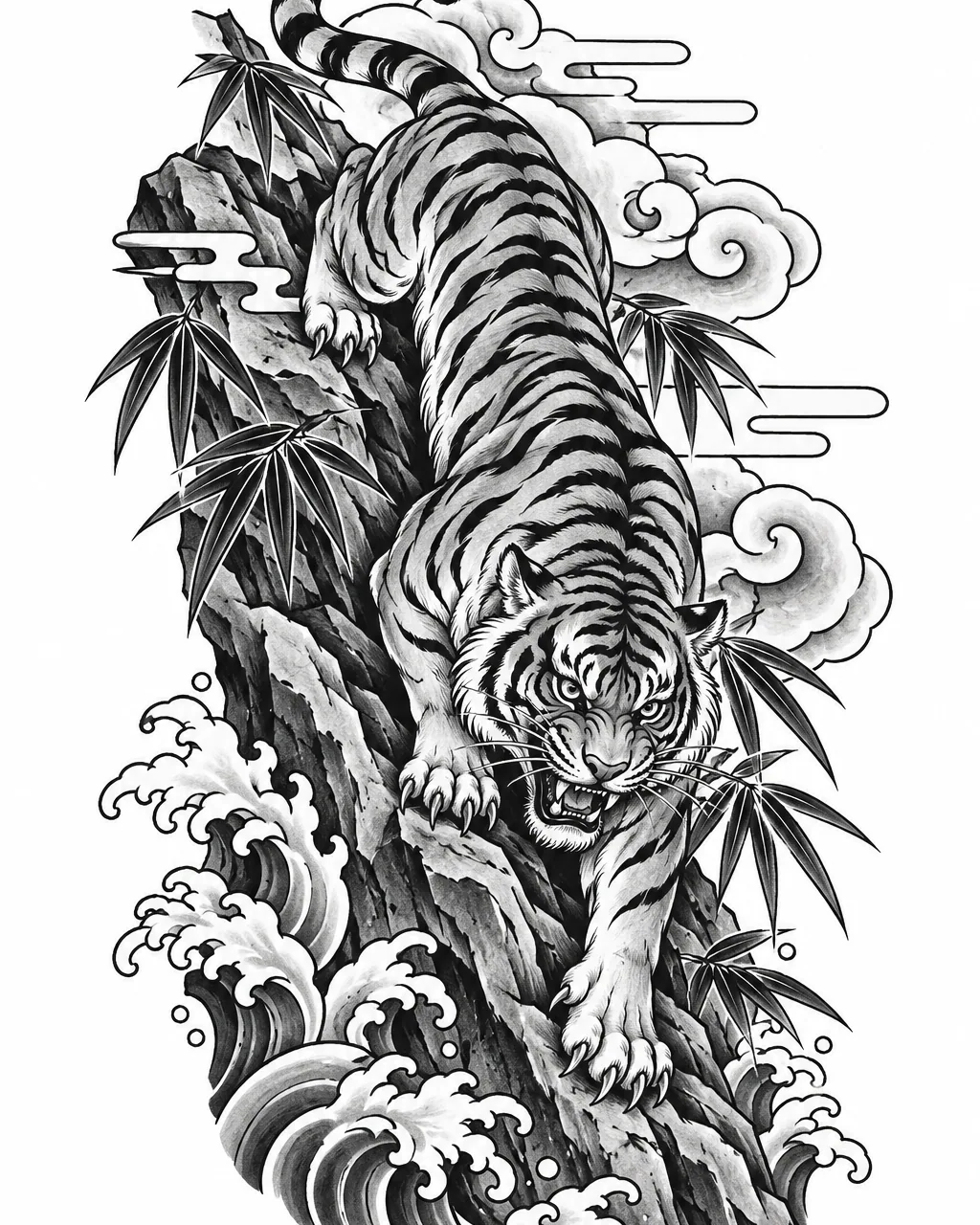
a tiger crouching among bamboo and wind barsJapanese · back 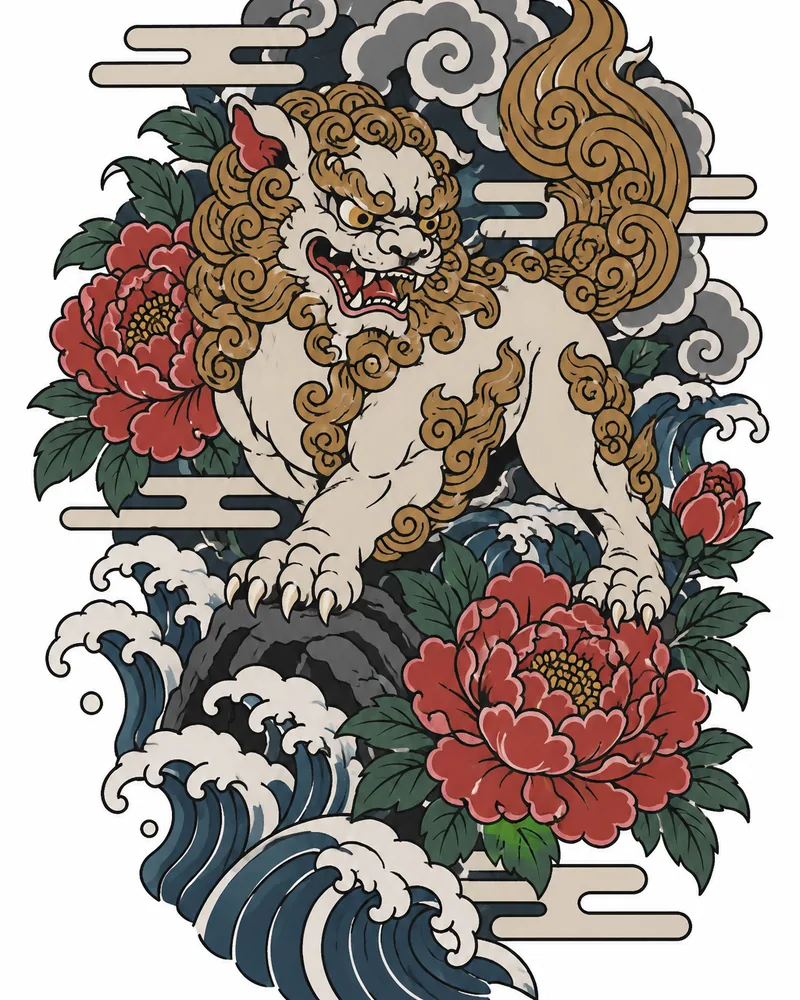
a guardian lion-dog with a curly mane among peoniesJapanese · calf 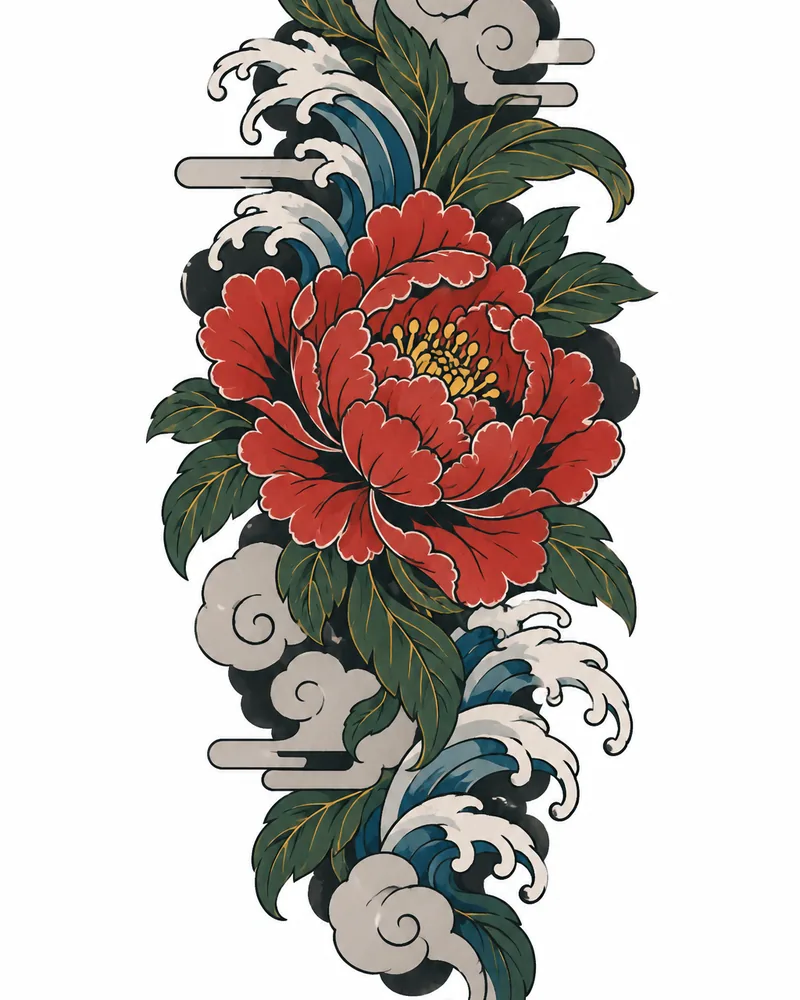
a peony in full bloom with swirling leavesJapanese · forearm 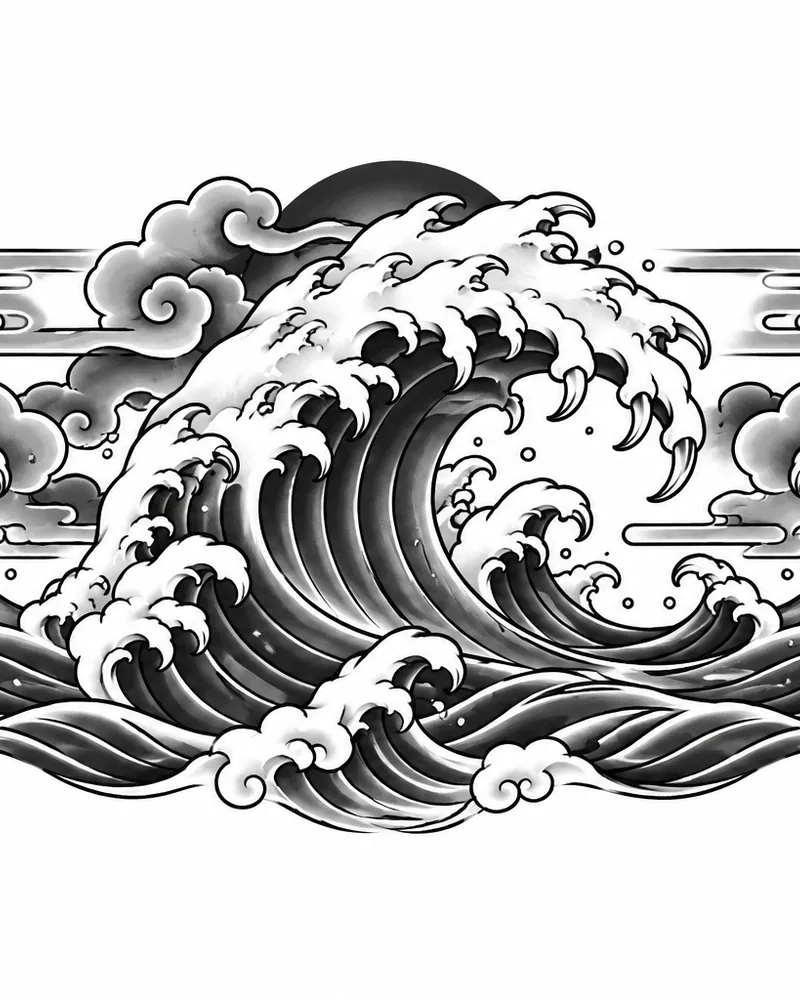
a crashing wave with foam curling into clawsJapanese · chest 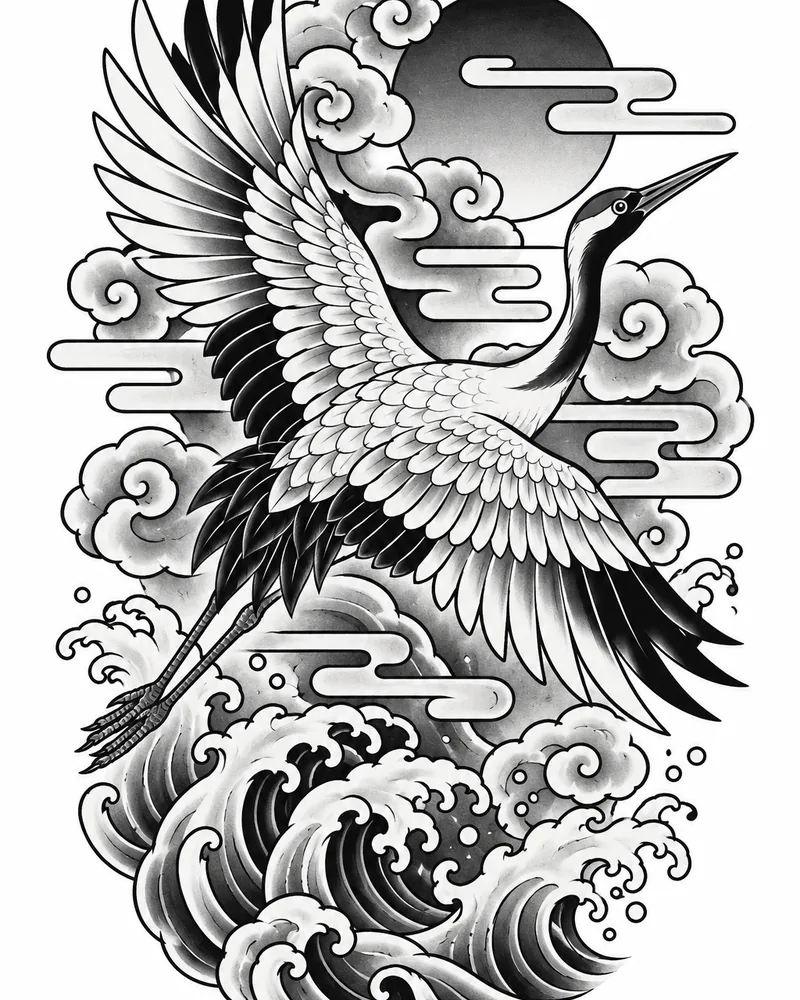
a crane in flight over wavesJapanese · upper arm 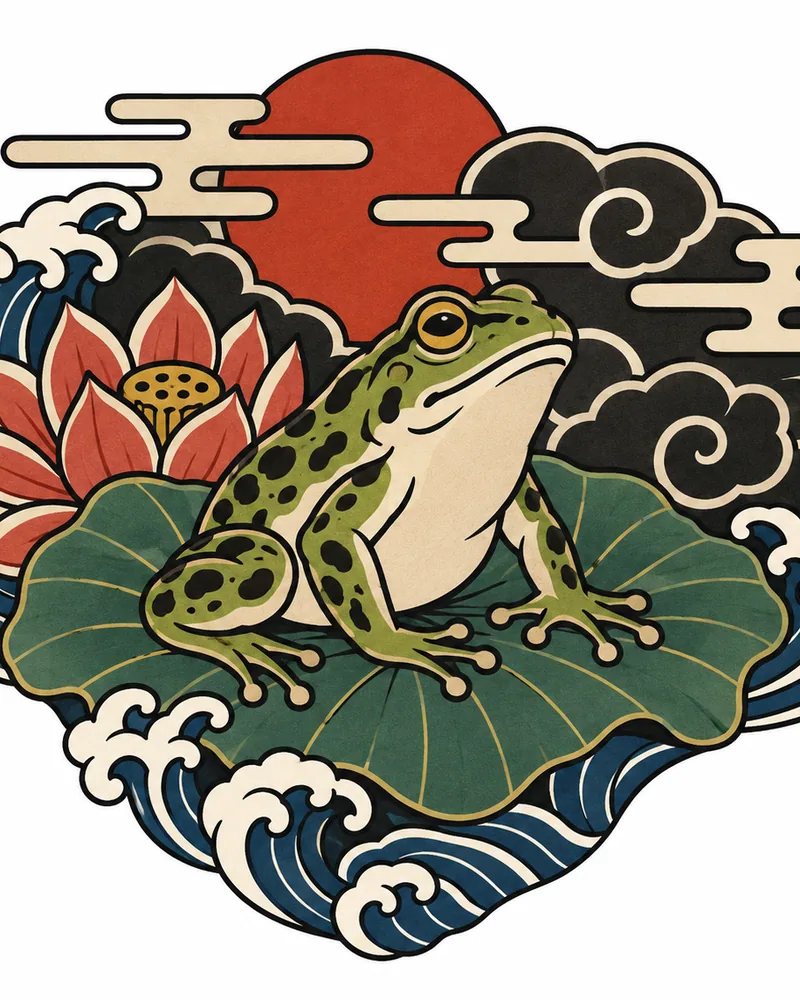
a frog sitting on a lotus leafJapanese · hand Not quite it?
Describe your own japanese tattoo
No. 01
What is a Japanese tattoo?
Japanese tattooing – irezumi, or horimono for traditional pictorial work – is known for large, unified compositions that wrap the body. A single design might cover an arm or the whole back, with a main subject framed by waves, clouds, rocks or wind bars.
Pictorial tattooing flourished in the Edo period alongside ukiyo-e woodblock prints. Utagawa Kuniyoshi’s prints of tattooed heroes from the Chinese novel Suikoden (Water Margin) were especially influential, and tattooers borrowed their bold lines, dramatic poses and dense backgrounds. Tattooing was banned in Japan in 1872 and legalized again in 1948, and some artists still work by hand with traditional tebori tools.
The style also carries social history: tattoos have long been associated with the yakuza in Japan, and some public baths, gyms and pools there still restrict visible tattoos. In Western shops, “Japanese” usually means work that follows traditional rules of subject, season and composition.
No. 02
Key characteristics of Japanese tattoos
- Large, unified compositions
- Designs are planned as one flowing image across a sleeve, back or chest panel rather than as scattered pieces.
- Framing backgrounds
- Wind bars, waves, clouds and rocks in dense black and grey push the main subject forward.
- Bold outlines
- Strong black lines borrowed from woodblock prints keep large pieces readable from a distance.
- Classic subjects
- Dragons, koi, tigers, phoenixes, foo dogs, hannya masks and folk heroes, each with traditional associations.
- Seasonal flowers
- Peonies, cherry blossoms, chrysanthemums and maple leaves are paired with subjects and seasons deliberately.
- Flow with the body
- Compositions follow muscle lines, with a clear border where the tattoo meets bare skin.
No. 03
Popular Japanese tattoo ideas
Classic subjects come with traditional pairings of flowers, backgrounds and seasons that an experienced artist will balance for you.
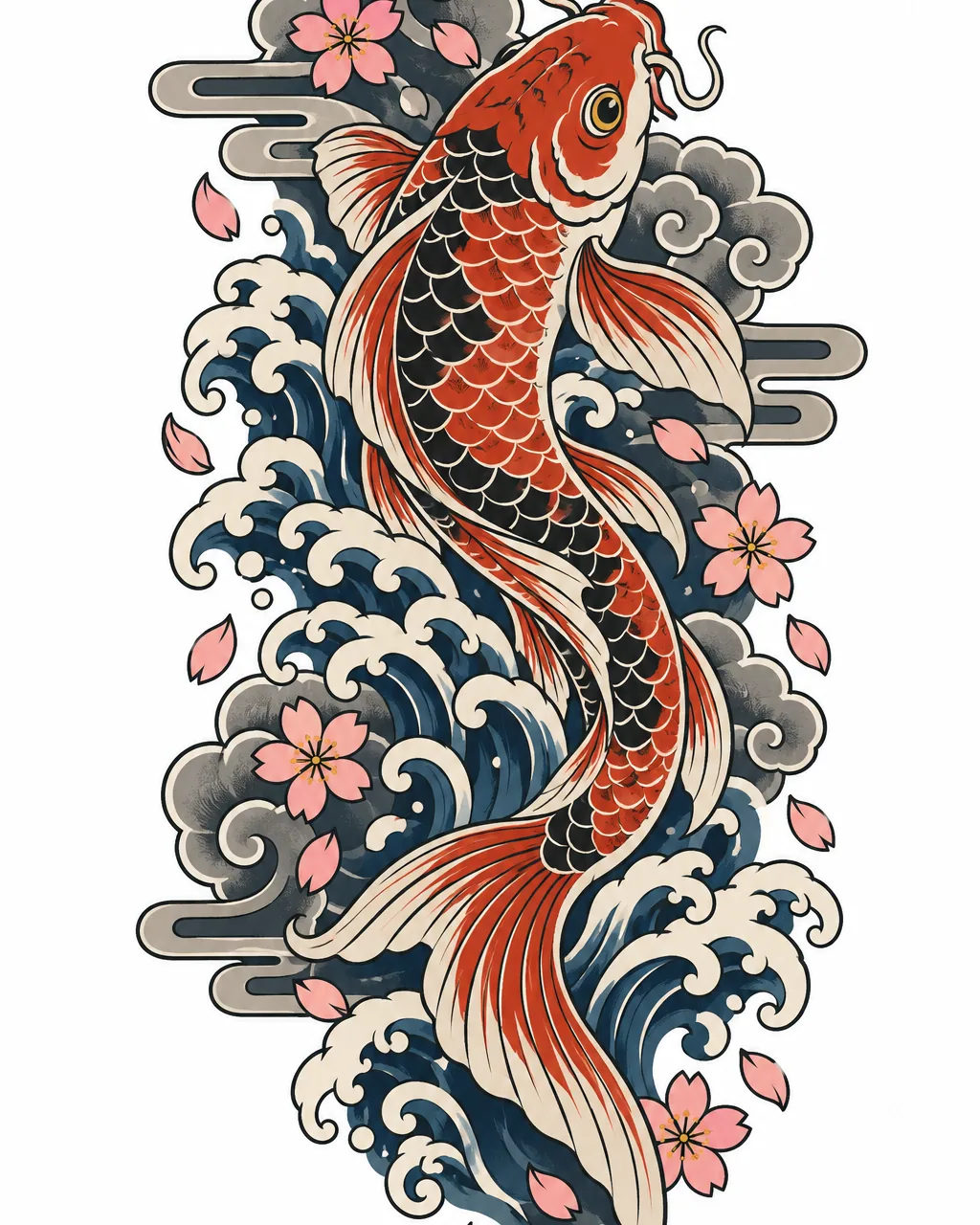
- Koi in waves
- A koi swimming against the current recalls the legend of a carp that climbs a waterfall and becomes a dragon – a symbol of perseverance.
- Hannya mask
- A horned mask from Noh theater, often framed by cherry blossoms and read as protective.
- Dragon in clouds
- A long, coiling dragon moving through clouds, ideal for a full sleeve or back piece.
- Tiger with bamboo
- A tiger prowling through bamboo, a classic image of strength and courage for a sleeve or back.
- Foo dog
- A guardian lion-dog, traditionally paired with peonies; works well on the upper arm or calf.
- Cherry blossoms and wind bars
- Falling blossoms over black wind bars, often used to fill and connect larger compositions.
- Peony
- The botan, often called the king of flowers, stands alone or accompanies a tiger or foo dog.
- Phoenix
- The hō-ō, with long sweeping tail feathers that need a back or sleeve to flow.
No. 04
How Japanese tattoos age
Traditional Japanese work is built to last. Bold outlines and heavy black backgrounds give the composition a strong structure, and large-scale designs leave room for ink to spread without losing detail. Well-made sleeves and back pieces stay readable for decades.
Color softens over time, with lighter tones fading first, so reds, yellows and greens may need a refresh down the line. The bigger aging risk is shrinking a classic subject too far: a dragon or koi squeezed into a few inches loses the background and flow that make it work.
No. 05
Best placements and sizes for Japanese tattoos
Japanese tattooing thinks in whole body areas. If you might want a sleeve later, plan the first piece so it can grow into one.
- Sleeve
- A full sleeve to the wrist or a shorter one ending above the elbow or mid-forearm, built over many sessions.
- Back
- The traditional showcase for a dragon, phoenix or tiger, sized to the full back and built over many sittings.
- Upper arm
- A single subject with background at 6–8 inches, a common start for a future sleeve.
- Calf
- Koi, foo dogs or peonies at 6–8 inches, framed by waves or wind bars.
- Chest
- Panels that frame a subject on each side of the chest, often connected to sleeves.
No. 06
Working with a Japanese-style artist
Look for artists who specialize in Japanese work and show healed sleeves or back pieces, not only single designs. Check that backgrounds are smooth and solid, subjects follow traditional proportions and the composition flows with the body.
Bring images of subjects and moods you like rather than a finished design – many Japanese-style artists draw directly onto the body or design specifically for it. Ask how they would pair flowers and backgrounds with your subject, how many sessions the piece may need and how it could connect to future work. Skip Japanese text unless a fluent speaker has checked it.
FAQ
Japanese style FAQ
What does irezumi mean?
Irezumi literally means “inserting ink” and is a general Japanese word for tattooing. In English, it usually refers to traditional Japanese tattoos – large pictorial designs of dragons, koi, tigers and flowers set against waves, clouds and wind bars. The related term horimono, meaning “carving,” is often used for traditional full-scale pictorial work.
What do Japanese tattoo symbols mean?
Each classic subject carries traditional associations. Koi suggest perseverance, from the legend of a carp that becomes a dragon; dragons are linked with wisdom and strength; tigers with courage; hannya masks with protection; and peonies with wealth and good fortune. Flowers and backgrounds also signal seasons, so artists balance subjects into one coherent composition.
How long does a Japanese sleeve take?
A full Japanese sleeve usually takes many sessions spread over months, and larger projects like back pieces can take a year or more. The timeline depends on your arm, the amount of background and color, how you heal and the artist’s schedule. Ask for an estimate in sessions rather than hours, and budget for the whole project.
Is it disrespectful to get a Japanese tattoo if you’re not Japanese?
Not inherently. Japanese tattooing has long been practiced for clients around the world, and many respected Japanese artists tattoo people of other backgrounds. What matters is the approach: work with an artist who knows the tradition, follow its compositional rules rather than mixing random symbols, and avoid Japanese text unless a fluent speaker has checked it.
Can you have tattoos in Japan?
Yes, tattoos are legal in Japan, but they can still carry a stigma because of their historical link with the yakuza. Some hot springs, gyms, pools and beaches restrict visible tattoos, though many now allow them or let you cover up. If you’re traveling, check each venue’s policy and bring a cover for smaller tattoos.
Design your own japanese piece
Describe it in a sentence. Four original sketches in seconds — then turn the one you love into a stencil.