Style guide · 8 designs
Fine Line Tattoo Ideas & Guide
A fine line tattoo uses a single needle or very small needle groupings to create delicate linework with little or no solid fill. Here’s where the style came from, ideas that suit it, what to expect as it ages and how to size it so it lasts.
Fine Line tattoo designs
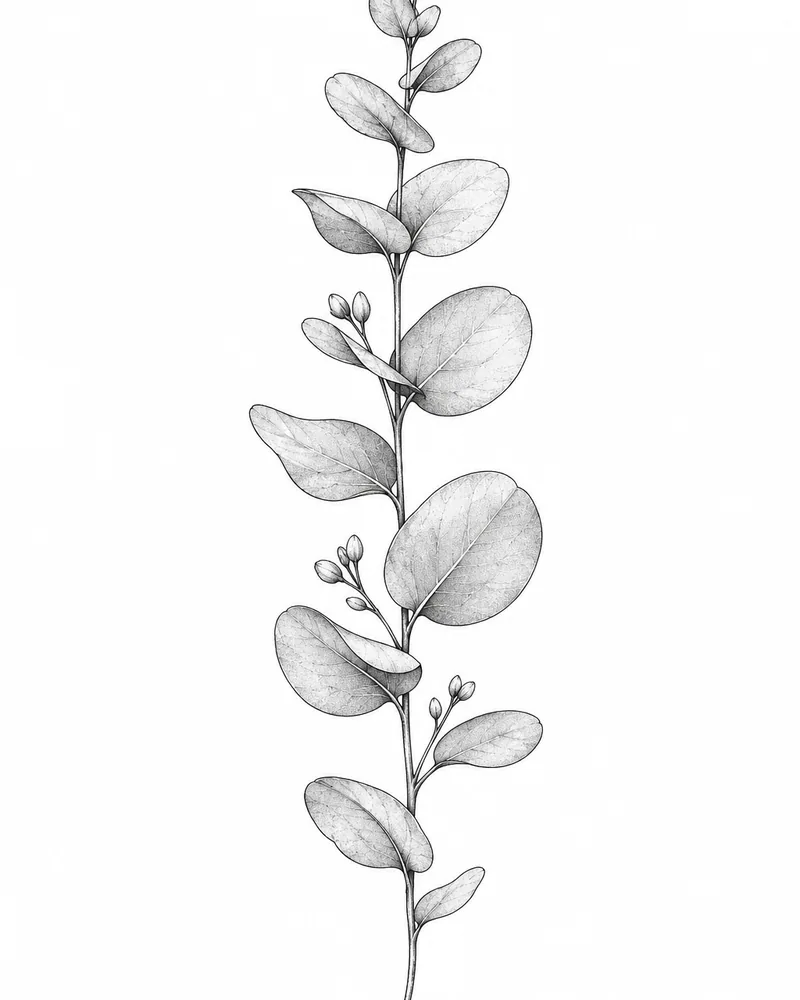
a botanical stem of eucalyptus leavesFine line · forearm 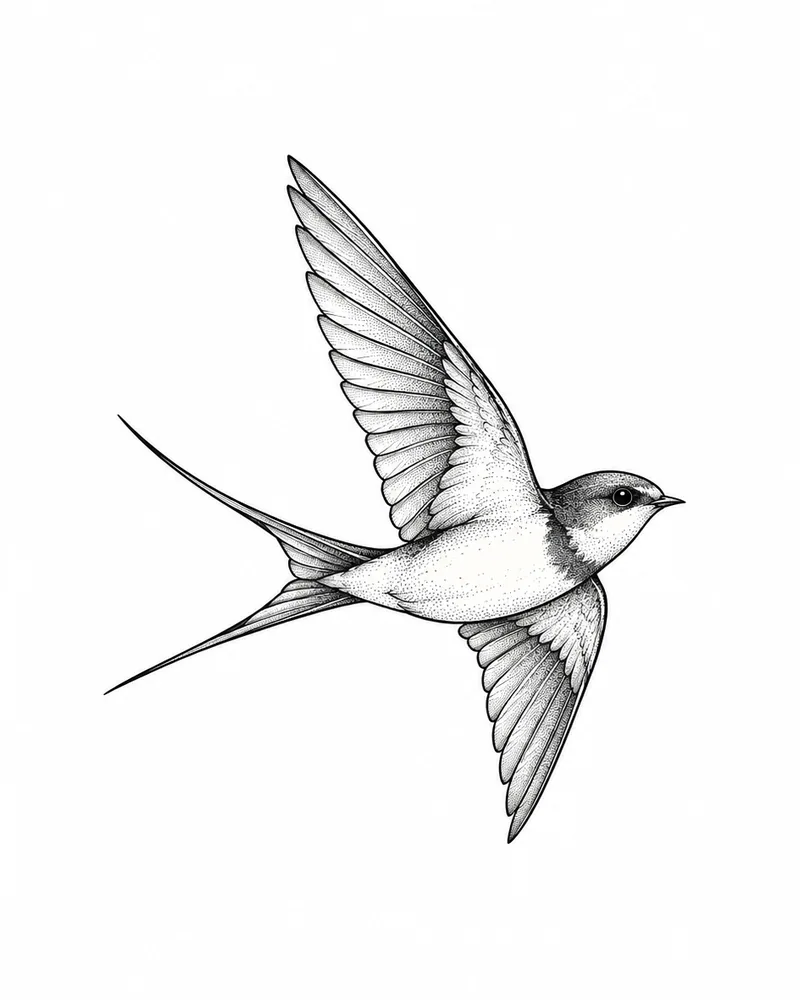
a small swallow with a forked tailFine line · wrist 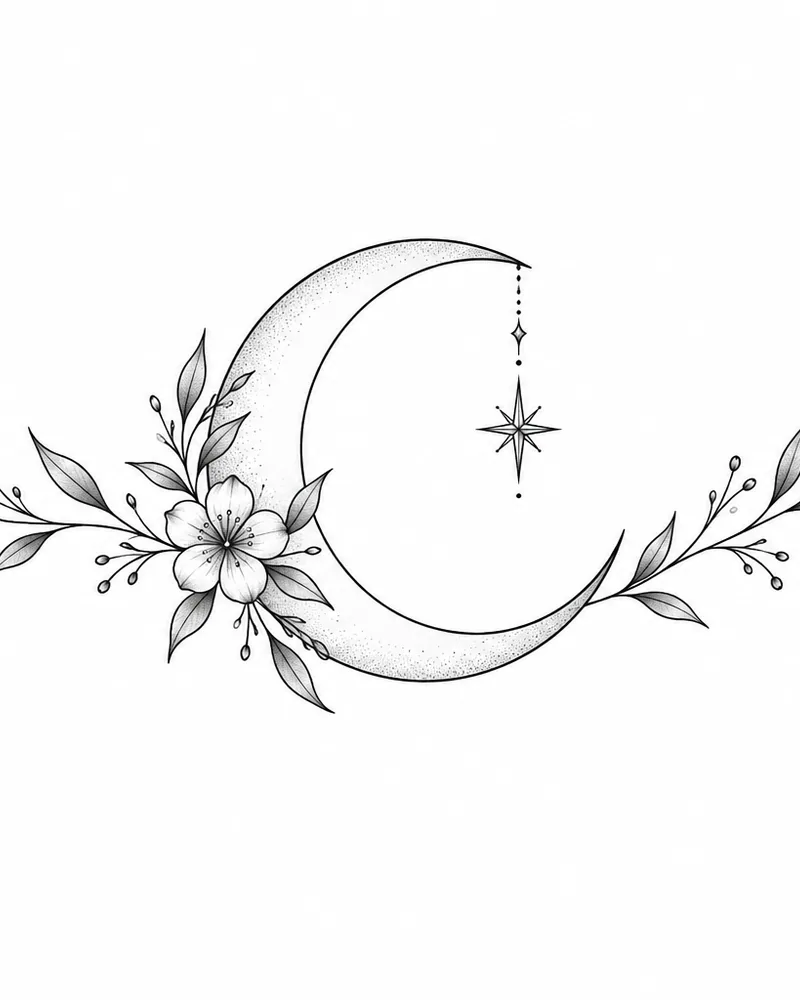
a crescent moon with a dangling starFine line · ankle 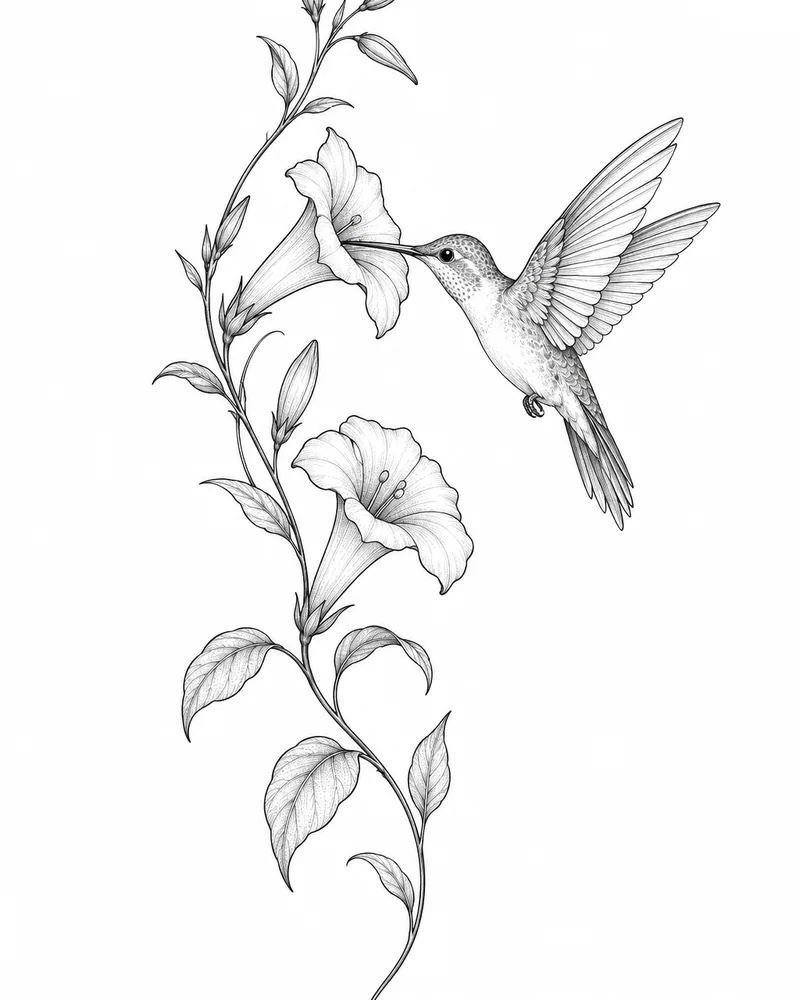
a hummingbird sipping from a trumpet flowerFine line · forearm 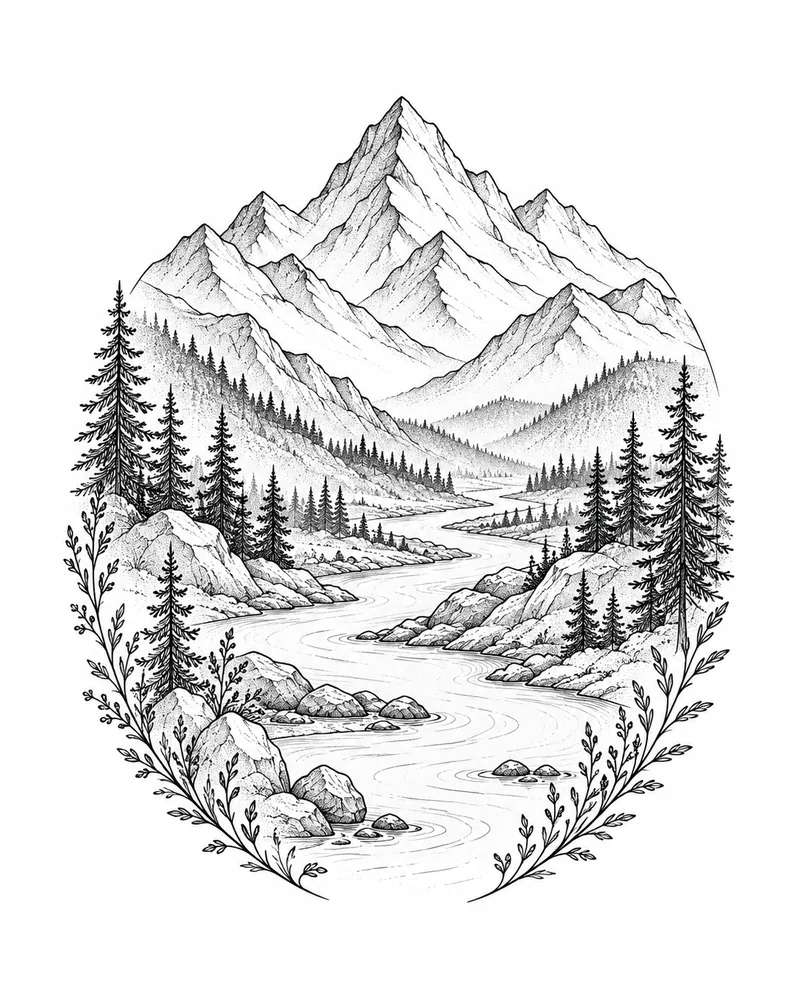
a mountain range with a winding riverFine line · upper arm 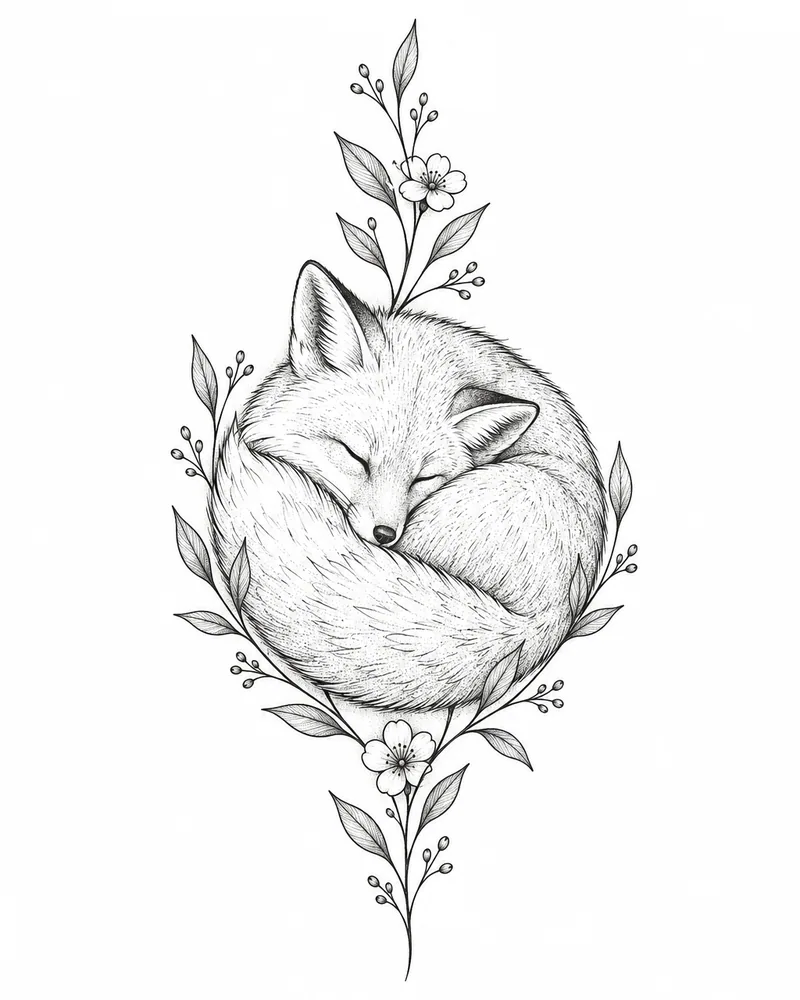
a sleeping fox curled into a circleFine line · back of the neck 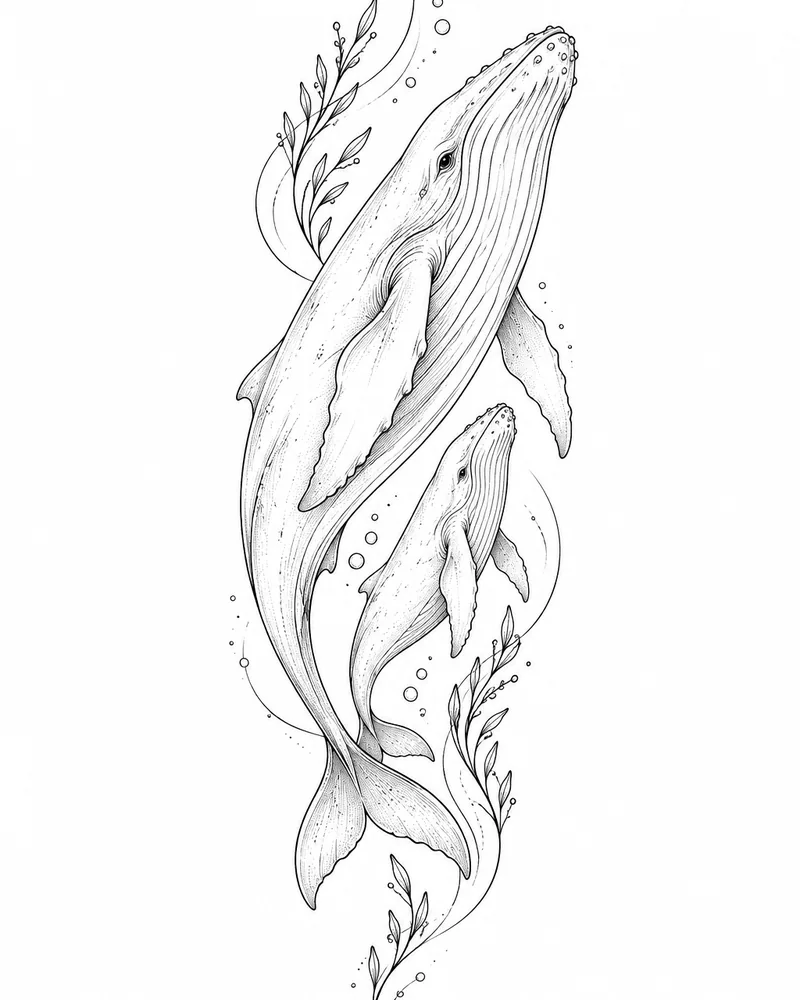
a mother whale swimming with her calfFine line · forearm 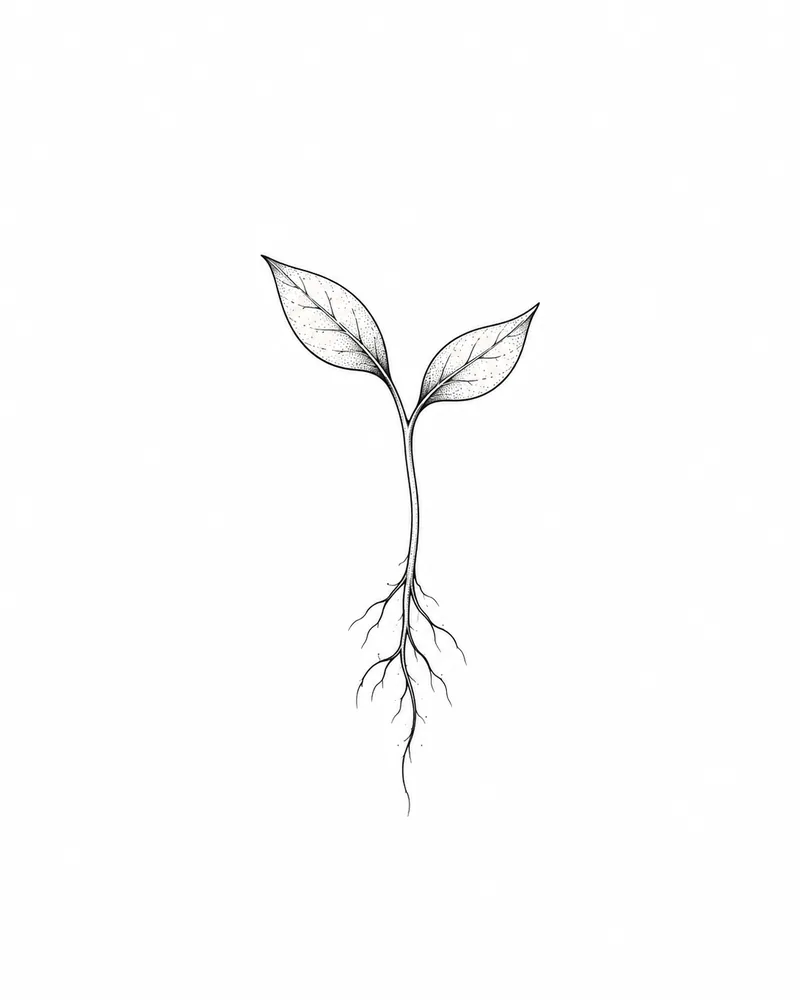
a tiny sprout with two leavesFine line · finger Not quite it?
Describe your own fine line tattoo
No. 01
What is a fine line tattoo?
Fine line is defined by technique: thin needles, light shading and lines that look closer to a pen drawing than a bold tattoo outline. Designs tend to be small and airy, and the open skin around them is part of the composition.
Its roots go back to the single-needle black-and-grey work that developed in Los Angeles in the 1970s, especially in Chicano communities, where artists created soft, detailed imagery with fine needles. The look returned in a new form in the 2010s, as delicate botanicals, tiny script and small symbols spread through social media and more studios began specializing in precise, small-scale work.
Fine line overlaps with minimalism but isn’t the same thing. Fine line describes how the lines are made; minimalism describes how few elements a design uses. A detailed fine line botanical study can be anything but minimal.
No. 02
Key characteristics of fine line tattoos
- Thin, crisp lines
- A single needle (1RL) up to about 3RL, so lines look drawn with a fine pen.
- Light shading
- Soft whip shading, fine stippling or no shading at all instead of solid black fill.
- Mostly black
- Black or diluted black is standard; small washes of color appear as accents.
- Negative space
- Open skin is used deliberately, giving designs an airy, delicate feel.
- Detail at small scale
- Leaf veins, tiny lettering and star maps are possible, within limits set by line spacing.
- Precision
- There’s nowhere to hide a wobble, so a steady hand and a careful stencil matter even more than in bold styles.
No. 03
Popular fine line tattoo ideas
Fine line rewards motifs with a clear silhouette and a few well-spaced details.
- Wildflower bouquet
- Three to five stems tied together, drawn botanical-style; a natural fit for the inner forearm.
- Tiny swallow
- A delicate take on the classic flash bird, an inch or two across, flying toward the wrist or ankle.
- Constellation
- Stars joined by hairline lines – a zodiac sign or a meaningful star map, with stars spaced well apart.
- Botanical branch
- An olive, eucalyptus or fern sprig that follows the line of the forearm, collarbone or ankle.
- Crescent moon
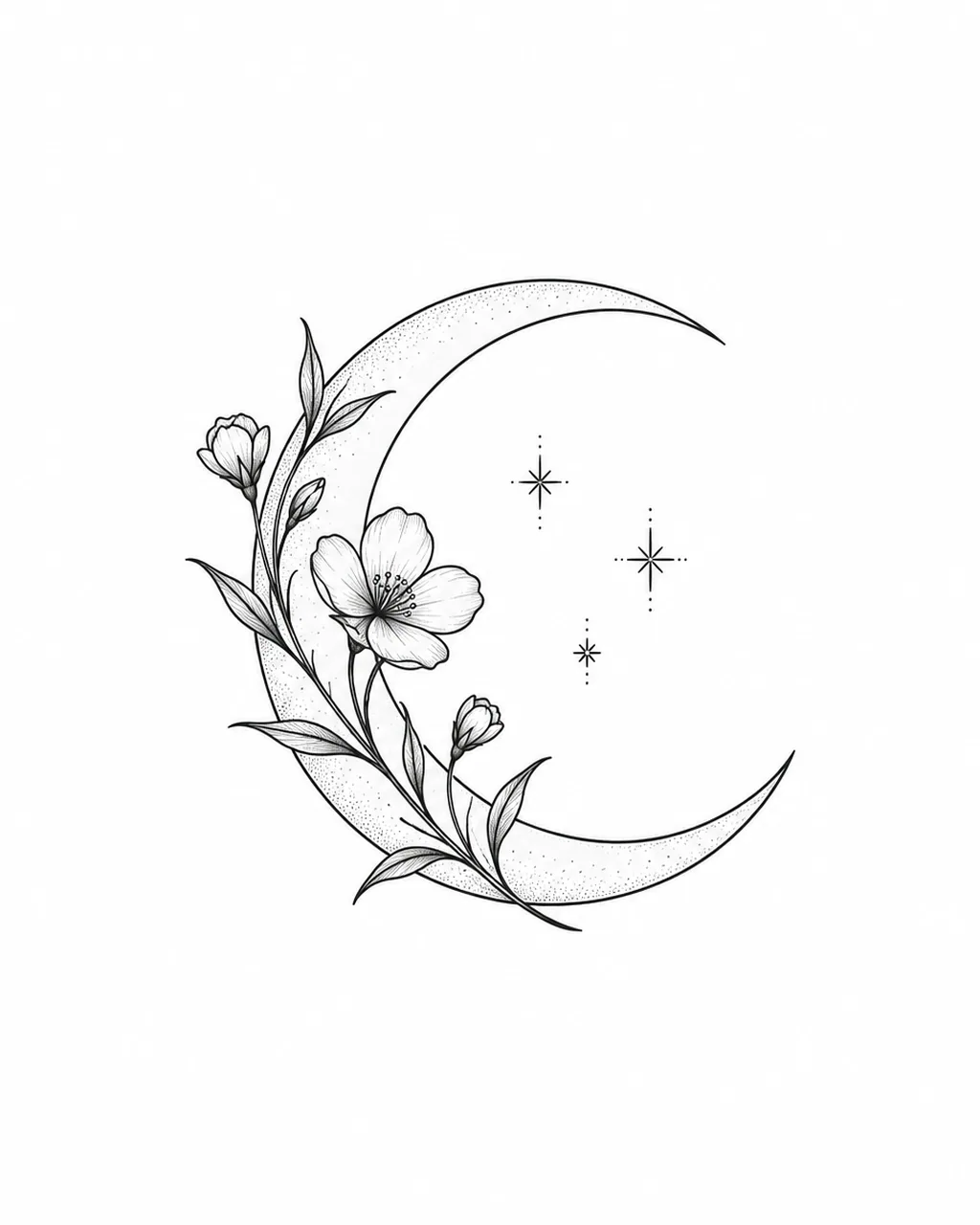
- A clean crescent alone or with a few tiny stars; one of the most versatile small designs.
- Single rose
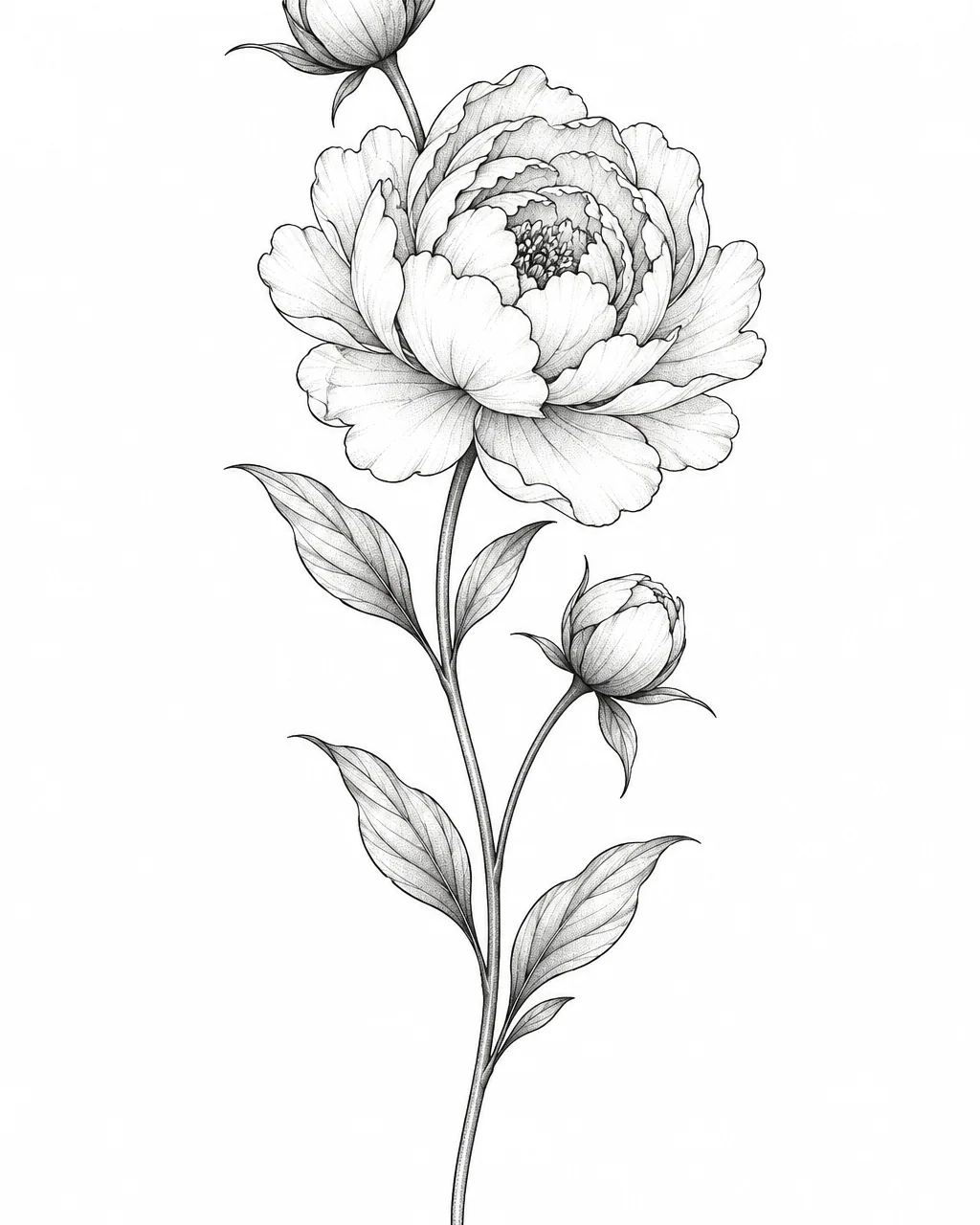
- A long-stem rose with light petal shading; give it 3 inches or more so the petals stay distinct.
- Butterfly
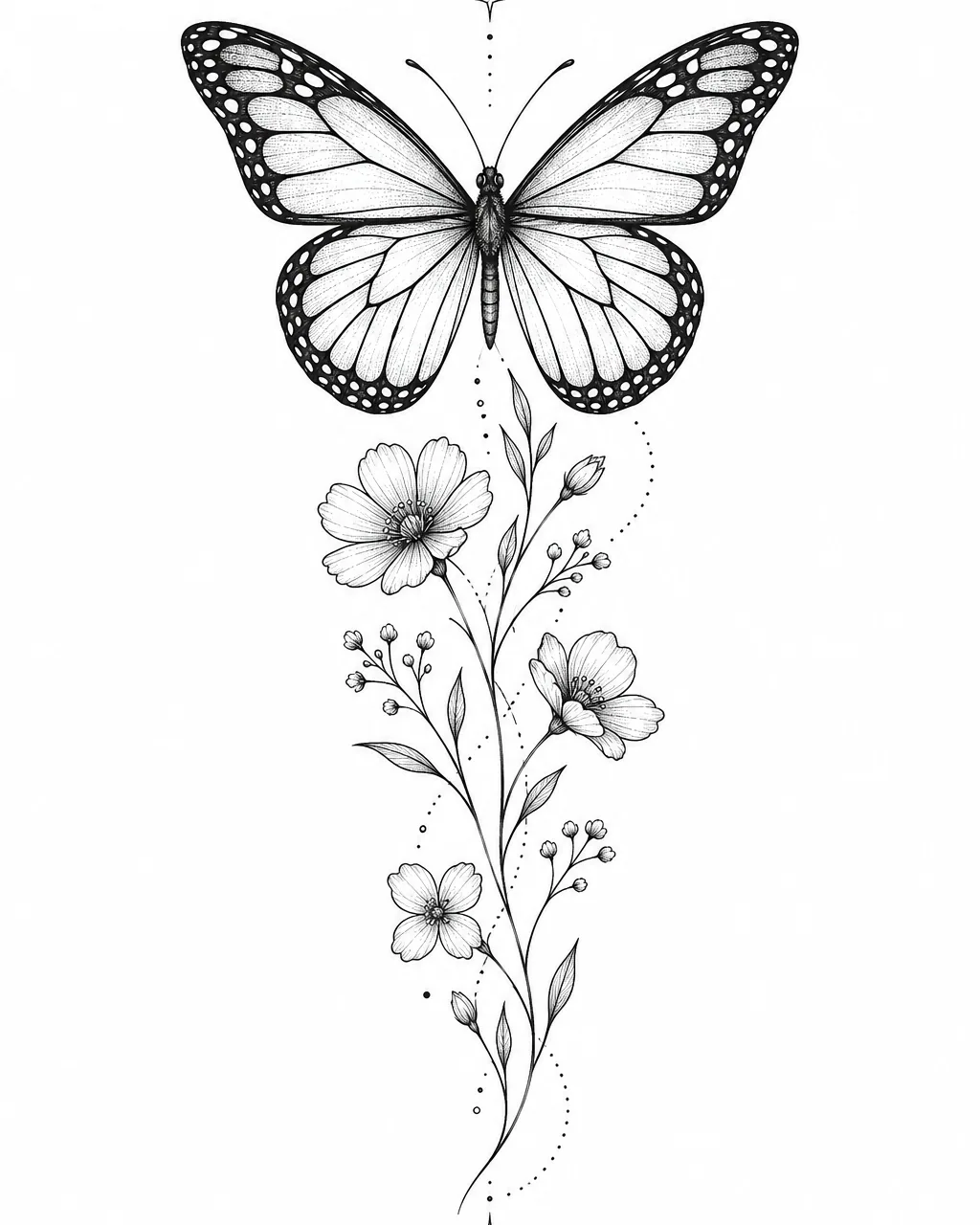
- Outlined wings with a few interior veins – symmetrical and easy to place almost anywhere.
- Mountain line
- A single ridge line, sometimes with a sun or moon, that wraps neatly around the wrist or forearm.
No. 04
How fine line tattoos age
Fine line tattoos change more than bold ones, and it’s worth knowing that upfront. Ink spreads slightly under the skin over the years, so thin lines soften and lighten, and details placed too close together can blur into one shape. Areas that rub or see a lot of sun – fingers, hands and feet – fade fastest.
You can stack the odds in your favor. Size designs so lines sit at least a few millimeters apart, skip microscopic lettering and choose an artist with consistent depth: lines placed too shallow fade, while lines pushed too deep can blow out into a blurry halo. Protect healed work with sunscreen and expect a touch-up at some point.
No. 05
Best placements and sizes for fine line
Choose smooth, stable skin with little friction. These sizes are starting points for designs with some interior detail.
- Inner forearm
- The most forgiving canvas: flat, sheltered from sun and roomy enough for 2–6 inch botanicals or script.
- Wrist
- Best for simple designs of 1–2 inches, like a small moon, a word or a slim stem.
- Ankle
- Sprigs, small birds or wraparound vines at 1.5–3 inches; socks and shoes add friction while it heals.
- Back of the neck
- A tiny symbol or short vertical design at 1–2 inches, easy to cover with hair or a collar.
- Finger
- Workable for tiny symbols, but finger tattoos fade and blur quickly, so expect frequent touch-ups.
No. 06
Working with a fine line artist
Fine line is a specialty, so ask to see healed photos at least several months old alongside fresh ones. Healed lines should still look crisp and even, without fuzzy edges or gaps, and the quality should be consistent across many pieces, not just one perfect shot.
Bring your reference and be ready to adjust the size: a good fine line artist will tell you when a design is too small for its detail. Ask about their touch-up policy and how they handle small lettering. If you’re still exploring, the TattooMaker generator can produce fine line sketches to bring as a starting point.
FAQ
Fine Line style FAQ
Do fine line tattoos fade?
Yes. Fine line tattoos usually fade and soften faster than bold styles because each line holds less ink. How fast depends on placement, sun exposure, your skin and how consistently the lines were placed. A touch-up after a few years is common. Sunscreen and placements away from friction, like the inner forearm, help them last longer.
How long do fine line tattoos last?
A fine line tattoo is permanent, but it won’t stay as crisp as the day it healed. Well-placed fine line work can look good for many years, especially on protected areas like the inner forearm or upper arm. Expect lines to soften and lighten gradually, and plan for touch-ups. Designs with generous spacing hold up far better than tiny, dense ones.
Do fine line tattoos hurt less?
Many people find fine line work less intense than bold styles, because the needles are small and there’s little or no solid fill, so sessions are often shorter. Pain still depends mostly on placement – spots over bone, like the ankle or wrist, tend to feel sharper than the outer forearm or upper arm – and on your own tolerance.
What is the difference between fine line and minimalist tattoos?
Fine line is a technique: very thin lines made with a single needle or small needle groupings. Minimalist is a design approach: using as few elements as possible. They often overlap, but a fine line tattoo can be highly detailed, like a full botanical study, and a minimalist tattoo can use bold lines. Many small tattoos are both at once.
How small can a fine line tattoo be?
Simple shapes such as a crescent moon or a short word can work at around an inch, but every extra detail needs more room. Because lines spread slightly over time, elements closer than a few millimeters can merge. If your design has interior detail or lettering, size it up or simplify it – your artist can tell you where the limit is for your placement.
Design your own fine line piece
Describe it in a sentence. Four original sketches in seconds — then turn the one you love into a stencil.