Style guide · 8 designs
Geometric Tattoo Ideas & Guide
A geometric tattoo is built from lines, shapes and patterns – triangles, polygons, circles and sacred geometry – arranged with precision and symmetry. This guide covers the style’s roots, its defining traits, popular ideas, how it ages and how to place it on a body that isn’t flat.
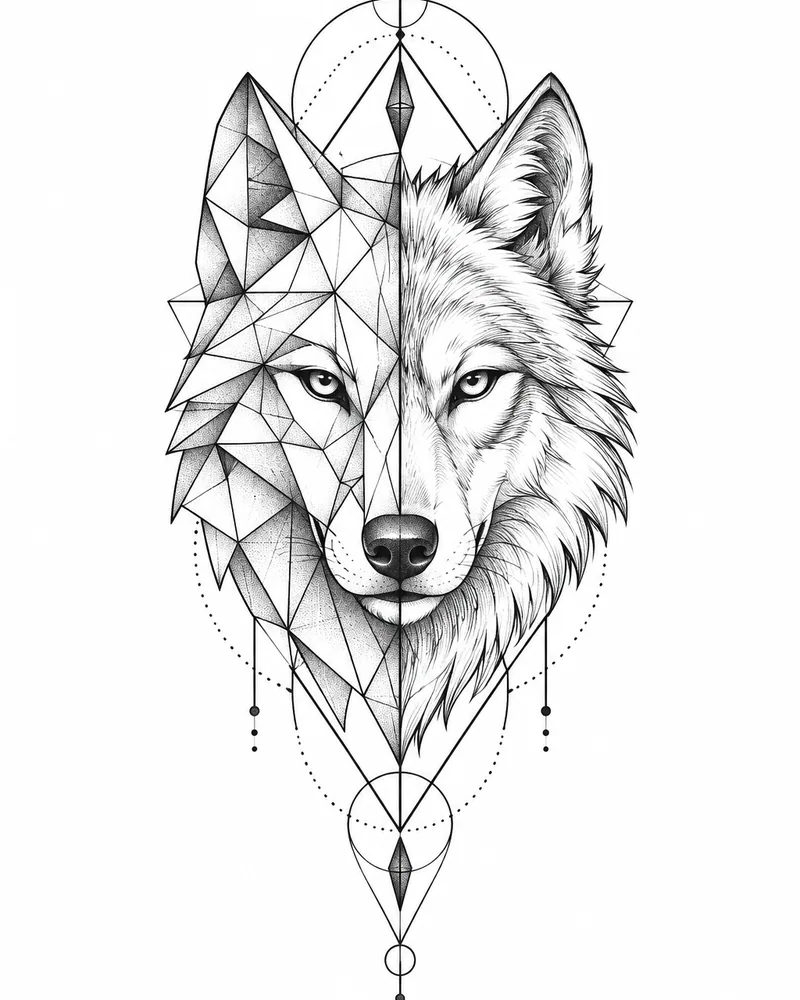
Geometric tattoo designs
a wolf head split by a vertical line of symmetry, one half faceted, one half outlinedGeometric · forearm 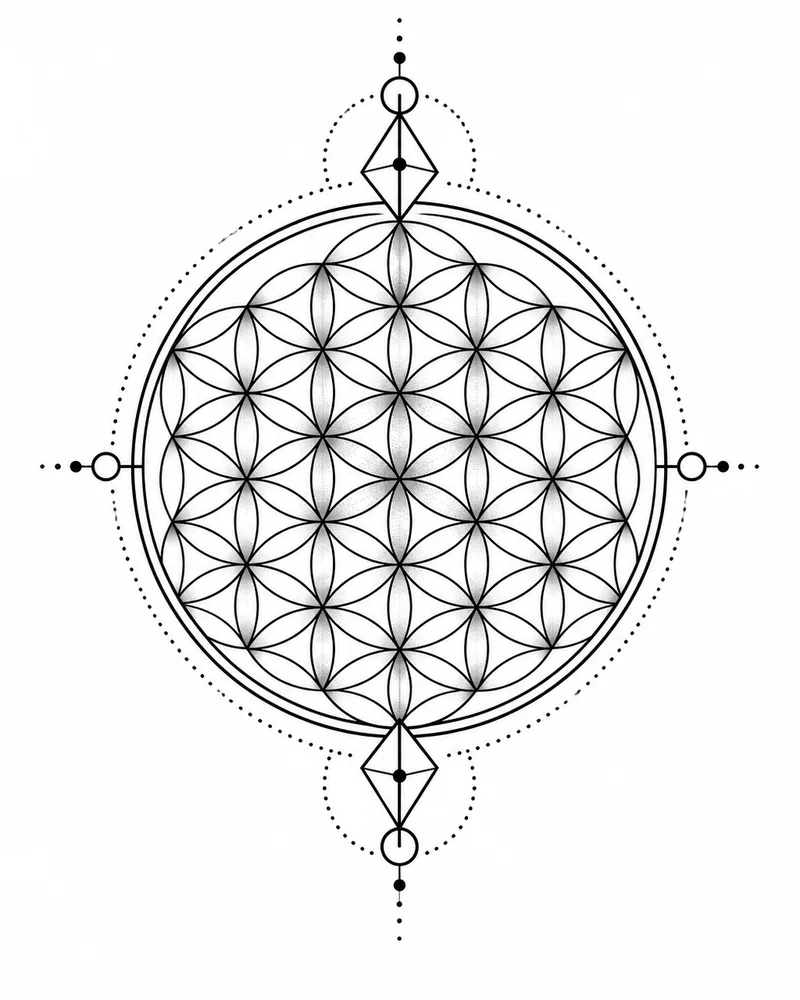
a flower of life pattern inside a circleGeometric · upper arm 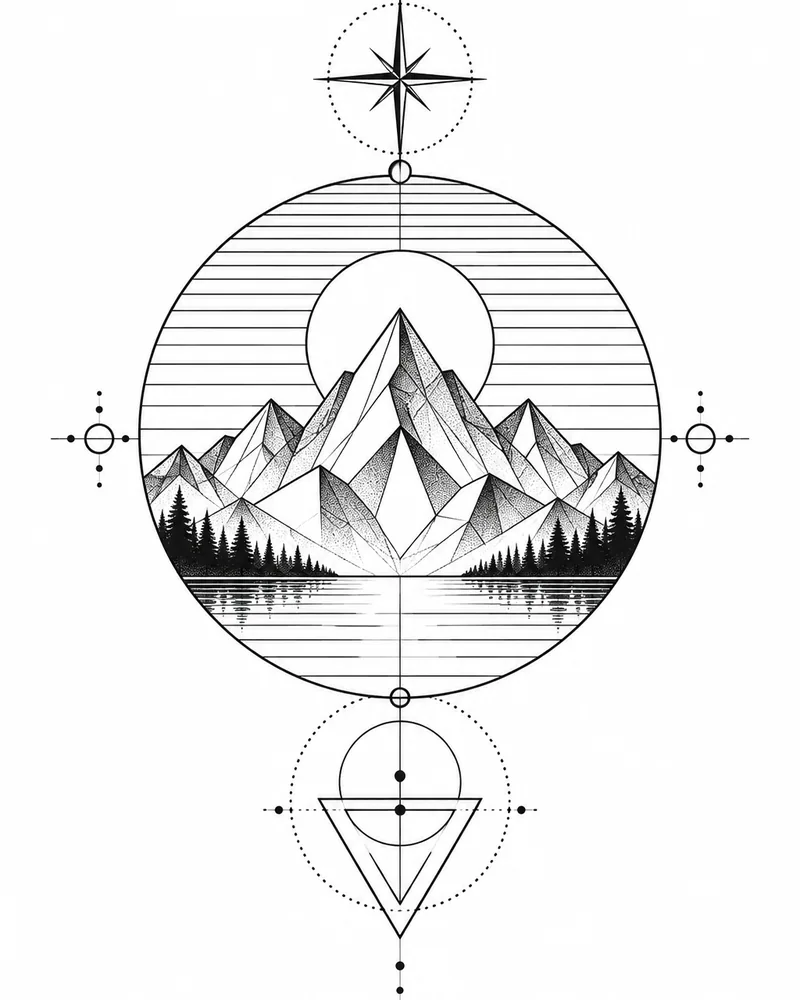
a mountain range inside a large circle with horizontal lines for the skyGeometric · calf 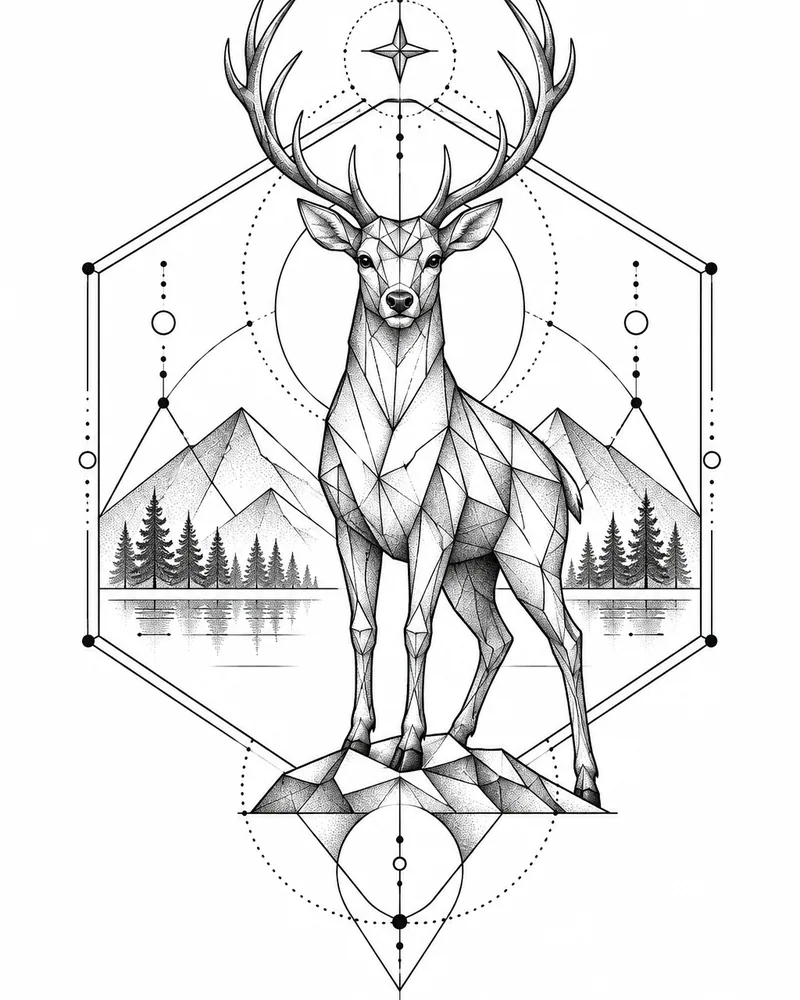
a deer standing alert inside a hexagonGeometric · back 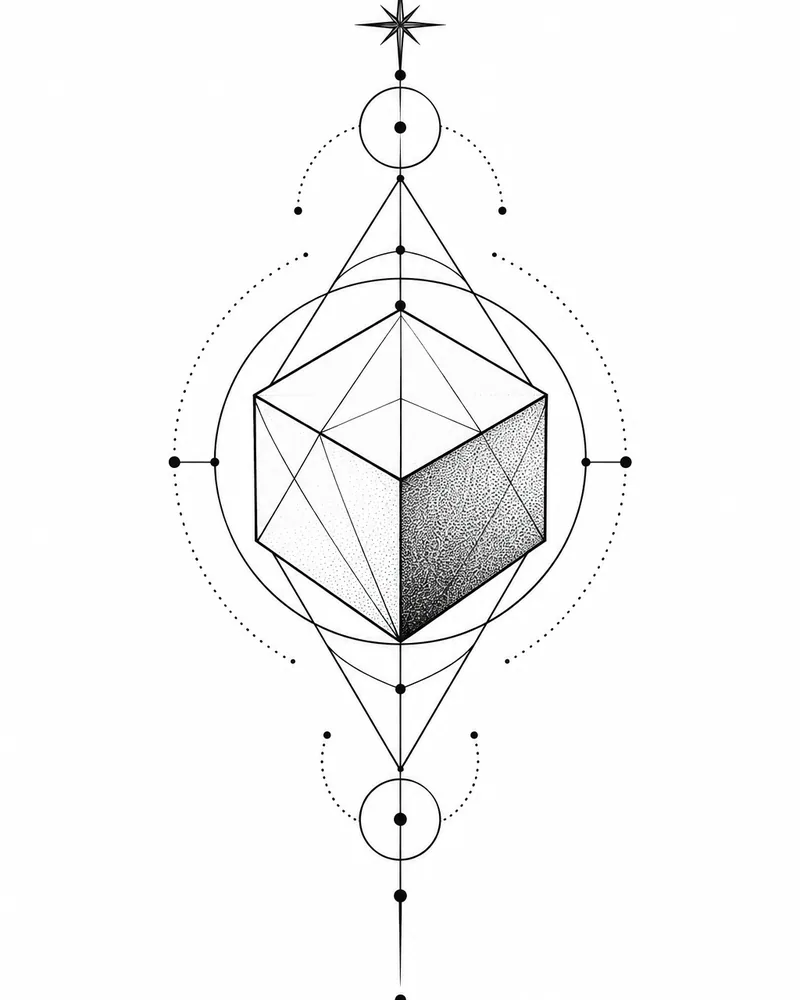
an isometric cube balanced on one corner with dot shading on one faceGeometric · forearm 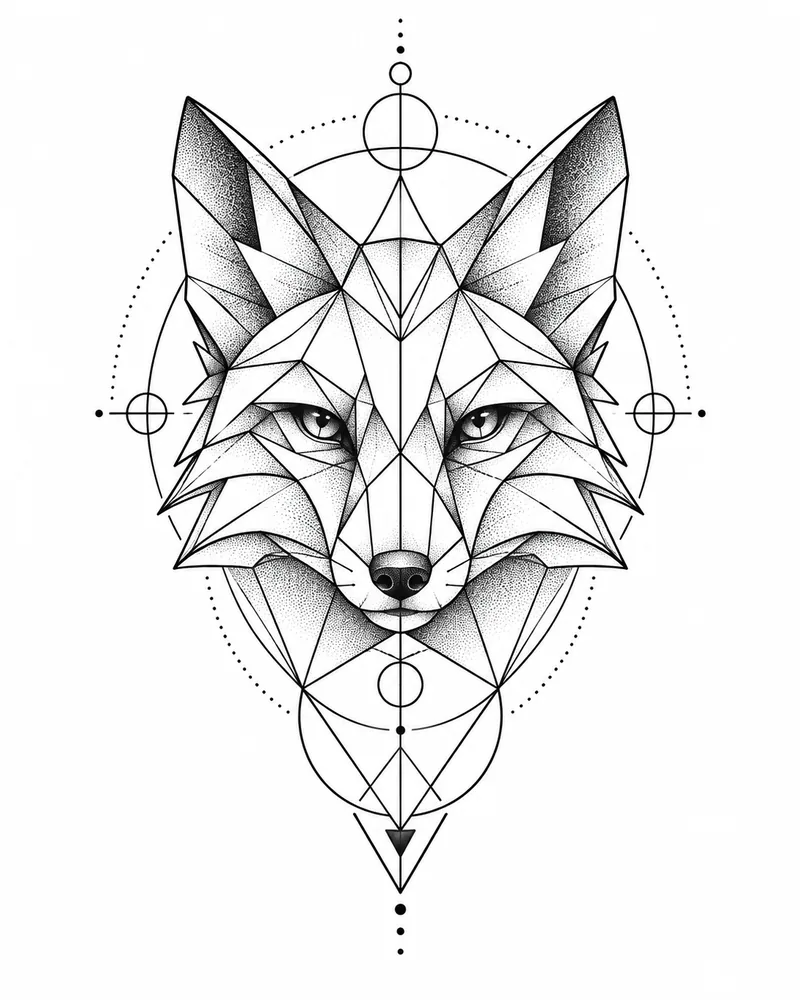
a fox head made of trianglesGeometric · upper arm 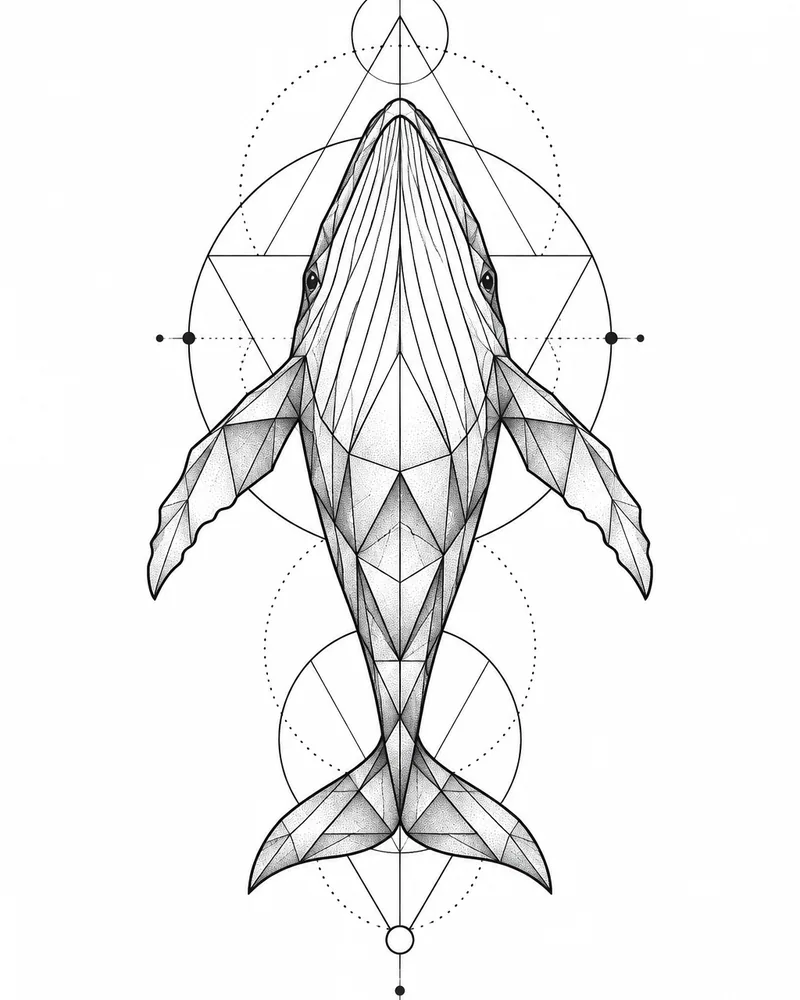
a whale with a body of interlocking shapesGeometric · calf 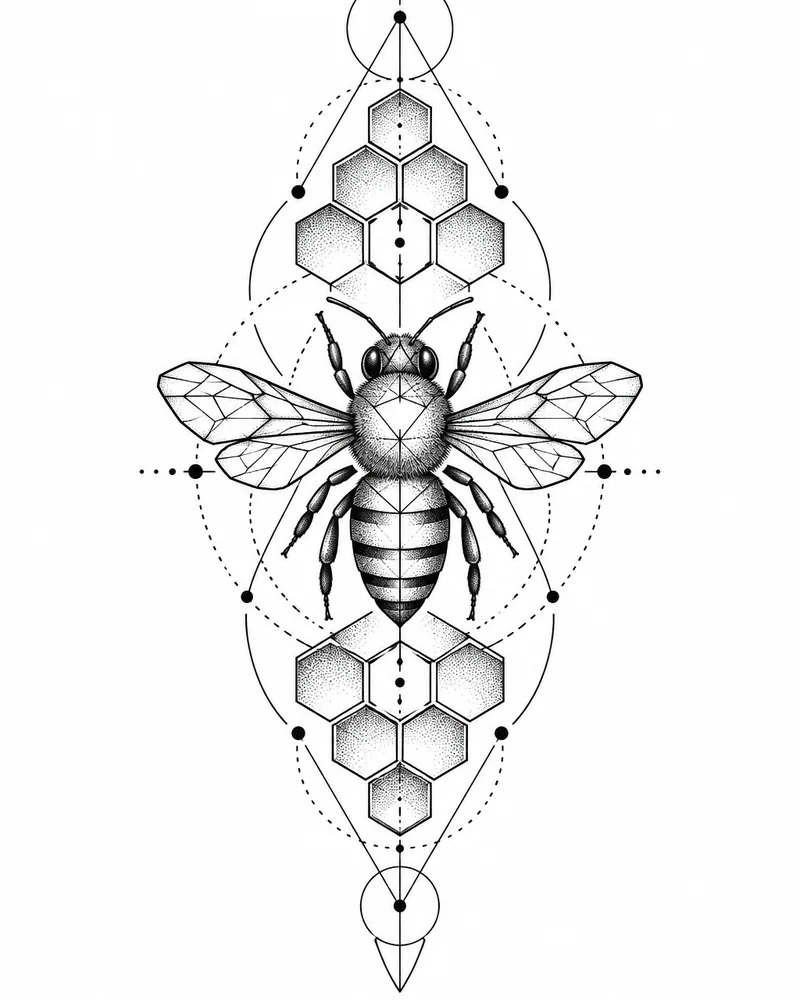
a honeycomb pattern with a single beeGeometric · forearm Not quite it?
Describe your own geometric tattoo
No. 01
What is a geometric tattoo?
Geometric tattoos use mathematical structure as their visual language: straight lines, true circles, repeating patterns and symmetrical forms. Some are purely abstract, like hexagon bands or sacred geometry diagrams; others use geometry to build a subject, such as a wolf or deer made of polygons.
Geometric patterns are among the oldest tattoo motifs – lines, triangles and zigzags appear in Polynesian, Amazigh (Berber), Filipino and many other traditional tattoo cultures. The modern geometric style, with ruler-straight linework, sacred geometry and dotwork shading, took off in the 2010s alongside the wider blackwork movement.
Because geometry is unforgiving, the style depends on careful drawing and stencil placement. Bodies are curved and move, so a skilled artist adapts each shape to the anatomy – a line that is straight on paper may need to bend slightly to look straight on a forearm.
No. 02
Key characteristics of geometric tattoos
- Precise linework
- Straight lines and clean circles with consistent weight and spacing.
- Symmetry
- Many designs mirror along a center line, which suits the spine or the middle of a forearm.
- Repetition and pattern
- Hexagons, triangles and tessellations repeat to form bands and fills.
- Sacred geometry
- Figures such as the flower of life and Metatron’s cube appear often.
- Negative space
- Open skin between lines keeps patterns crisp and readable.
- Dotwork shading
- Stippled gradients add depth without breaking the clean geometry.
No. 03
Popular geometric tattoo ideas
Geometric ideas range from pure pattern to animals built from shapes.
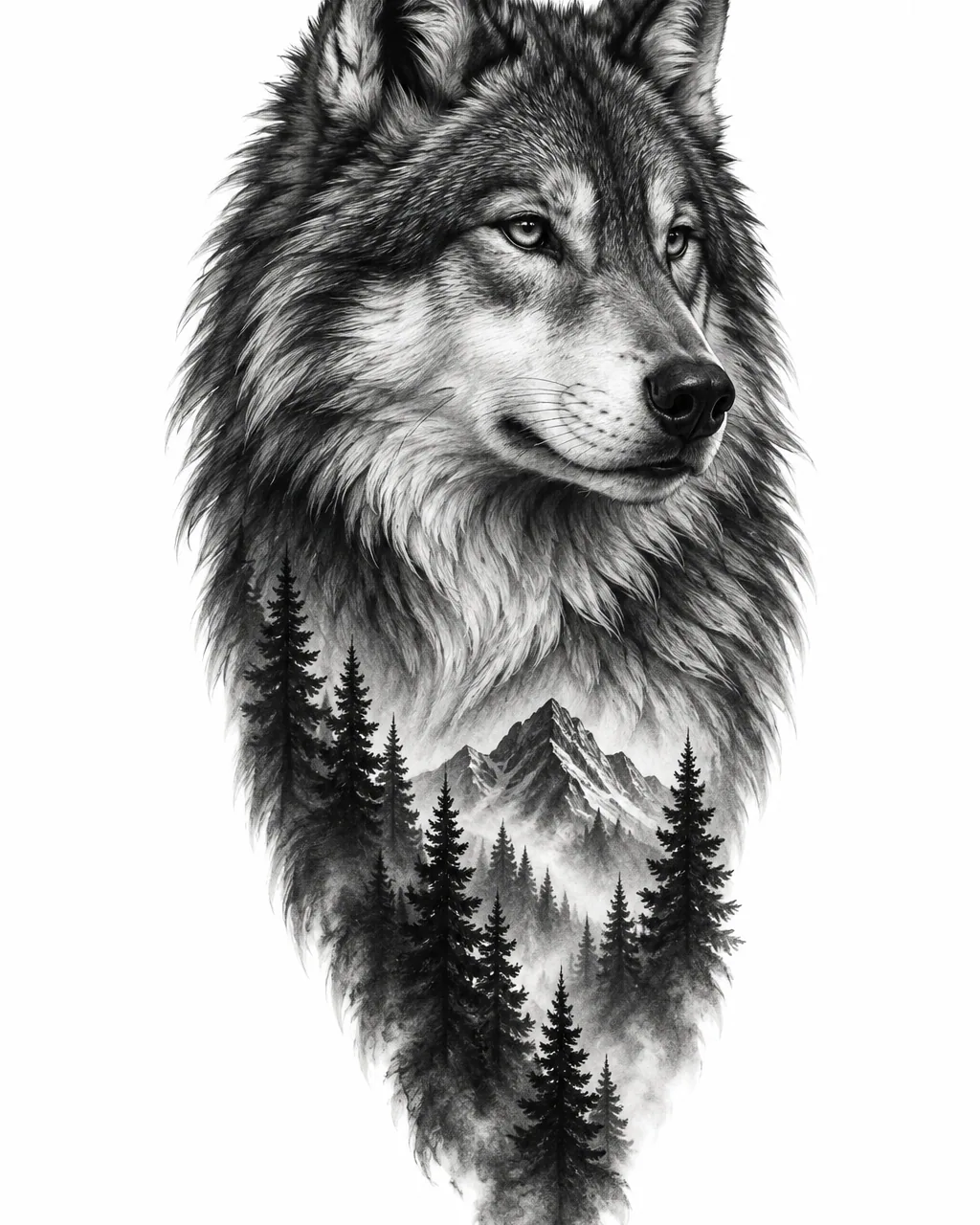
- Geometric wolf
- A wolf head split into polygons, sometimes half realistic and half geometric, at 5–7 inches on a forearm or calf.
- Flower of life
- Overlapping circles in a hexagonal pattern; give it at least 3 inches so the intersections stay clear.
- Geometric mountain
- Peaks drawn as triangles with linework shading, a clean fit for the forearm or upper arm.
- Polygon deer
- A deer head built from angular facets, with antlers that add height for a forearm or upper back.
- Metatron’s cube
- A dense figure of circles and connecting lines; size it generously so it doesn’t blur.
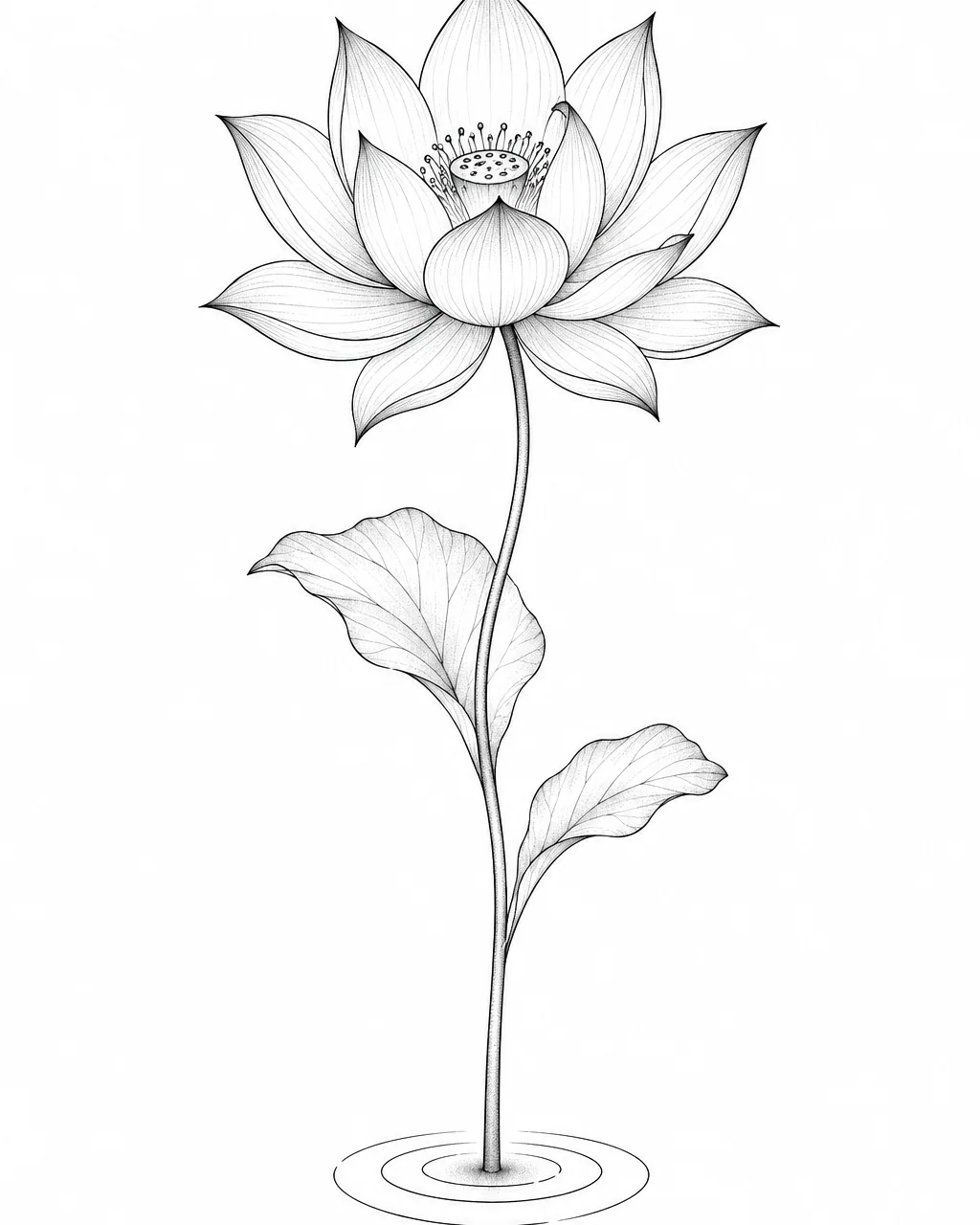
- Geometric lotus
- A symmetrical lotus framed by circles, lines and dot gradients, often centered on the upper back.
- Hexagon pattern band
- A band of honeycomb shapes wrapping the forearm or calf, fading out with dots.
- Geometric fox
- A fox face constructed from triangles, compact enough for an upper arm or calf.
No. 04
How geometric tattoos age
Geometric tattoos age well when lines have room. Clean, evenly spaced linework holds its shape for years, and black geometry stays crisp longer than soft shading. Problems come from density: where many fine lines meet or run close together, spreading ink can merge them into dark spots.
Straight lines and true circles are also unforgiving – a wobble or asymmetry is visible on day one and doesn’t improve with time. Bands that wrap a limb can look slightly shifted if the body changes. Generous sizing, simplified intersections and an experienced artist make the difference.
No. 05
Best placements and sizes for geometric tattoos
Choose areas with a natural axis for symmetry and relatively flat skin.
- Forearm
- Bands, patterns and polygon animals at 3–7 inches; the middle of the forearm is a natural axis.
- Upper arm
- Sacred geometry and shoulder patterns at 4–7 inches that can grow into a sleeve.
- Calf
- Long vertical patterns and wraparound bands at 5–8 inches.
- Back
- The spine is a perfect line of symmetry for large, mirrored designs.
No. 06
Working with a geometric tattoo artist
In healed work, look for lines that are truly straight, circles that are round and symmetry that holds up on curved areas like the forearm and calf. If you want a band or wraparound piece, ask to see one – they’re harder than flat designs.
Bring a clean reference, ideally a vector file for exact geometry, and expect the artist to adapt it to your anatomy. Ask how they place stencils on curved areas and how they plan line spacing for aging. You can draft pattern ideas with the TattooMaker generator, then refine them with your artist.
FAQ
Geometric style FAQ
What do geometric tattoos mean?
Geometric tattoos often stand for balance, harmony and order, since they’re built on symmetry and repetition. Sacred geometry figures such as the flower of life are associated with connection and creation in several spiritual traditions, while polygon animals combine the animal’s meaning with a modern look. Many people choose geometry simply for its clean, graphic beauty.
Do geometric tattoos age well?
Yes, when they’re designed for skin. Evenly spaced black lines stay crisp for years, but very fine, dense intersections can blur together as ink spreads. Ask your artist to keep spacing generous and simplify tight details. Placement matters too: flatter, stable areas like the forearm or upper back keep straight lines looking straight.
Are geometric tattoos hard to do?
They’re among the most technically demanding styles, because straight lines, true circles and symmetry leave no room for error. Skin also curves and stretches, so the artist has to adapt the design to your anatomy and place the stencil carefully. Choose an artist whose healed portfolio shows clean geometry on placements similar to yours.
Can geometric tattoos be combined with other styles?
Yes. Geometry pairs well with dotwork shading, fine line botanicals and realism – a realistic animal framed by geometric shapes is a popular combination. The key is a clear plan for where the styles meet, so the geometric elements frame the subject rather than compete with it. An artist experienced in both styles will get the best result.
Design your own geometric piece
Describe it in a sentence. Four original sketches in seconds — then turn the one you love into a stencil.