Theme · 14 designs
Tiger Tattoo Ideas
A tiger tattoo channels power, courage and protection, and it has prowled through East Asian art and tattooing for centuries. Its long, striped body loves movement, which makes placement and pose just as important as style.
Tiger tattoo designs
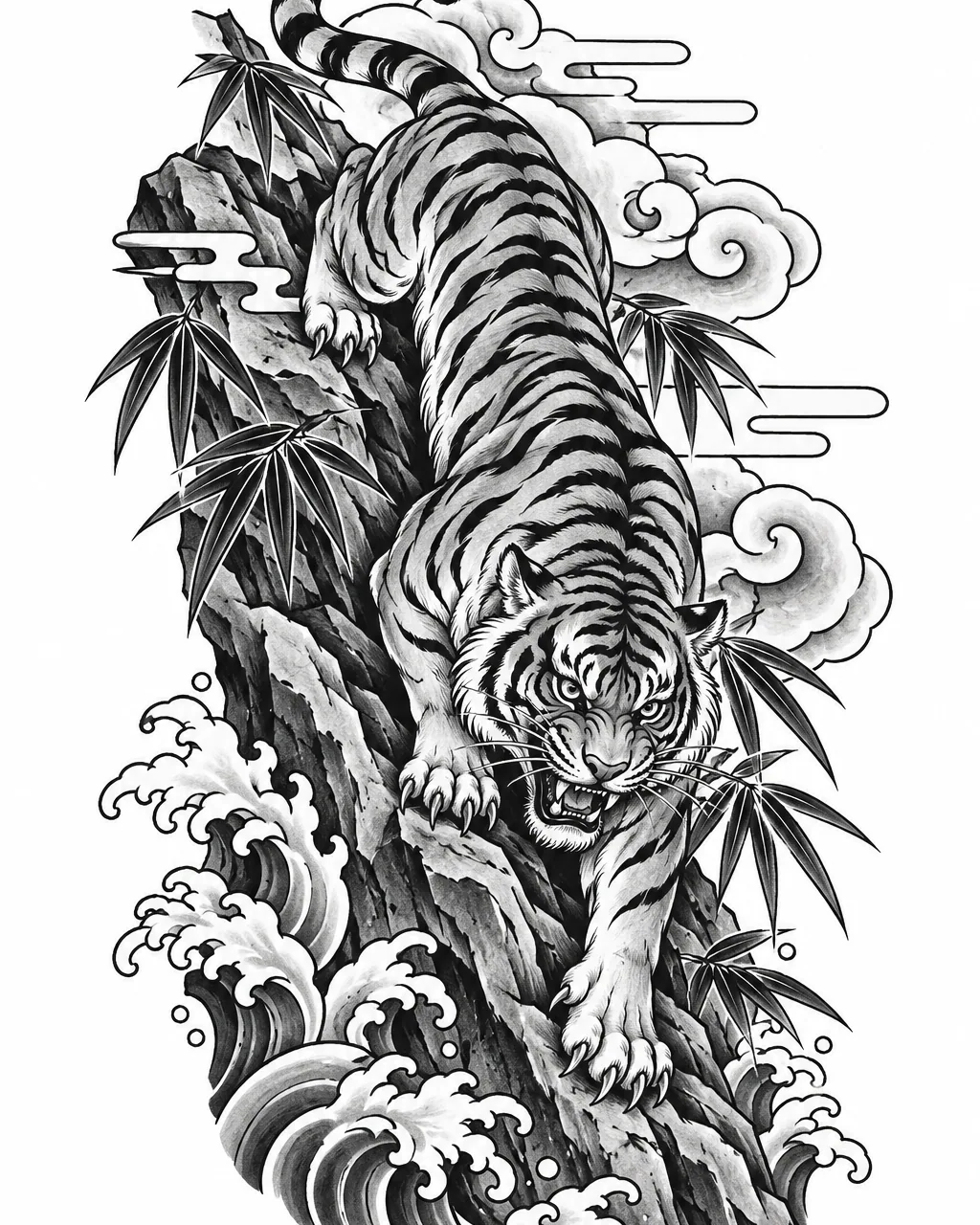
a tiger descending a rocky cliff head first, front paws reaching down, bamboo leaves and wind bars around it, powerful flowing stripesJapanese · calf 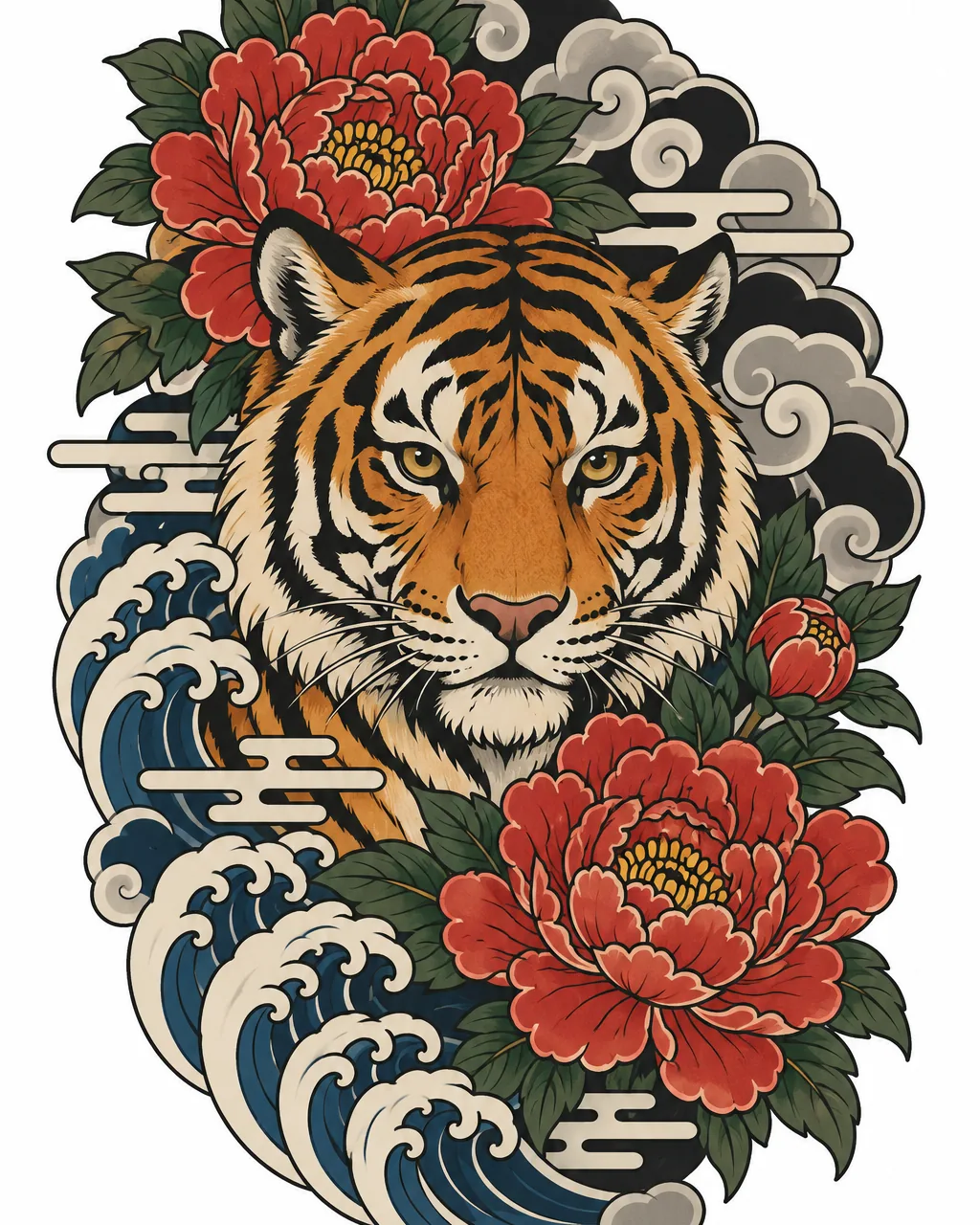
a tiger head framed by large peonies, mouth closed, intense calm eyesJapanese · upper arm 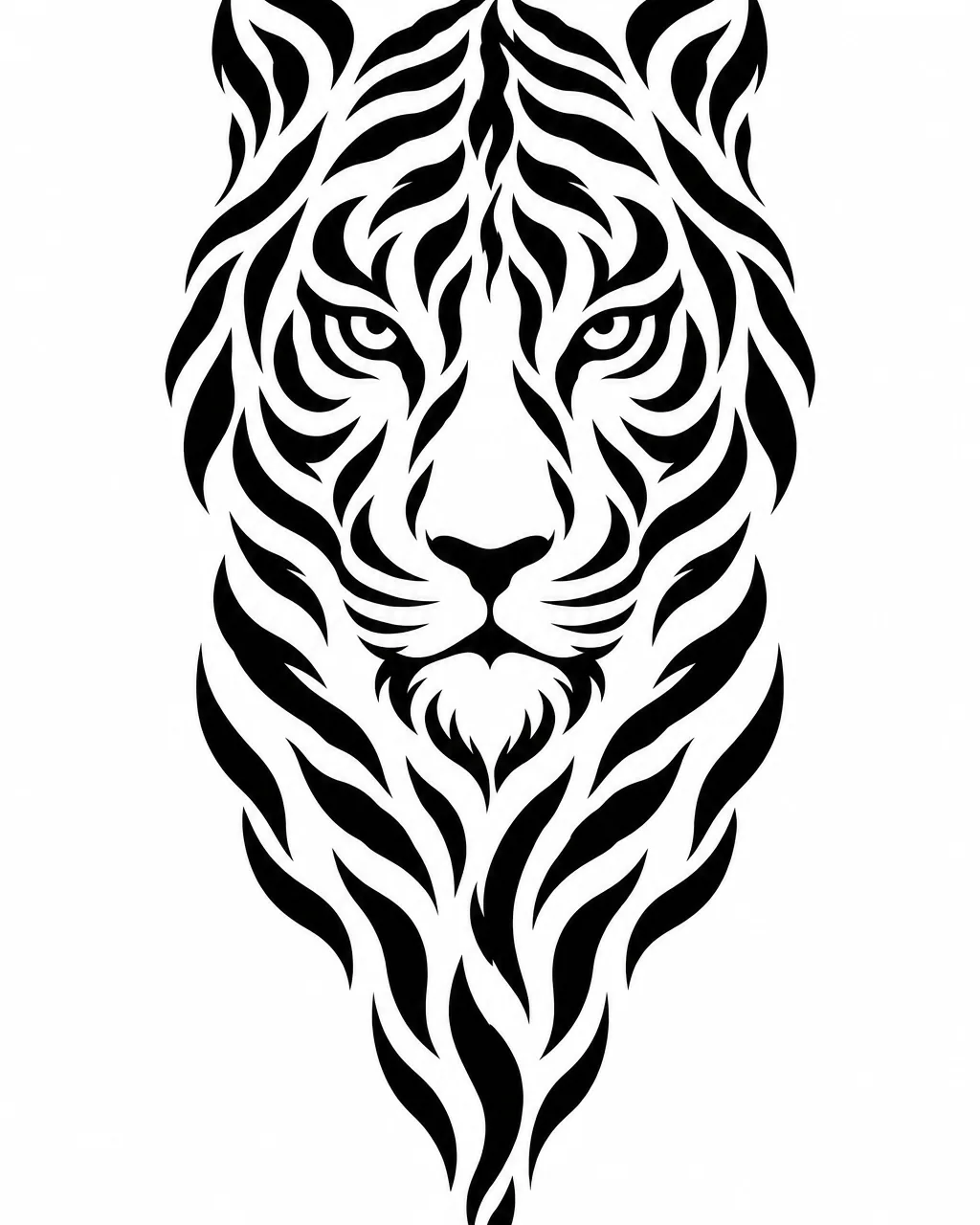
a tiger face formed only by its stripes, no outlineBlackwork · forearm 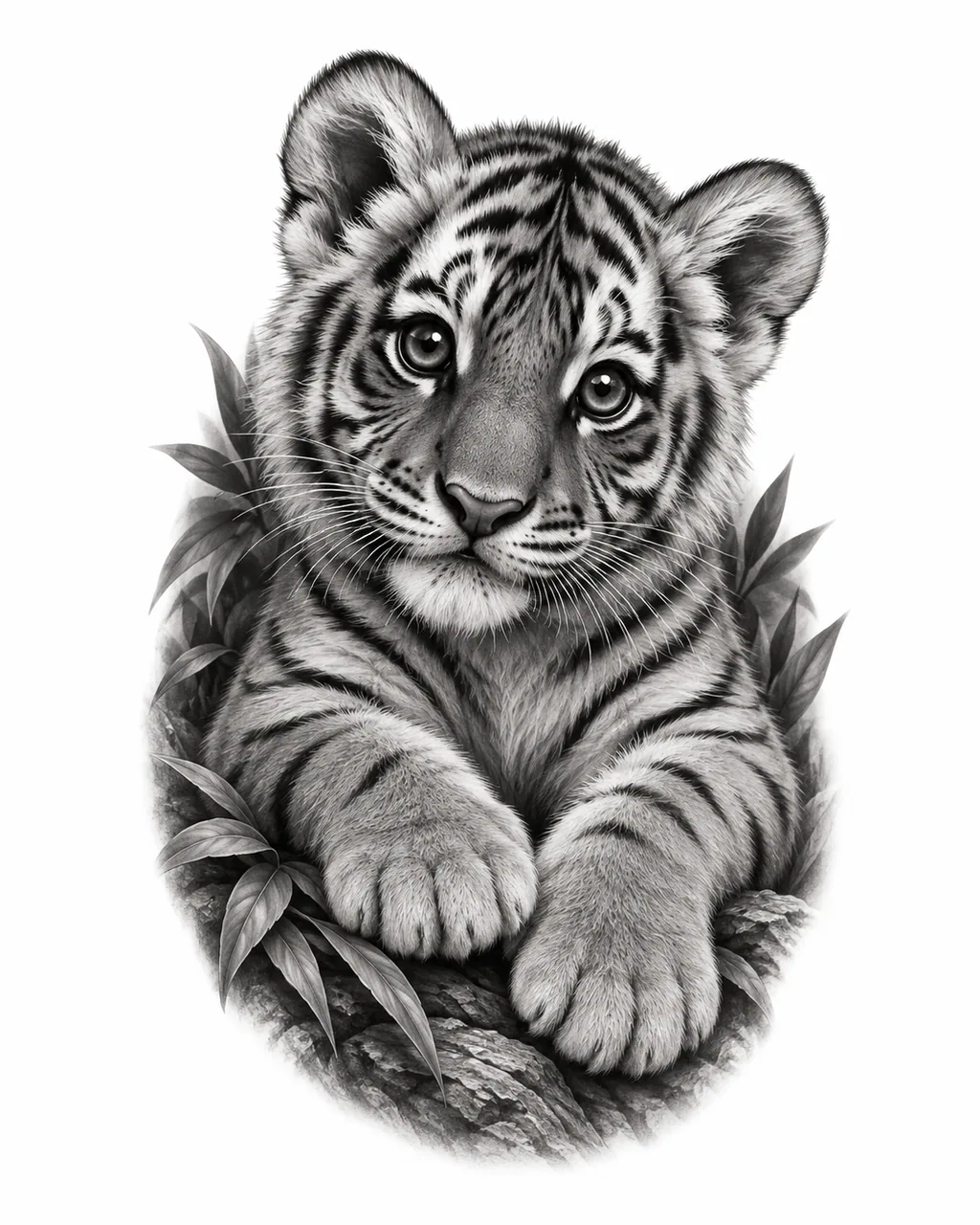
a tiger cub portrait with wide curious eyesRealism · upper arm 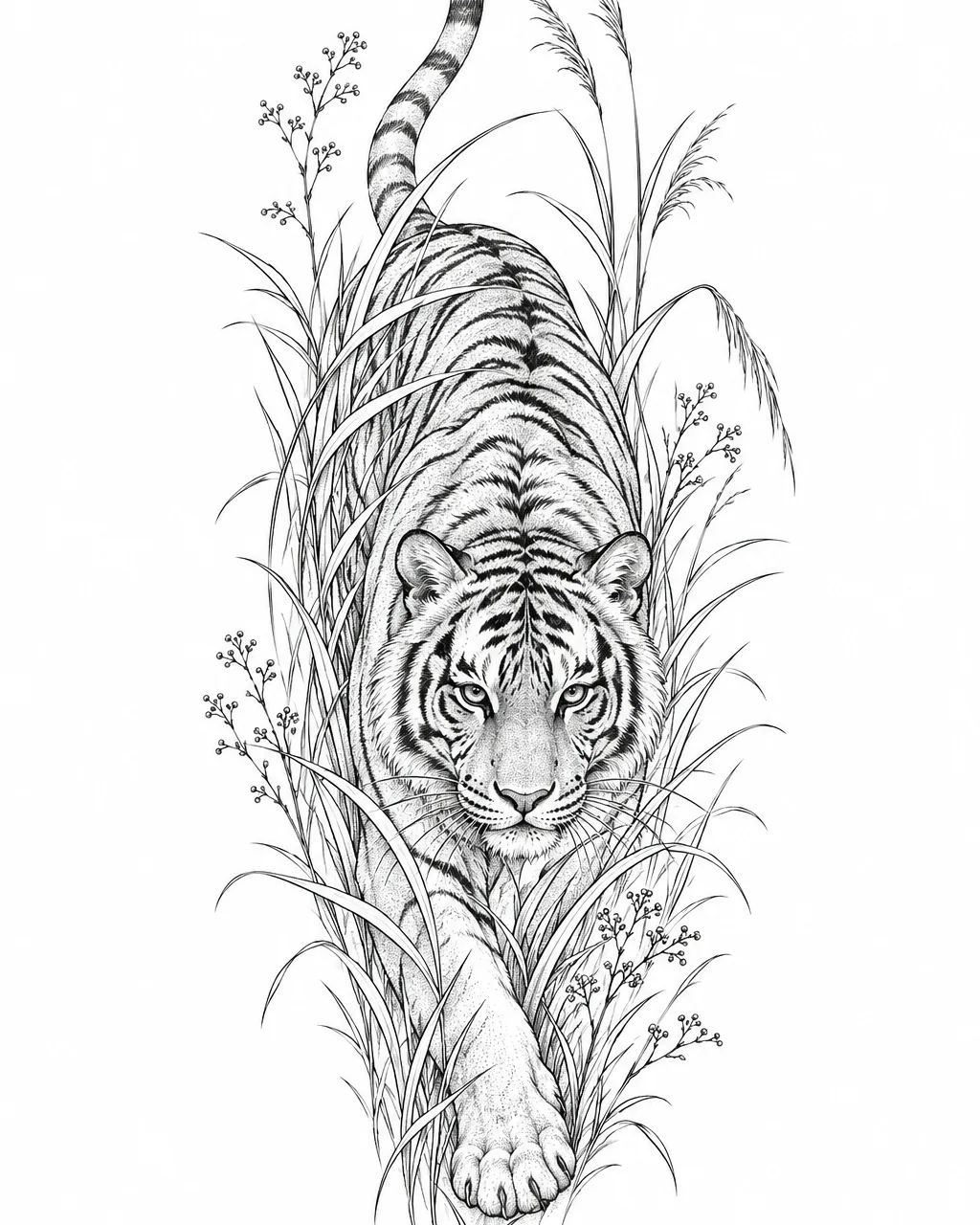
a tiger stalking low through tall grassFine line · forearm 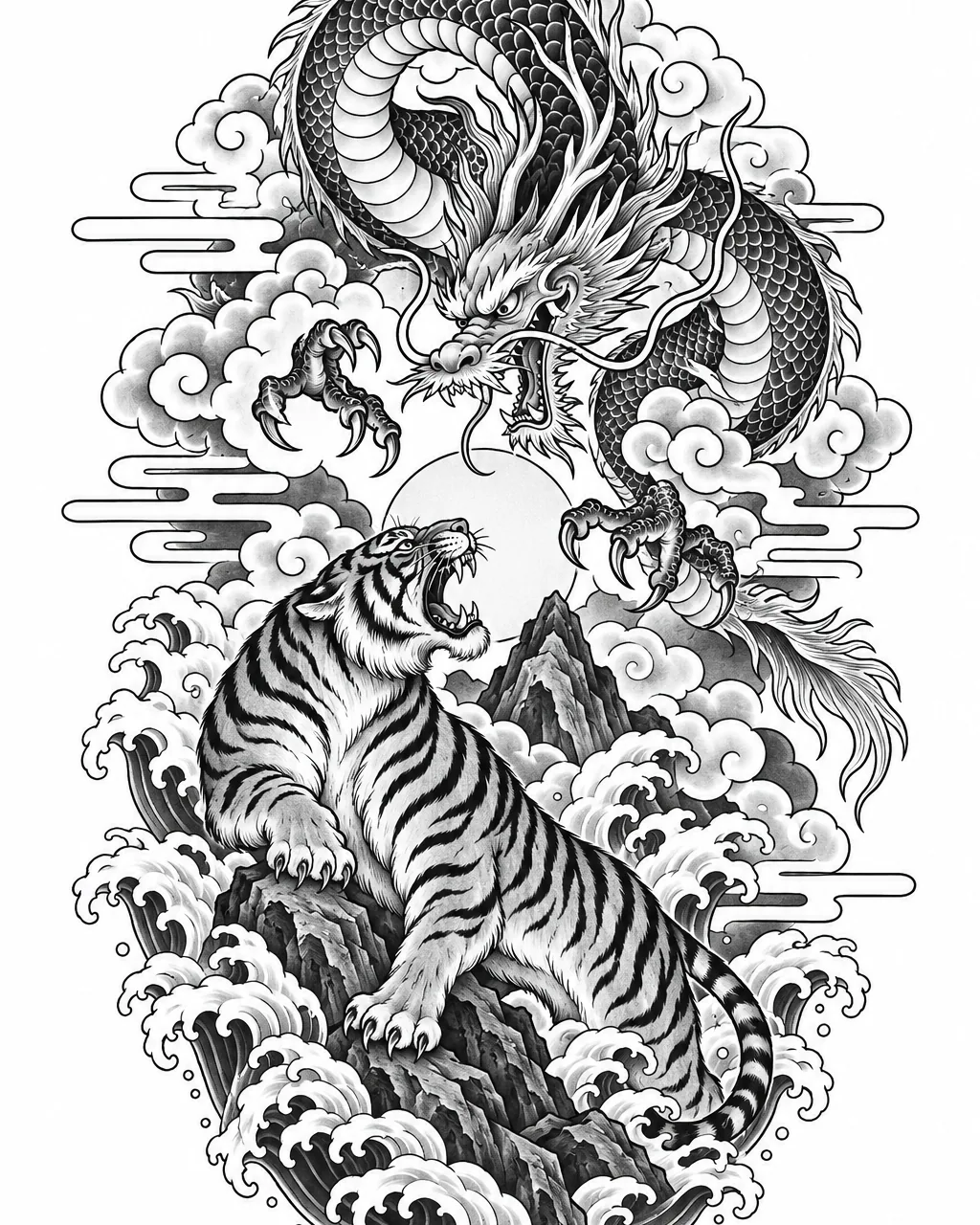
a tiger and a dragon facing off amid clouds and waves, the tiger below and the dragon aboveJapanese · back 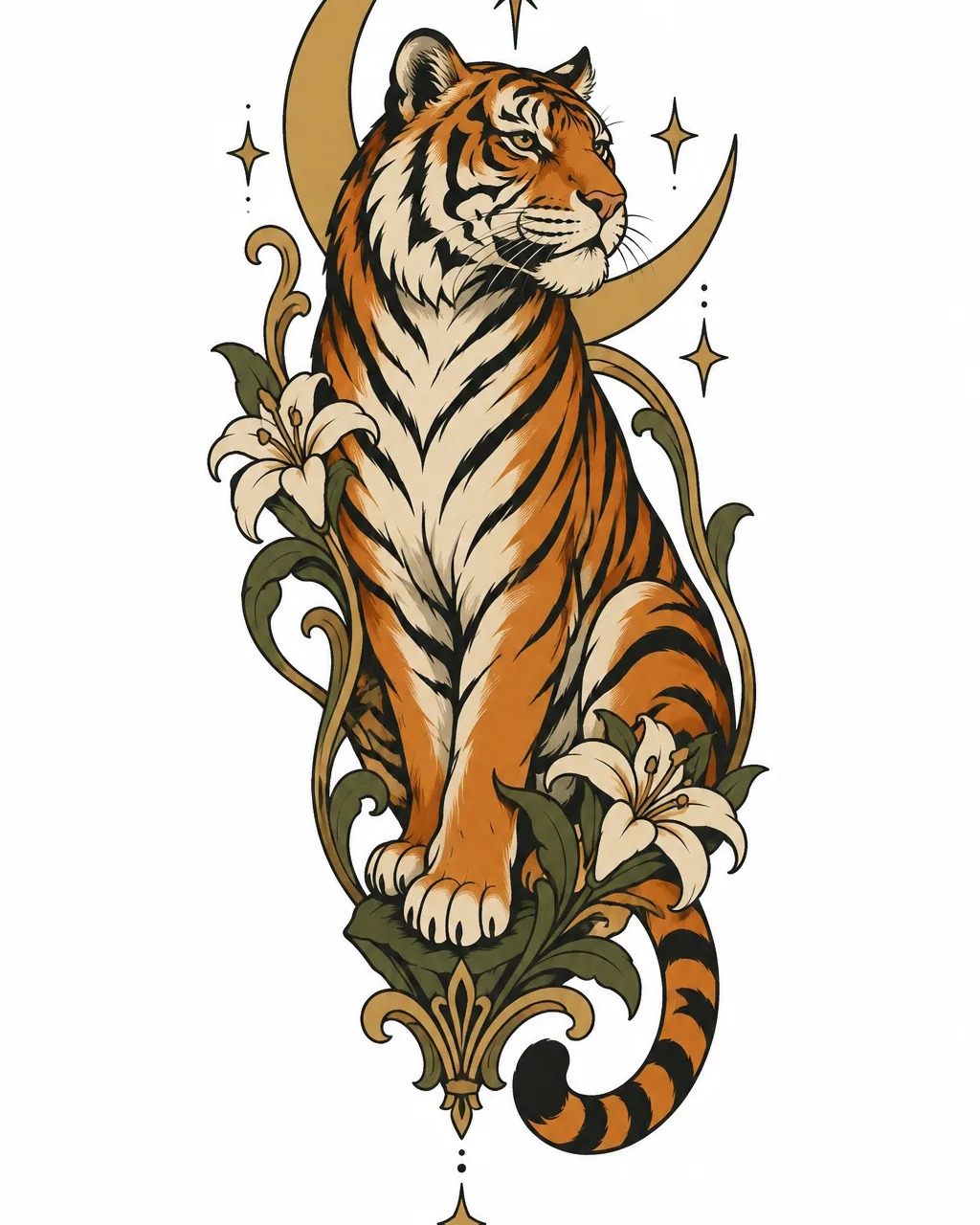
a tiger with a crescent moon and small stars behind its headNeo-trad · forearm 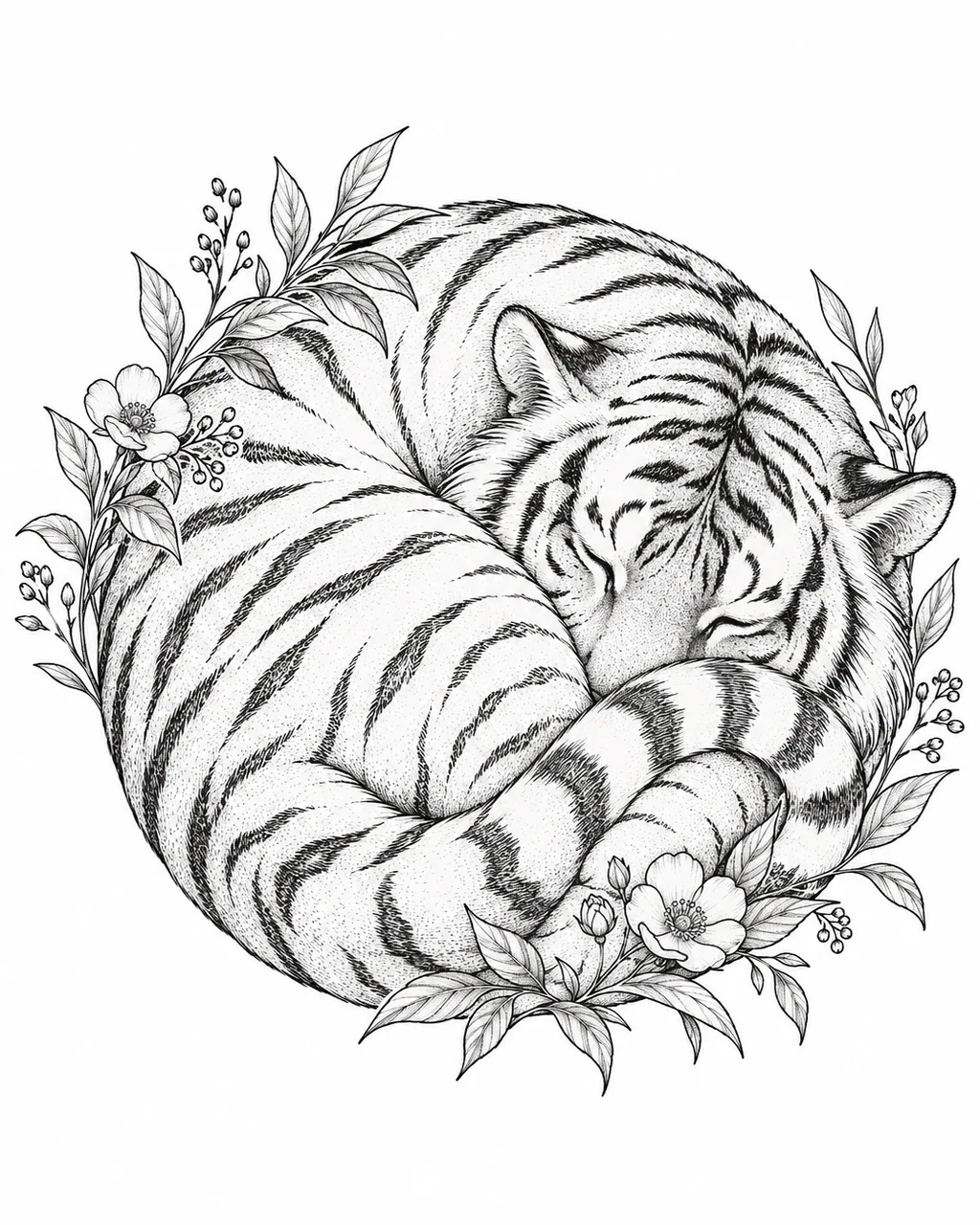
a sleeping tiger curled into a circle, tail over its noseFine line · upper arm 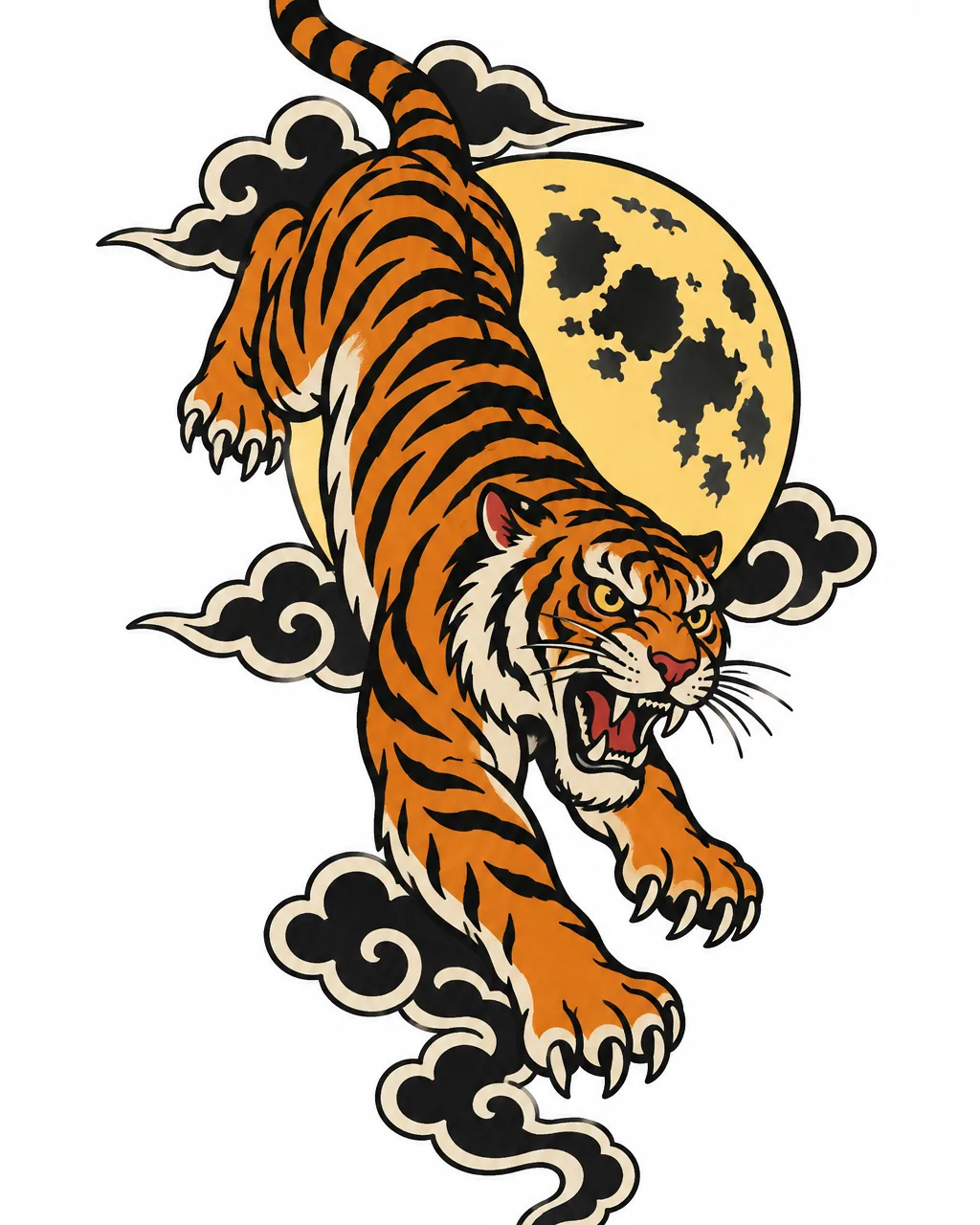
a tiger leaping across a large full moonTraditional · forearm 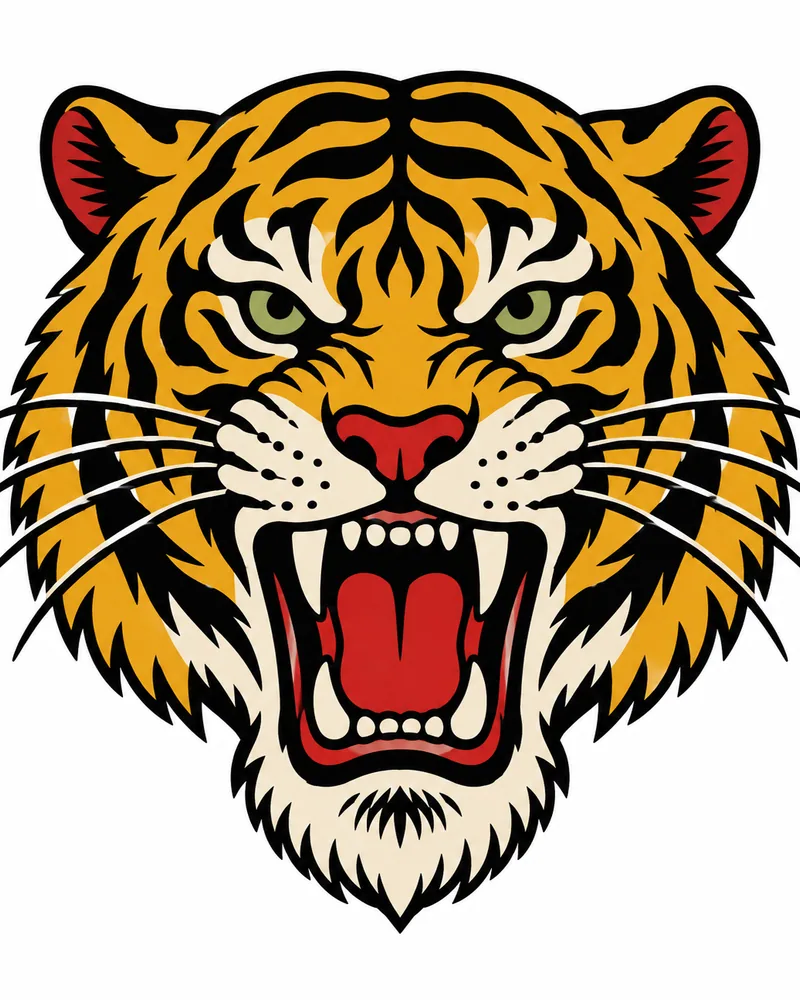
a roaring tiger head facing forward, bold black stripes over mustard yellow fur, red mouth, white whisker padsTraditional · upper arm 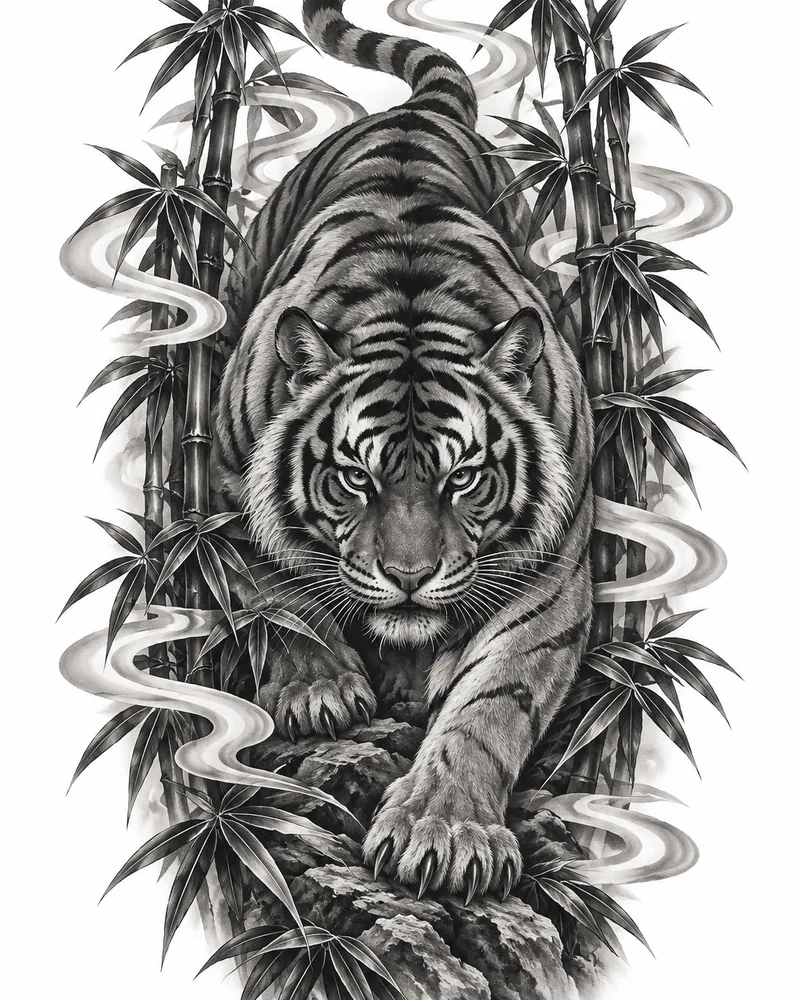
a crouching tiger among bamboo and wind barsRealism · back 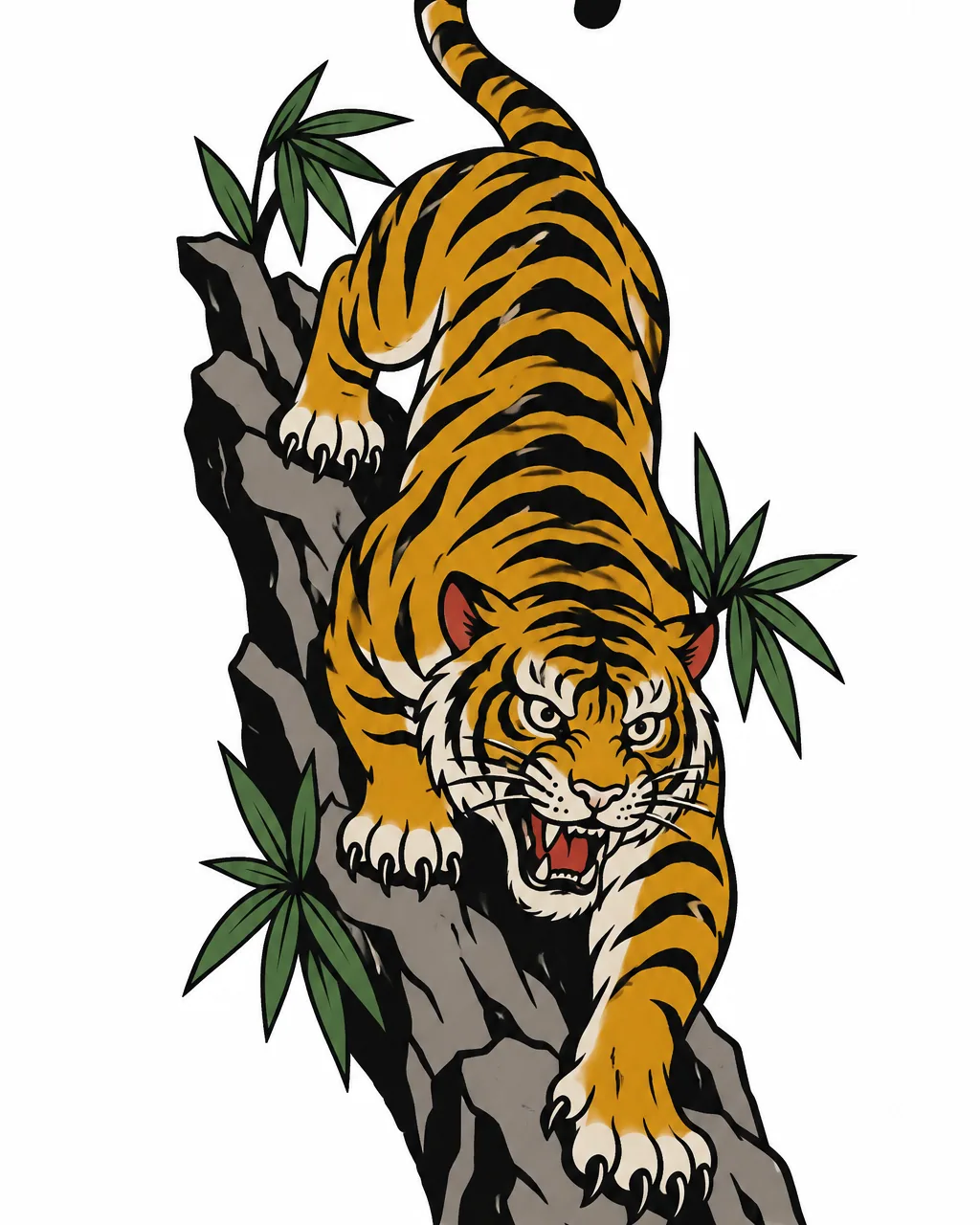
a tiger descending a rocky cliff head first, front paws reaching down, mustard fur with bold black stripes, a few green bamboo leavesTraditional · calf Not quite it?
Describe your own tiger tattoo
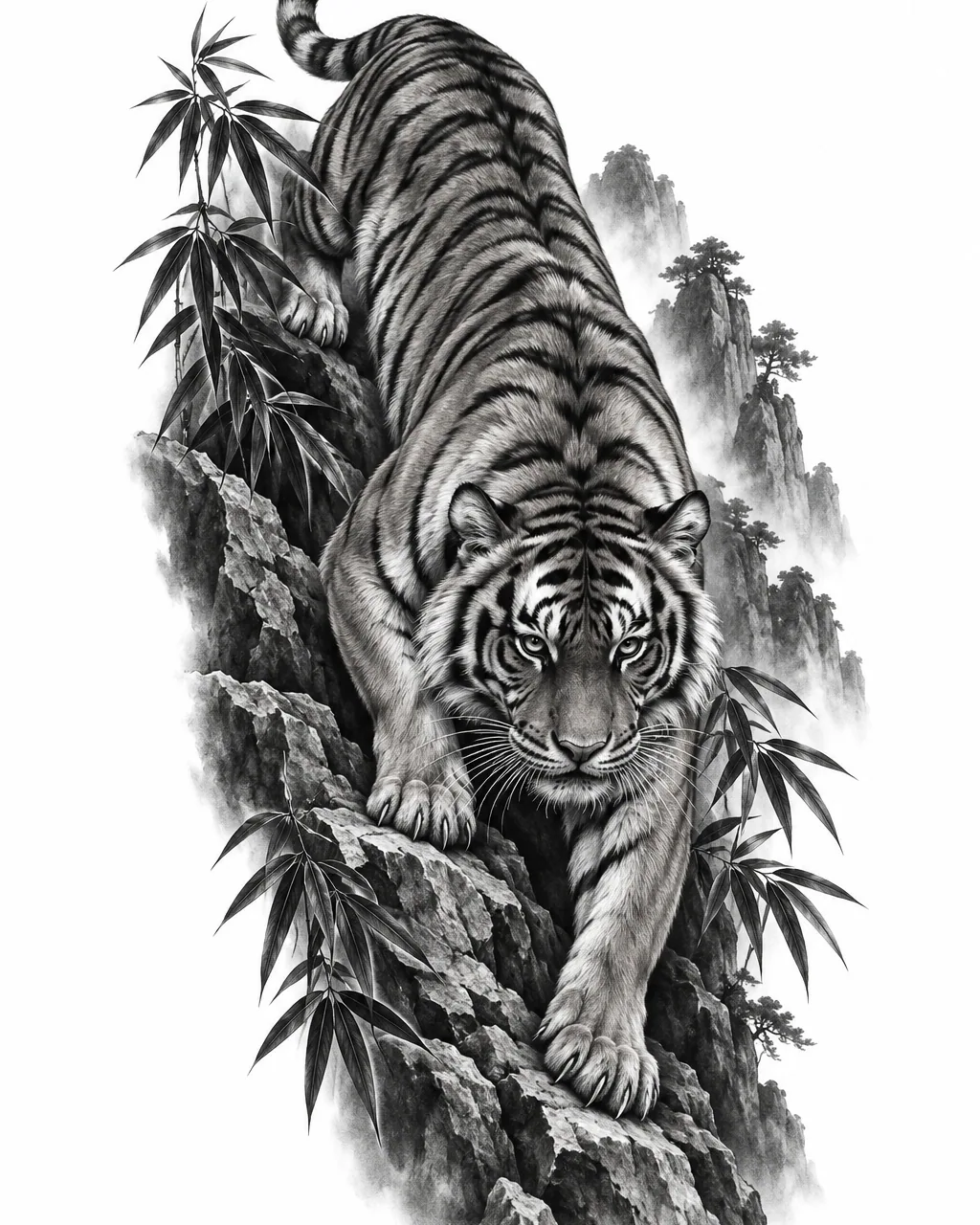
a tiger descending a rocky cliff head first, front paws reaching down, realistic fur and muscle shading, bamboo leaves at the edgesRealism · calf 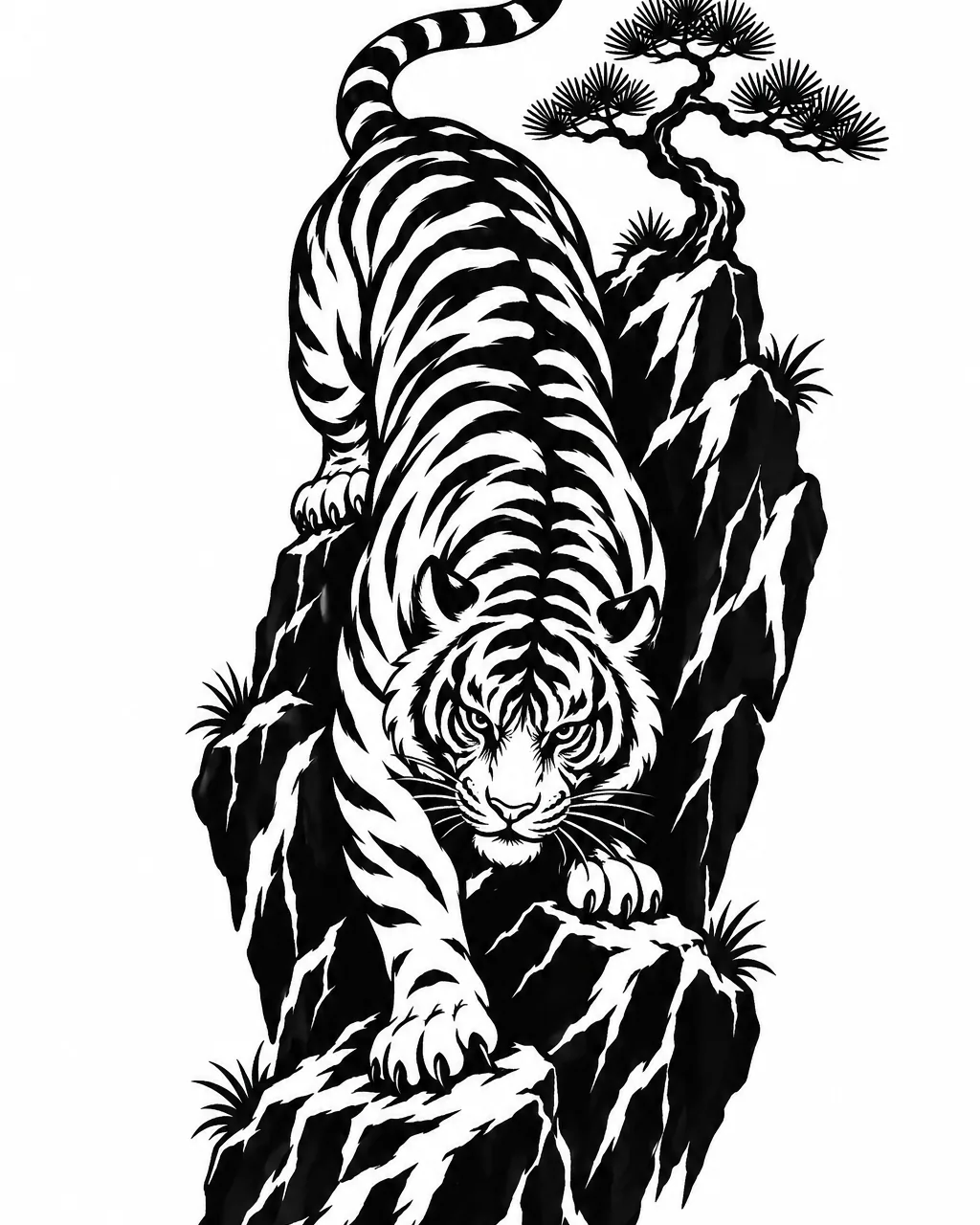
a tiger descending a rocky cliff head first, stripes and rocks as bold solid black shapes with negative-space highlightsBlackwork · calf
No. 01
Tiger tattoo meaning
In China the tiger is king of the beasts; folk tradition even reads the stripes on its forehead as the character for king. The White Tiger guards the west among the Four Symbols, the tiger is the third sign of the zodiac, and tiger-head shoes and hats traditionally protect children.
Japanese art pairs the tiger with bamboo and with the dragon, a balance of earthly and heavenly power, and in irezumi it is said to ward off bad luck and illness. A tiger appears in Korea’s founding myth, and India and Bangladesh both name the Bengal tiger their national animal.
- Power
- Raw strength and confidence, without the regal formality of a lion.
- Protection
- Across East Asia, tiger images guard homes, children and the wearer against misfortune.
- Courage
- Facing challenges head-on, a common choice after a hard-won personal battle.
- Independence
- Tigers live and hunt alone, so the motif suits a fierce, self-made spirit.
- Balance
- Paired with a dragon, the tiger represents forces that keep each other in check.
No. 02
Popular tiger tattoo ideas
Tigers reward movement, so let the body follow the muscle instead of sitting stiffly in a box. Sketch a few poses in the TattooMaker generator first; the stripes change dramatically with the angle.
- Crouching tiger among bamboo
- The classic Japanese pairing; bamboo stalks frame the body and lead the eye along the forearm or calf.
- Roaring tiger head
- A front or three-quarter head with open jaws, a flash staple that reads well at 4–6 in (10–15 cm).
- Tiger stalking through grass
- A low, horizontal body that wraps the forearm or sweeps across the upper back.
- Tiger with peony
- The peony, the king of flowers in Chinese and Japanese art, softens the stripes and adds color.
- Tiger face with stripes only
- Just stripes, eyes and nose, with negative space doing the work; it needs bold blacks and enough size to read.
- Tiger and dragon
- Two rivals circling each other, ideal for a back piece or a matching pair of sleeves.
- Tiger climbing down a cliff
- A dramatic vertical composition from Japanese tattooing, with rocks and wind bars filling the gaps.
- Tiger cub portrait
- A softer option, often for a child born in a Year of the Tiger, most recently 2022.
No. 03
Best placements for a tiger tattoo
A full-bodied tiger needs length, so long, muscular areas suit it best; save smaller spots for a head or face.
- Forearm
- A stalking or crouching tiger follows the length of the arm. Pain 3–5 out of 10; 5–8 in (13–20 cm).
- Upper arm
- The traditional spot for a roaring head, with room to wrap the shoulder. Pain 2–4 out of 10 outside, 5–6 inside; 5–8 in (13–20 cm).
- Back
- The full back gives a tiger in bamboo or a tiger-and-dragon scene room to breathe. Pain 4–6 out of 10, 7–8 over the spine; 12–20 in (30–51 cm).
- Calf
- Vertical and muscular, perfect for a tiger climbing down a cliff. Pain 3–5 out of 10; 6–9 in (15–23 cm).
- Thigh
- Large and easy to cover, it fits a whole tiger. Pain 3–5 out of 10 on the front or outer thigh; 8–12 in (20–30 cm).
No. 04
Which tattoo style suits a tiger?
- Japanese
- Bold outlines, stylized stripes and wind or bamboo backgrounds. Built for large scale, it ages exceptionally well.
- American Traditional
- A snarling head with heavy black and limited color; simple and graphic, it stays readable for decades.
- Realism
- Detailed fur and lifelike eyes in black and gray or color. It needs size, and bright oranges fade faster without sun protection.
- Neo-Traditional
- Ornamental frames, jewels and rich color held by strong outlines, so it keeps its shape well over time.
No. 05
How much does a tiger tattoo cost?
Tigers tend to be medium or large because the stripes need room. A small tiger face, 2–3 in (5–8 cm), usually costs $150–$350. A tiger head or crouching tiger on the forearm, 5–8 in (13–20 cm), typically runs $400–$1,200 over three to six hours. Large color tigers on the thigh or back can cost $1,500–$5,000 or more, and full Japanese back pieces often exceed that.
Most US artists charge $120–$250 an hour, varying by city and experience; the TattooMaker cost calculator gives a ballpark figure before you ask for a quote.
No. 06
Before you book
- Find a Japanese specialist
- For irezumi-style work, choose an artist whose portfolio is full of large, healed Japanese pieces.
- Respect Sak Yant
- Thai twin-tiger Sak Yant are sacred designs traditionally given by monks or ajarns; if you just like the look, ask for an original tiger.
FAQ
Tiger tattoo FAQ
What does a tiger tattoo mean?
A tiger tattoo usually represents power, courage and protection. In Chinese and Japanese tradition, the tiger is also believed to ward off evil, bad luck and illness, and in Korea it’s widely seen as a national symbol. Because tigers are solitary hunters, the image can also stand for independence. Pose matters: a calm tiger feels protective, while a snarling one reads as fierce.
What does a tiger and dragon tattoo mean?
In East Asian art, the tiger and dragon represent two great forces in balance. A classic saying holds that clouds follow the dragon and wind follows the tiger, so the pair often appears with clouds and wind bars. Together they can stand for yin and yang, heaven and earth, or the tension between ambition and restraint. It suits large placements like the back.
What does a Japanese tiger tattoo mean?
In Japanese tattooing, the tiger symbolizes strength, courage and protection, and it’s traditionally believed to guard against evil spirits, bad luck and disease. It is often shown with bamboo, rocks or wind, sometimes facing a dragon. Japanese-style tigers are usually large, covering an arm, leg or back, with bold outlines and backgrounds designed to flow with the body.
Where should I put a tiger tattoo?
Because tigers look best in motion, long areas work well: the forearm, calf, thigh and upper arm all let the body stretch out. A tiger head fits the shoulder, chest or outer forearm. For a full scene with bamboo or a dragon, the back is ideal. Small spots like the wrist only suit a simplified face, since stripes blur at tiny sizes.
Is it okay to get a Sak Yant tiger tattoo?
Sak Yant designs, including the twin tigers, are sacred in Thai tradition. They’re traditionally applied by monks or ajarns with a blessing and rules the wearer is expected to follow. Some ajarns do tattoo visitors, so if the meaning matters to you, receive it in that context. If you just love the look, ask an artist for an original tiger design that doesn’t copy sacred script.
Make a tiger tattoo that’s yours
Describe it in a sentence. Four original sketches in seconds — then turn the one you love into a stencil.